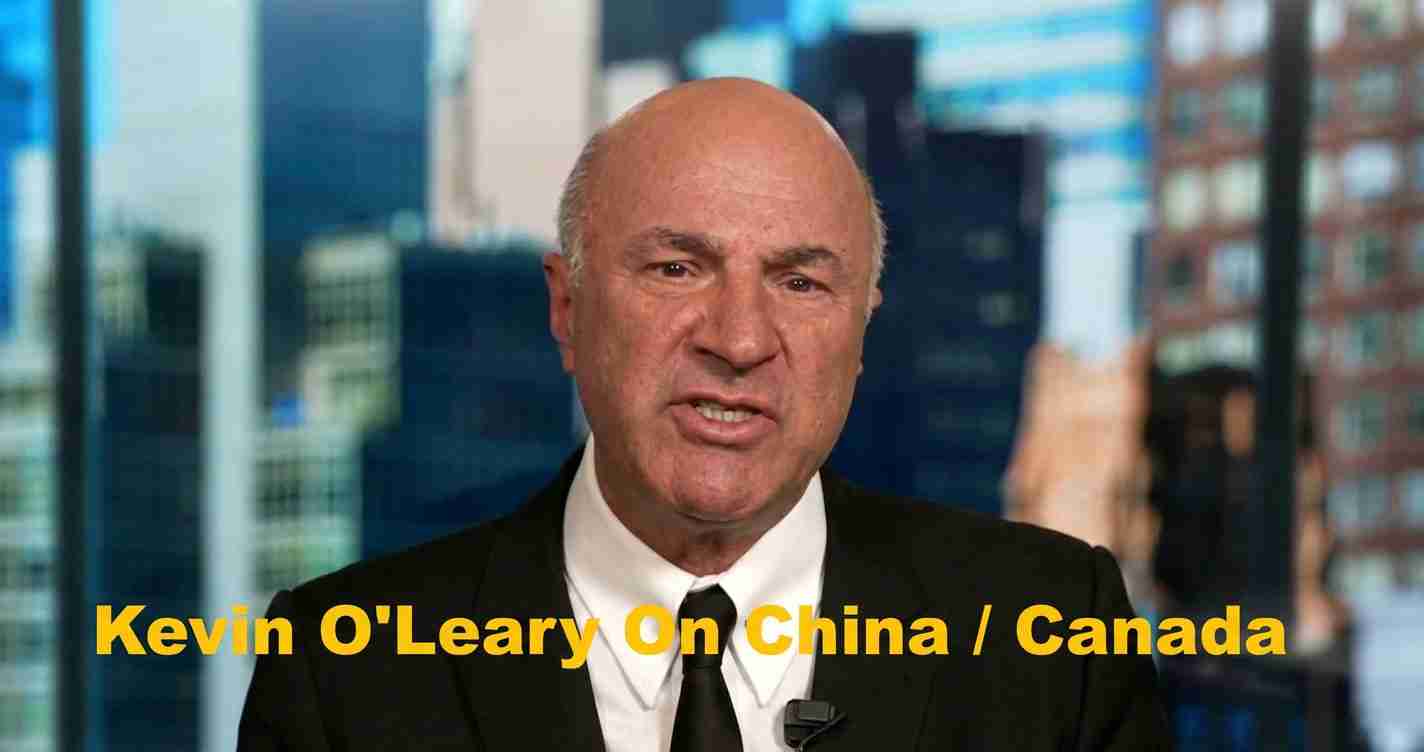
Kevin O’Leary warns Canada against China deal as Trump threatens 100% tariffs on imports
Kevin O’Leary warned Canada against closer ties with China, saying Beijing exploits partners, as President Trump threatened 100% tariffs on Canadian imports — a clash that spotlights trade, security and supply‑chain risks across North America.
Key takeaways
- O’Leary’s warning: Kevin O’Leary said “China is not your friend” and cautioned Canada would be exploited, citing national-security and economic risks.
- Trump’s tariff threat: President Trump suggested a possible 100% tariff on Canadian imports if Canada becomes a gateway for Chinese goods.
- Canada’s stance: Officials, including Mark Carney, say Ottawa has no plan for a full free‑trade deal with China and recent talks were limited.
- Wider stakes: Steep tariffs could disrupt integrated U.S.–Canada supply chains and affect sectors from agriculture to tech, including major impacts in California.
Main coverage
O’Leary’s warning: “China is not your friend”
Kevin O’Leary, the investor and television personality known from Shark Tank, made blunt remarks on Fox Business’s The Claman Countdown. He said China has “screwed every one” of its business partners and Canada “will be no exception.” He described China as an “economic and military and AI enemy to both Canada and the United States” and concluded, “China is not your friend.” Sources cited during coverage include Fox Business.
O’Leary framed the issue in national‑security terms, linking trade choices to defense planning. He referenced President Trump’s proposed “Golden Dome” missile defense concept and argued Canada’s geography — between Greenland and Alaska — raises stakes for any arrangement involving China. He also predicted that rhetoric would ease and leaders would likely reconcile: “kissing cousins soon.” Additional coverage noting his prediction is available at AOL and a related clip at Fox News video.
Trump’s social media warnings and the tariff threat
President Trump posted warnings on social media saying Canada is “sorely mistaken” if it believes it can be a gateway for Chinese goods into the U.S. He suggested he might impose a 100% tariff on imports from Canada tied to such arrangements. Reporting on this messaging and the surrounding context appears at Fox Business.
Economists warn that a tariff of that magnitude would sharply raise costs for consumers and businesses, disrupt supply chains, and risk retaliation. The U.S.–Canada trading relationship is deeply integrated: Canada is the top export destination for 36 U.S. states and many Canadian goods flow directly into U.S. production networks — meaning broad effects across manufacturing, agriculture, energy and services.
Canada’s response and the record on talks with China
Canadian officials have pushed back against the idea Ottawa is seeking a sweeping free‑trade deal with Beijing. Former Bank of Canada Governor Mark Carney said Canada has no intention of negotiating a full free‑trade agreement with China and characterized recent discussions as narrow, focused on limited tariff relief in specific sectors rather than broad market opening. See reporting at Fox Business.
Fox Business did not publish the full text of any Canada–China agreement in its reporting. Other outlets documenting O’Leary’s comments emphasized his view that, despite the rhetoric, the United States and Canada will likely reconcile and remain economically close (AOL; Fox News video).
What is at stake: trade, security and supply chains
The debate centers on three core risks:
- Economic disruption: A 100% tariff on Canadian imports would raise costs for U.S. firms and consumers, harm Canadian exporters and likely prompt countermeasures. The integrated nature of North American supply chains magnifies these effects.
- National security: Concerns about military competition, advanced technologies and AI underpin arguments that closer ties with China carry strategic risks for both Canada and the U.S.
- Political dynamics: Aggressive public threats can be bargaining leverage but also unsettle investors and businesses planning cross‑border operations. Rhetoric may cool, but short‑term uncertainty has real costs.
Implications for California
Economic impact
- Exports and jobs: California firms export machinery, agricultural products, wine and tech services to Canada; tariffs or friction could reduce sales and cost jobs.
- Tech and chips: The tech sector relies on global semiconductor supply chains; restrictions tied to national‑security screening could raise compliance costs and slow parts access.
- Agriculture and food: Tariffs and border delays would raise costs for California growers exporting perishable goods to Canada.
Political consequences
Trade politics in California cut across party lines. Businesses and local leaders who depend on predictable trade may clash with those prioritizing national‑security measures. Members of Congress from California could face pressure to seek exemptions or relief for affected industries.
Social and consumer effects
- Higher prices: Tariffs that raise import costs would likely increase consumer prices, disproportionately affecting low‑ and middle‑income households.
- Employment shifts: Manufacturing, logistics, food processing and tech jobs in California could be affected by trade uncertainty and potential retaliation.
Practical applications for Californians
- Businesses should review cross‑border supply chains and consider inventory buffers or alternative suppliers.
- Exporters should monitor tariff announcements and consult trade attorneys or customs brokers to understand potential duties.
- State and local officials may need to coordinate with federal agencies to seek waivers or mitigation for key industries if tariffs are imposed.
Reporting notes and sources
This article draws on Kevin O’Leary’s Fox Business interview and related reporting, the president’s social media statements as reported, and additional coverage noting O’Leary’s prediction about U.S.–Canada economic unity. Primary sources cited in reporting include Fox Business, AOL, and a Fox News video. No full text of any comprehensive Canada‑China free‑trade agreement was available in the referenced reports.
Quick quotes: “China is not your friend.” — Kevin O’Leary. Reporting available at Fox Business.