
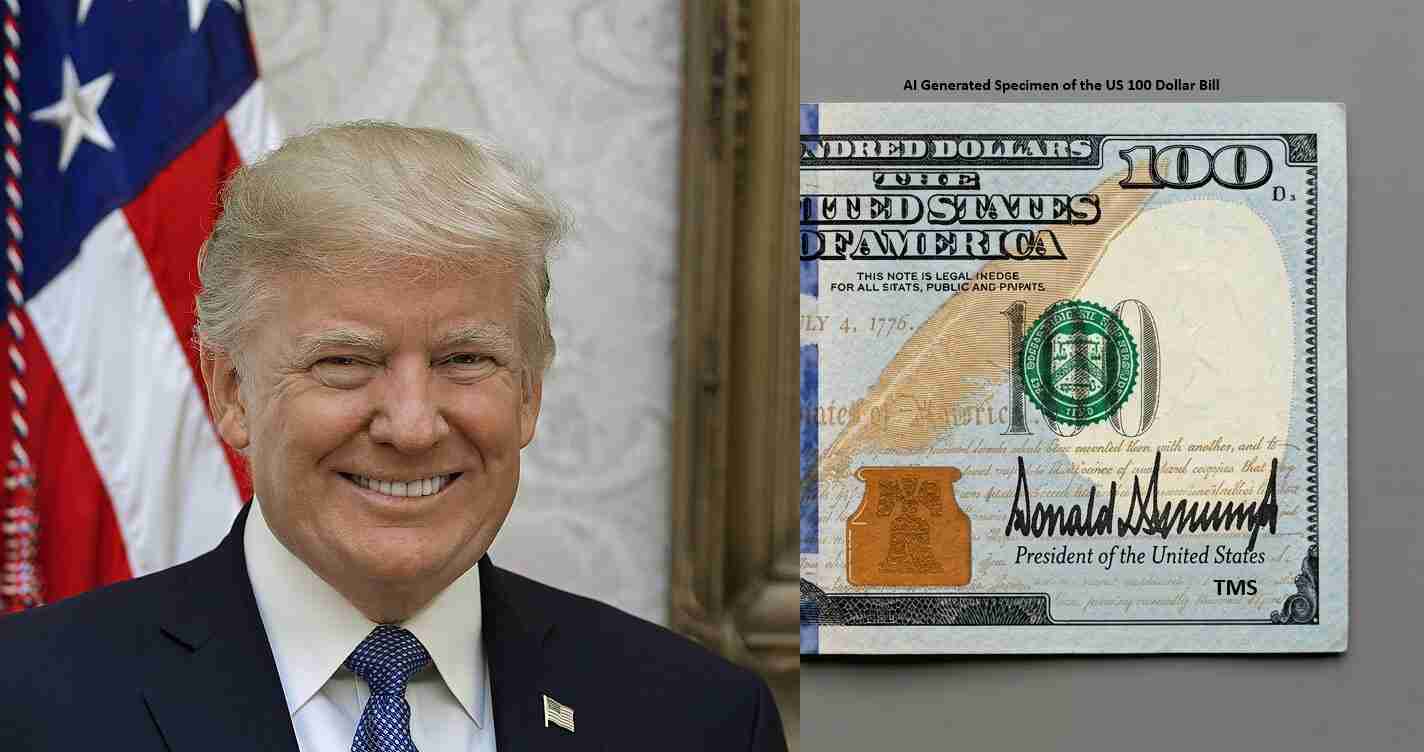
Trump’s signature to appear on U.S. bills for 250th anniversary, a first for a sitting president
The U.S. Treasury Department announced March 26, 2026 that President Donald Trump’s signature will be added to all future U.S. paper currency, the first time a sitting president’s name will appear on bills as part of the Semiquincentennial commemoration.
Key takeaways
- Signature on currency: The Treasury will add President Trump’s signature to future U.S. paper currency to mark the nation’s 250th anniversary. (ABC News)
- Unprecedented change: Replaces the Treasurer’s signature for the first time in roughly 165 years and places the president’s signature alongside Treasury Secretary Scott Bessent’s. (Politico, CBS News)
- Production start: The Bureau of Engraving and Printing will begin printing $100 bills with the new signatures in June 2026; other denominations will follow. (CBS News)
What the Treasury said
Treasury Secretary Scott Bessent issued a statement framing the change as recognition of the administration’s economic record. He said:
“Under President Trump’s leadership, we are on a path toward unprecedented economic growth, lasting dollar dominance and fiscal strength and stability. There is no more powerful way to recognize the historic achievements of our great country and President Donald J. Trump than U.S. dollar bills bearing his name, and it is only appropriate that this historic currency be issued at the Semiquincentennial.”
The Treasury statement emphasized the Semiquincentennial purpose and praised the administration’s economic agenda. (Politico, CBS News)
How this fits with coin efforts
The paper-currency decision complements related efforts to place President Trump on coinage. A federal arts panel, the Commission of Fine Arts, recently approved the design of a 24-karat gold commemorative coin featuring President Trump based on an official White House photograph. Supporters say commemorative coins honor history; critics warn of politicizing national symbols. (ABC News, CBS News)
Legal and historical context
Traditionally, signatures on U.S. bills have been those of the Treasury Secretary and the Treasurer of the United States. The addition of a sitting president’s signature breaks that long-standing practice. Some legal observers note federal restrictions that generally bar living people from appearing on regular circulating currency; proponents argue the statute does not clearly prohibit signatures or limited commemorative measures. The Treasury has not publicly provided a detailed legal opinion explaining the change. (ABC News, CBS News, Politico)
Production and logistics
Printing schedule: The Bureau of Engraving and Printing will begin producing $100 bills bearing the signatures of President Trump and Treasury Secretary Scott Bessent in June 2026, with other denominations to follow later in the year. (CBS News)
Existing notes that bear the signatures of former Treasury Secretary Janet Yellen and Treasurer Lynn Malerba remain legal tender and will continue to circulate alongside newly issued bills. Officials have not provided a firm timeline for full rollout or how long the change will remain in effect.
Responses and political reaction
The announcement drew mixed reactions. Supporters, including some Republicans and administration allies, called it a patriotic commemoration and recognition of recent economic gains. Critics questioned the precedent of placing a living president’s name on currency and argued the move politicizes a national symbol. Democratic officials have reportedly opposed related coin initiatives. The Treasury focused its message on honoring the Semiquincentennial and the administration’s economic record rather than engaging with legal or partisan critiques. (ABC News, Politico)
Implications for California
Economic signaling
Many Californians monitor national economic policy closely given the state’s large economy and global trade ties. A decision framed around “unprecedented economic growth” and “lasting dollar dominance” may be received positively by conservative fiscal audiences. Local banks, cash-handling businesses and merchants will need to accommodate new notes as they enter circulation; existing bills will remain legal tender and circulate alongside new ones. (CBS News)
Political impact
California’s political landscape is predominantly Democratic but contains sizable conservative and business constituencies. The change could energize pro-Trump supporters while giving opponents a new issue to criticize as politicization of national symbols. State and local leaders may be asked to respond, especially if commemorative coin sales or events occur in the state. (Politico, ABC News)
Practical concerns for businesses and collectors
Retail and tourism hubs such as Los Angeles and San Francisco, which handle large cash volumes, should prepare for a gradual introduction of new notes and possible public curiosity. Numismatic collectors and dealers may see heightened interest in initial issues — especially the first $100 bills produced in June — and in approved commemorative coins. (CBS News, ABC News)
Legal and reputational risks for institutions
California universities, cultural institutions and state agencies that accept donations or host commemorative events should weigh the optics of association with currency or coinage tied to a sitting president. Some institutions may face internal debate or public criticism about perceived politicization. (Politico)
Background: precedent and unusual steps
This is not the first time President Trump’s name has appeared on government-issued materials — some COVID-19 relief checks bore messaging with his name — but placing a sitting president’s signature on circulating paper currency and removing the Treasurer’s signature is historic. The administration characterizes the change as appropriate for the 250th anniversary and as recognition of a so-called “Golden Age economic revival.” (Politico, CBS News)
Unanswered questions
Key uncertainties remain: how long the president’s signature will appear on notes, whether statutes were amended or reinterpreted, how design and anti-counterfeiting issues were resolved, and whether courts or Congress might challenge the step. The Bureau of Engraving and Printing has not released detailed technical plans for integrating signatures with existing security features. (Politico, ABC News)
Where to watch next
Observers nationwide — and especially in California — will watch for production notes from the Bureau of Engraving and Printing, any legal challenges or congressional responses, and the pace at which new bills enter circulation. The first $100 bills with the new signatures are scheduled for production in June 2026; collectors, cash handlers and officials should prepare for a staged rollout and continuing public debate. (CBS News)



