Yellowstone’s Echinus Geyser, the World’s Largest Acidic Geyser, Reawakens After Nearly Six Years
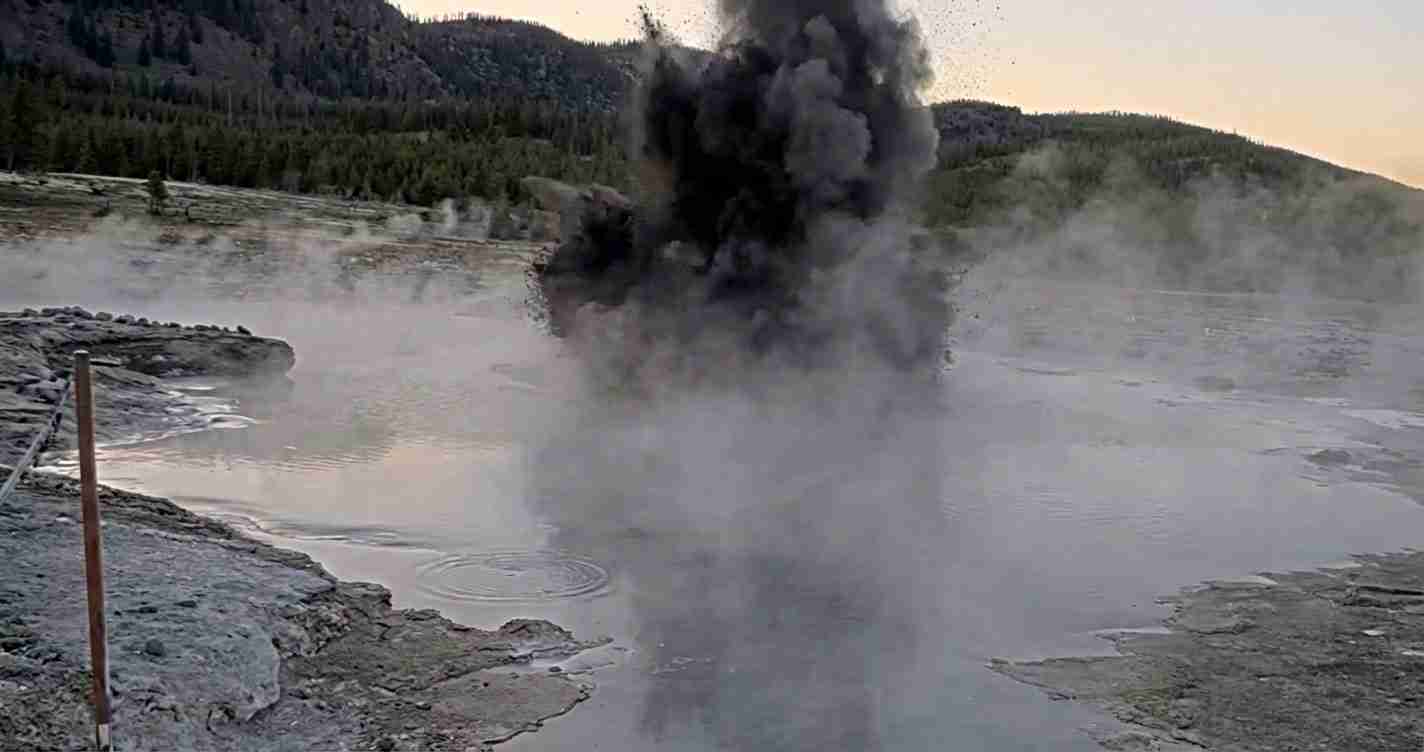
Echinus Geyser in Yellowstone National Park’s Norris Geyser Basin reawakened in February 2026 after nearly six years. The acidic feature erupted repeatedly — surging 20–30 feet — and is being closely monitored by USGS and park scientists this month.
Key takeaways
- Reawakening timeline: First eruption on Feb. 7, 2026, with additional bursts on Feb. 9, 12 and 15 and intensified activity from Feb. 16 onward. Sources: NDTV, ABC News, Popular Science.
- Chemistry & temperature: Waters near 176.5°F (80.3°C) with pH ~3.3–3.6 — acidic like vinegar or orange juice but not so corrosive as to dissolve the geyser plumbing. Sources: NDTV, KTVQ.
- Monitoring: The Yellowstone Volcano Observatory and USGS track Echinus with temperature graphs, seismic instruments and deformation monitoring; temperature spikes near 158°F often indicate eruptions.
- Local implications: Renewed eruptions can spur short-term public interest and research collaborations, particularly among Western U.S. institutions and California-based universities.
Key information
Echinus Geyser first erupted on Feb. 7, 2026, ending nearly six years of dormancy since December 2020. Subsequent bursts were recorded on Feb. 9, 12 and 15 before the feature began producing eruptions every two to five hours from Feb. 16, often lasting two to three minutes and typically reaching 20–30 feet. Sources: NDTV, ABC News, Popular Science.
Water temperatures near Echinus reach about 176.5°F (80.3°C), with measured pH values around 3.3–3.6. These values make the pool clearly acidic while not being imminently destructive to the geyser’s rock plumbing. Sources: NDTV, KTVQ.
What makes Echinus special
Echinus sits in the Back Basin of the Norris Geyser Basin, a high-temperature area known for rapidly changing features. It is one of the world’s few acidic geysers, notable for vivid mineral colors and a spiny cone that inspired the name given by 19th‑century mineralogist Albert Charles Peale, who likened the formations to sea urchins. Sources: ABC News, KTVQ.
Chemistry and formations
Scientists attribute Echinus’s acidity to the mixing of acidic gases with more neutral groundwater rather than to a single concentrated corrosive fluid. The result: a pH comparable to orange juice or vinegar — acidic but not sufficiently corrosive to strip away the geyser’s plumbing.
Visible signatures: Iron, aluminum and arsenic minerals form a vivid red border around the pool, while silica-coated spines scatter around the cone — tangible records of the geyser’s unique chemistry.
Eruption behavior and history
Echinus was relatively regular in the late 20th century; visitors once watched eruptions from close benches and platforms because the geyser was predictable and dramatic. After 1998, a decline in a secondary water source changed the plumbing dynamics and Echinus entered irregular cycles of activity and dormancy. Brief active phases were noted in 2017–2019, and monitoring installed in 2010 recorded only sporadic eruptions in the early 2010s.
Historic heights: Eruptions have ranged from small spurts to blasts up to 75 feet in earlier decades; the recent 2026 activity has been more modest, typically 20–30 feet, lasting two to three minutes. Sources: KTVQ, NDTV, USGS.
Timeline of the February 2026 reawakening
- Feb. 7: First eruption after nearly six years of quiet. Sources: NDTV, ABC News.
- Feb. 9, 12, 15: Additional bursts recorded. Sources: NDTV, ABC News.
- Feb. 16 onward: Activity intensified with eruptions every two to five hours, lasting ~two to three minutes and typically reaching 20–30 feet; by late February the geyser had erupted roughly 40 times during the month before activity waned. Sources: Popular Science, NDTV, YouTube monitoring.
How scientists are reading the signals
The Yellowstone Volcano Observatory and USGS use a network of instruments to track hydrothermal features. For Echinus, temperature graphs are a primary real-time indicator: readings near 158°F often correspond with eruptions, while lower spikes near 104°F may indicate non-eruptive surges.
Seismic data and ground-deformation measurements complement temperature readings, helping scientists infer underground plumbing changes and pressure shifts. The USGS notes that Echinus’s active phases have historically been short; wakes often last a month or two before dormancy returns, and the agency considers continued summer eruptions unlikely in the near term. Sources: Popular Science, USGS, NDTV.
Safety and visitor notes
Park officials and scientists emphasize that hydrothermal areas are fragile and hazardous. Boardwalks and observation points protect visitors and thermal features. Visitors should remain on designated trails, heed park signage, and avoid close approaches — eruptions can be sudden and temperatures extreme. Guidance: USGS / YVO, National Park Service safety materials.
Implications for California
Echinus’s renewed activity carries several near-term implications for California travelers, researchers and policy-minded stakeholders.
Economic and tourism impacts
California is a major source of Yellowstone visitors. A high-profile reawakening can spur short-term interest and bookings — particularly among early-season nature travelers — benefiting airlines, travel agencies and tour operators that serve the western U.S. However, constraints on visitation at sensitive sites mean increased interest may not translate into long-term, large-scale tourism shifts. Source: Popular Science.
Environmental and scientific collaboration
California universities and research institutions with geology and earth-science programs routinely engage in western geothermal research. The 2026 Echinus event provides fresh data for acidic-geyser dynamics and Yellowstone hydrothermal studies, and may prompt partnerships with federal agencies for field work, data analysis and remote monitoring.
Policy and public land perspective
For a politically moderate conservative audience in California, the event highlights the value of science-based monitoring and investment in public-land infrastructure: instrumentation and park maintenance protect visitors, conserve fragile features and support research that informs practical land-management decisions.
Practical effects for Californians
- Travel planning: Book early and use reputable operators; seasonal closures and park rules affect access. Guidance: NPS geology and safety guidance.
- Education & outreach: Schools and public programs can use Echinus as a case study in geothermal systems, hydrology and chemistry (USGS educational materials).
- Conservation awareness: The geyser’s colorful deposits and fragile formations underscore the need for responsible recreation and stewardship to preserve natural wonders.
Reporting and where to follow updates
Scientists and park managers post near-real-time temperature graphs and status updates via the Yellowstone Volcano Observatory and USGS feeds. Journalists and the public can monitor those streams for the latest eruption patterns and monitoring data.
Sources and further reading
- NDTV: “World’s largest acidic geyser in Yellowstone erupts after 6 years”
- ABC News: “Yellowstone’s rare acidic geyser active after years of dormancy”
- Popular Science: “World’s largest acidic geyser erupts in Yellowstone”
- KTVQ: “World’s largest acidic geyser erupts again in Yellowstone after years of silence”
- USGS / Yellowstone Volcano Observatory: “Echinus Geyser back in action now”
- YouTube monitoring compilation: video of eruptions and count data
Reporting based on Times Media Service aggregation of USGS, YVO, NDTV, ABC News, Popular Science, KTVQ and public monitoring feeds.