Tiny blue octopus from Galápagos named Microeledone galapagensis after high‑tech scans reveal new species
Researchers have formally described Microeledone galapagensis, a tiny blue deep‑sea octopus from the Galápagos discovered on an ROV survey in 2015 at about 1,770 meters; micro‑CT scans allowed non‑destructive internal anatomy study and species description.
- New species documented: Microeledone galapagensis described from Galápagos deep‑sea specimens.
- Non‑destructive ID: High‑resolution micro‑CT scans revealed diagnostic internal anatomy without dissection.
- Conservation signal: Discovery highlights hidden deep‑sea biodiversity inside the Galápagos Marine Reserve.
- Broader impacts: Findings reinforce the value of ROV surveys, museum curation and imaging tech for research and policy.
How the octopus was found
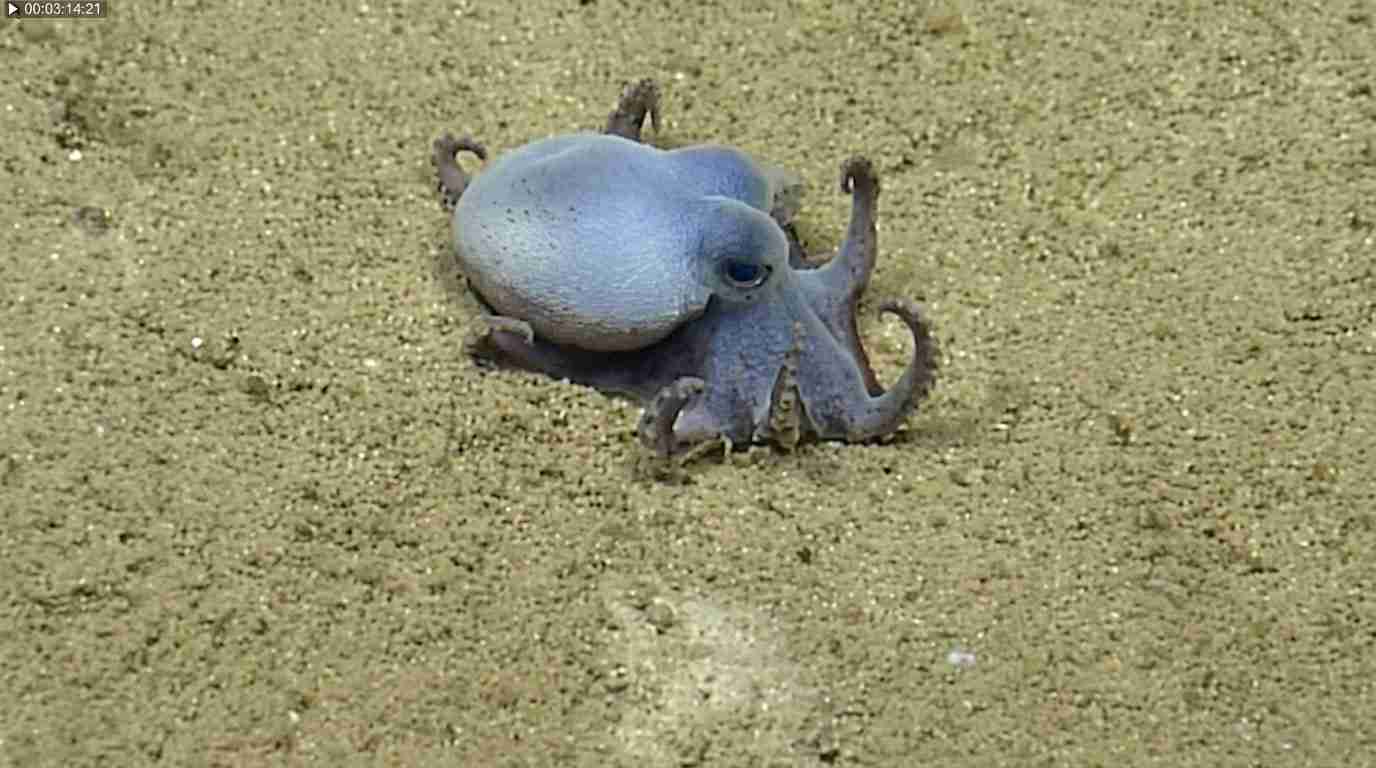
During a biodiversity survey, researchers used a remotely operated vehicle (ROV) to explore deep soft‑sediment plains near the Galápagos. The vehicle’s camera recorded a tiny pale‑to‑blue octopus crawling on sandy ground at roughly 5,800 feet (~1,770 m). Operators returned to the site and collected multiple individuals with the ROV’s sampling tools for study, following standard practice for deep‑sea surveys that have recently yielded dozens of new invertebrates. For expedition context see the expedition context.
Specimens, curation and specialist involvement
Collected animals were preserved and initially curated at the Charles Darwin Research Station in the Galápagos. When local comparisons failed to match known species, type material was sent to cephalopod taxonomist Dr. Janet Voight at the Field Museum (Chicago) for formal description. The peer‑reviewed paper names the species Microeledone galapagensis, with type locality in the Galápagos.
Why identification was hard
Many small, deep‑sea octopuses have simple external features and can appear very similar. Crucial differences often lie in subtle internal structures — the beak and radula, gills, muscle arrangement and reproductive organs. With only a few specimens, researchers prefer non‑destructive methods. In this case, they turned to micro‑CT scanning to image internal anatomy in full detail without cutting the animals.
Micro‑CT: a non‑destructive microscope
Micro‑computed tomography (micro‑CT) uses X‑rays to create detailed 3‑D images. At the Field Museum’s X‑ray lab, preserved octopuses were scanned and virtual models of internal parts were built. Scans revealed the buccal mass and radula, gill structures, parts of the digestive tract and reproductive anatomy — features that provided the diagnostic characters separating Microeledone galapagensis from related groups.
Methodological significance: Using micro‑CT as a primary taxonomic tool lets scientists preserve rare specimens while generating digital datasets that other researchers can re‑examine. For additional method background see the methods reference.
What the new octopus looks like
Published summaries describe the animal as a “tiny blue” octopus: a small mantle and relatively short arms consistent with benthic octopods. ROV lighting and preservation can affect color, so authors relied on internal characters — radula teeth, beak shape and reproductive structures — documented via micro‑CT to support the species diagnosis. The genus name Microeledone indicates a small‑bodied form related to Eledone‑type octopuses; the species epithet galapagensis denotes the Galápagos type locality. Exact measurements (mantle length, sucker counts and arm ratios) appear in the technical paper summarized by the release.
Habitat and likely behavior
The octopus was observed on soft, sandy or silty seafloor in the deep bathyal zone at roughly 1,700–1,800 meters — cold, dark and high‑pressure conditions. The ROV footage showed crawling behavior consistent with a benthic lifestyle. Like similar small deep‑sea octopods, it likely preys on small invertebrates such as worms and crustaceans, capturing prey with its arms and suckers.
Currently known only from the Galápagos type locality, its true range may extend along the eastern tropical Pacific pending further surveys and specimens.
Scientific and conservation significance
This discovery expands the catalog of deep‑sea life around the Galápagos and helps fill knowledge gaps about octopus diversity and evolution in the eastern Pacific. The adoption of micro‑CT scanning represents a methodological advance: precise anatomy can be recorded non‑destructively and shared digitally for future comparison.
“Protected areas such as the Galápagos Marine Reserve contain species still unknown to science, including from understudied deep waters.”
For conservation, the find supports arguments for careful management of deep‑sea activities (e.g., bottom‑contact fishing or mineral extraction) and underlines the value of continued exploration within marine reserves.
Broader context: deep exploration in Ecuador
The new octopus joins other recent discoveries from deep eastern Pacific surveys that use ROVs, advanced imaging and genetics. Teams have described new fish and invertebrate species off Central and South America in recent years. See related coverage from the Scripps Institution of Oceanography for context.
On land, Ecuador and the Galápagos continue producing new species of plants and animals, underscoring how much biodiversity remains undescribed and why modern imaging stories like this resonate with the public.
Implications for California
Economic: Advances in ROV surveys and micro‑CT scanning create demand for engineering, data processing and museum curation services — areas where California universities and companies can play a growing role.
Policy: Policymakers can cite discoveries like this when arguing for funding of ocean research, monitoring and protections against destructive seafloor activities — aligning with stewardship‑oriented conservation priorities.
Social & cultural: The octopus story is a teachable moment for schools, museums and aquariums in California, sparking interest in marine careers and public support for research institutions.
Sources and further reading
- Scripps Institution of Oceanography coverage of recent deep‑sea discoveries
- ROV expedition videos and outreach summaries: ROV video 1; ROV video 2
- Background on Galápagos wildlife
- Related example: new treefrog discovered in Ecuador
- Recent tiny plant species discovery in western Ecuador
Preserved facts, original sources and URLs are included above for verification and further reading.