NASA Completes Artemis II Rocket Rollout to Launch Pad, Clearing Major Hurdle for First Crewed Moon Mission Since 1972
NASA rolled the Artemis II SLS rocket and Orion capsule to Launch Pad 39B on Jan. 17, 2026, in a nearly 12‑hour transfer, moving the first crewed Moon mission since 1972 closer to a February liftoff.
- Nearly 12 hours: The 322‑foot stack moved at under 1 mph along the four‑mile crawlerway, arriving after a 7:04 a.m. EST start and 6:42 p.m. EST arrival.
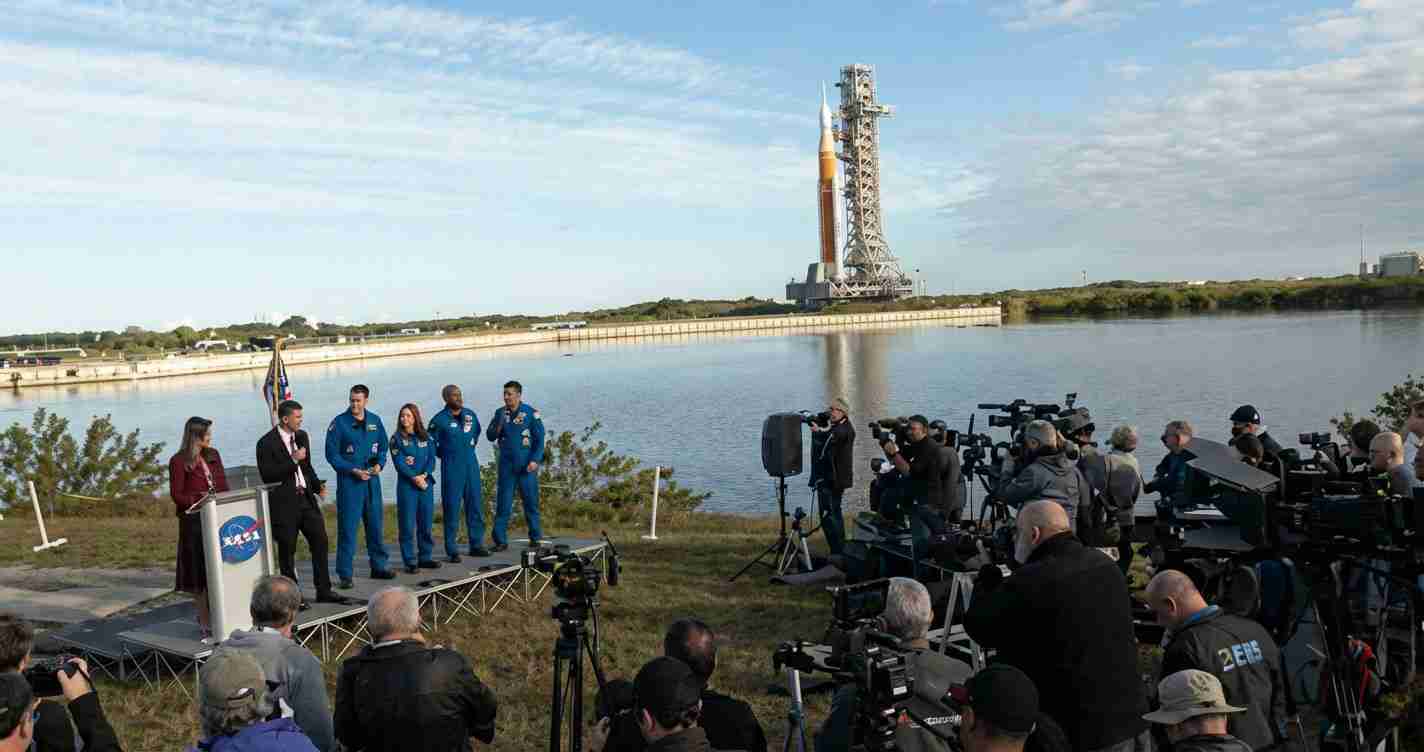
- Crew and mission: Commander Reid Wiseman, Pilot Victor Glover, and mission specialists Christina Koch and Jeremy Hansen will fly a roughly 10‑day crewed lunar flyby.
- Next steps: A wet dress rehearsal is planned for Feb. 2, 2026, with a no‑earlier‑than (NET) launch target of Feb. 6, 2026, pending rehearsals and checks.
- Regional impact: California aerospace firms and workforce stand to benefit from continued Artemis program activity and related contracts.
Rollout: how it unfolded and why it matters
What happened: On Saturday, Jan. 17, 2026, the integrated Space Launch System (SLS) and crew‑capable Orion stack — 322 feet tall — departed the Vehicle Assembly Building on crawler‑transporter‑2 at 7:04 a.m. EST and reached Launch Pad 39B at 6:42 p.m. EST, a nearly 12‑hour transfer across the river‑rock crawlerway. Sources for timing and movement include NASASpaceflight coverage: Artemis II rollout and NASA mission blog: NASA’s Moonbound Artemis II rocket reaches launch pad.
Operational pauses: Teams paused briefly to address minor hardware items and to retract the crew access arm safely; those stops lengthened the transfer but did not halt progress. NASA livestreamed the event following a pre‑rollout briefing, allowing public and media viewing of the operation (Space.com live coverage and briefing, NASA livestream archive).
Why it matters: Moving the flight‑ready SLS and crewed Orion to the pad begins final integrated testing, pad system verification, communication and power checks, propellant interfaces and rehearsals — all with the actual flight stack in launch configuration. These pad integrations directly shape readiness for the upcoming wet dress rehearsal and potential February launch window.
Crew and mission basics
Crew: Commander Reid Wiseman, Pilot Victor Glover, and mission specialists Christina Koch and Jeremy Hansen (Canadian Space Agency). This will be the first crewed Orion flight and the first time humans have traveled to the Moon’s vicinity since Apollo 17 in 1972.
Mission profile: Artemis II will be a roughly 10‑day crewed flyby that does not enter lunar orbit. The plan calls for a pass about 7,500 kilometers beyond the lunar far side, farther from Earth than any crewed spacecraft in history. (Background references: NASASpaceflight, NASA mission blog, Wikipedia: Artemis II.)
Why the schedule is tight — and why NASA says it’s feasible
Compressed timeline: NASA has targeted an accelerated February cadence to maintain program momentum. A wet dress rehearsal is scheduled for Feb. 2, 2026 — a full countdown including fueling and a launch‑hold point — that will validate ground procedures and vehicle performance.
Launch window: The agency lists a no‑earlier‑than date of Feb. 6, 2026, with opportunities driven by lunar geometry, solar power conditions and spacecraft consumables. If the wet dress rehearsal or other factors raise issues, the mission could slip into later February windows or beyond into March–April. (Sources: NASASpaceflight, Space.com, NASA Artemis II mission page.)
Safety first: NASA officials emphasized that while operational efficiencies enabled an accelerated plan, safety and thorough checks remain the priority; timelines can shift if issues arise.
Technical and logistical details worth watching
- Pad integrations: Engineers will test pad umbilicals, electrical systems and communications with the vehicle in place; any discovered leaks, electrical anomalies or software issues could delay the plan. (Source: NASASpaceflight.)
- Wet dress rehearsal outcomes: The Feb. 2 exercise will include fueling SLS and a full countdown to a launch‑hold point; results will determine whether the Feb. 6 NET remains viable.
- Weather and range: Florida weather, Atlantic sea conditions and Eastern Range scheduling shape exact launch opportunities; forecasts closer to the attempt will inform go/no‑go decisions.
- Operational checklist: Post‑rehearsal tasks include final software updates, flight hardware closeouts, crew run‑throughs and additional verifications on SLS and Orion systems.
How this rollout connects to the larger Artemis program
Artemis II is a critical incremental step: uncrewed Artemis I proved core systems in 2022; Artemis II will validate crewed operations and Orion systems with humans aboard; and Artemis III aims for a crewed lunar landing. A successful Artemis II flyby reduces risks ahead of landing attempts and informs procedures, hardware checks and schedules for future missions. (See NASA Artemis II mission page.)
Implications for California
Economic impact: California aerospace firms supplying Orion components, avionics, software and ground systems stand to benefit from continued Artemis activity — sustaining engineering, manufacturing and testing jobs across the state.
Political consequences: Visible milestones like this rollout can bolster bipartisan arguments for continued federal investment in aerospace, benefiting California contractors and research institutions.
Social and cultural effects: The mission may spur hiring demand, expanded training programs and STEM outreach at K–12 and university levels. Communities that host aerospace companies often treat such milestones as civic achievements that reinforce California’s tech and space identity.
Practical applications: Californians should expect national media and NASA livestream coverage, potential downstream business opportunities for satellite and lunar systems firms, and increases in internships and university partnerships tied to high‑profile missions.
What California watchers should track next
- Wet dress rehearsal results on Feb. 2, 2026, to assess viability of the Feb. 6 NET.
- Hardware or pad issues discovered during final integrations at Launch Pad 39B.
- Official launch date confirmation and visitor viewing package releases from Kennedy Space Center.
- Contract and procurement announcements affecting California‑based contractors tied to Orion, SLS and lunar support systems.
“This rollout moved a crewed Moon mission one significant step closer to flight readiness while exposing the remaining technical checks that must be closed before launch.”
Sources and further reading
- NASASpaceflight coverage: Artemis II rollout
- NASA mission blog: NASA’s Moonbound Artemis II rocket reaches launch pad
- Space.com live coverage and pre‑rollout briefing
- NASA Artemis II mission page
- Artemis II launch listing and details
- Wikipedia: Artemis II overview and mission history
- Kennedy Space Center visitor information for Artemis II
- NASA livestream archive of rollout briefing