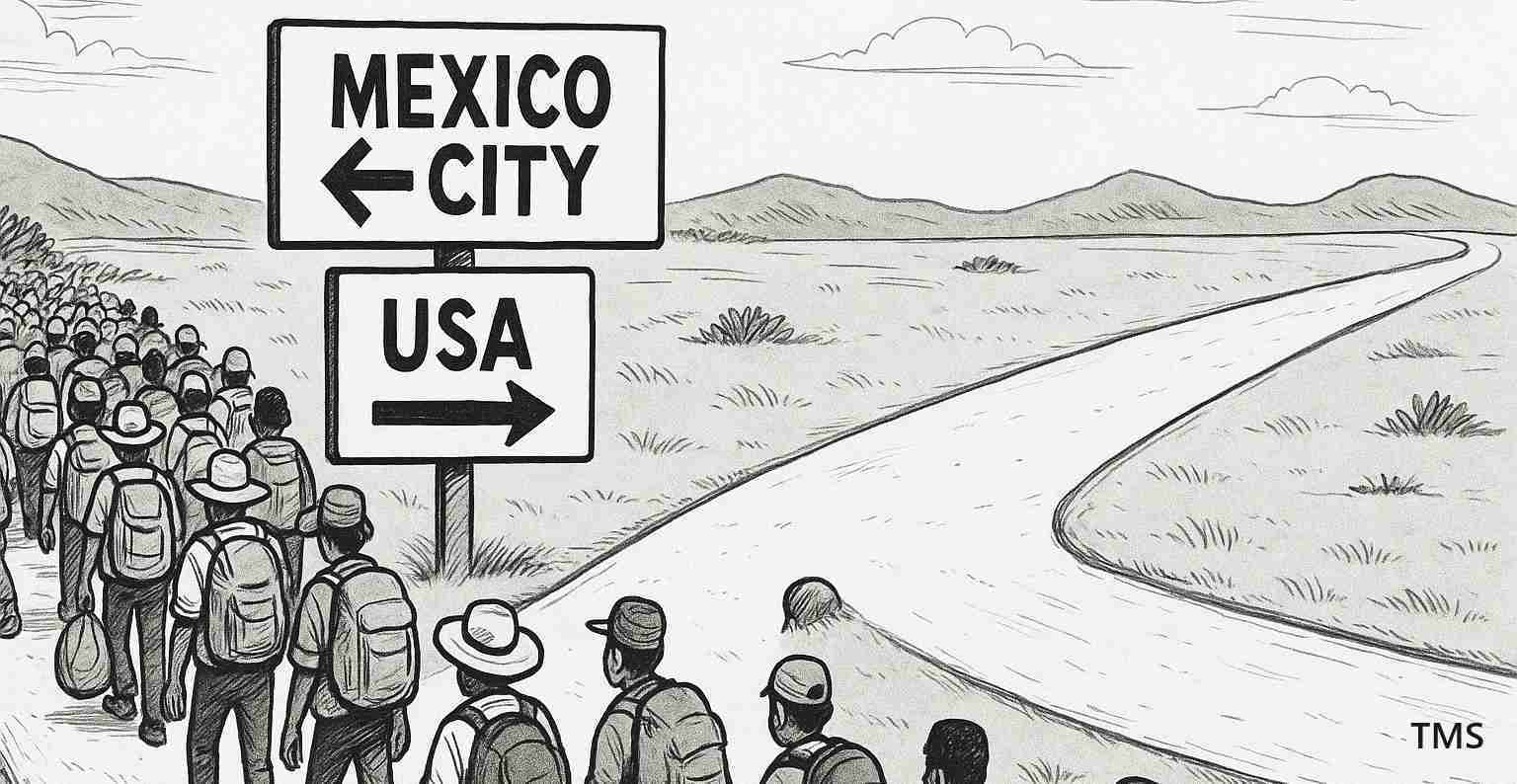
Cuban-led migrant caravan heads to Mexico City as Trump-era policies steer would-be U.S. migrants toward Mexico
A migrant caravan of about 1,200 people—largely Cubans with migrants from Honduras, Ecuador, Brazil, Haiti, Nicaragua and Venezuela—has departed Tapachula aiming for Mexico City to seek legal status and work amid U.S. asylum barriers and delays in processing.
Key takeaways
- About 1,200 migrants, led largely by Cuban nationals with groups from Honduras, Ecuador, Brazil, Haiti, Nicaragua and Venezuela.
- Destination shift: The caravan’s stated aim is Mexico City to regularize status and find work rather than attempting entry to the U.S.
- Drivers: Long asylum/residency waits in Chiapas, poor local economies, and fear of U.S. rejection tied to Trump-era immigration measures.
- Dangers: Weather, food shortages, violence and alleged scams charging 3,000–20,000 pesos for paperwork help.
- Organization: Largely leaderless and coordinated via social media rather than formal groups.
Main story
Overview: A caravan estimated at about 1,200 people has departed Tapachula, in southern Chiapas, with an explicit aim to reach Mexico City. The group is led largely by Cuban nationals and includes migrants from Honduras, Ecuador, Brazil, Haiti, Nicaragua and Venezuela. Migrants say they are pursuing legal pathways and employment inside Mexico rather than risking the northern trek to U.S. checkpoints.
Size and composition; sources
Reports place the caravan at roughly 1,200 migrants, mostly Cuban, with other nationalities represented. See coverage from Mexico News Daily and Anadolu Agency for initial reporting.
Why the caravan aims for Mexico City
Many migrants say the migration math has changed: with asylum access narrowed and processing channels curtailed at the U.S. border, the perceived risk of attempting to cross north has increased. Instead, migrants are choosing Mexico City to pursue permits, jobs, and access to NGOs and consulates. Observers note removal or restriction of tools that once streamlined asylum claims—raising the bar for those aiming for the U.S.—and citing effects from measures enacted during the Trump administration.
Tapachula context: Chiapas is one of Mexico’s poorest states and faces severe capacity constraints. Migrants and advocates report processing waits of up to 10 months for asylum or residency filings, leaving people undocumented and unable to work while they wait—factors that push families to relocate to larger cities with stronger labor markets.
The journey: hazards, corruption and community risks
The caravan confronts traditional migration hazards: exposure to extreme weather, limited food and water, theft, and violence. Humanitarian groups warn of organized extortion and scams—so-called “assistants” or lawyers have allegedly charged between 3,000 and 20,000 pesos (~$150–$1,000) for paperwork assistance, sometimes without delivering results. Shelters and aid organizations in Tapachula are stretched thin as arrivals continue.
“The pressure on local services is intense,” humanitarian sources say, noting limited shelter capacity and long waits for official processing.
Reporting on these dangers and alleged scams can be found in Mexico News Daily.
Mexican authorities’ inconsistent response
Authorities in Mexico have responded unevenly: at times allowing groups to travel for days before offering documentation, transport or shelter. This ad hoc handling reflects tensions between humanitarian obligations, public-order concerns and limited resources. Mexico has become both a destination and a transit country; some migrants intend to settle permanently while others use urban centers as staging points for later attempts north.
The “Trump effect” and U.S. policy dynamics
Policy drivers: Many migrants and analysts point to changes introduced or expanded during the Trump administration—measures targeting asylum claims and tightening entry—as central to the shift in expectations. The end or restriction of expedited/app-based processes and increased deportations have created a reputational barrier: even if policy changes later, backlogs and removal risks continue to influence decisions.
Further context and analysis on border policy and its regional effects are available from WOLA and other reporting sources.
Social media, leaderless organization and grassroots movement
Unlike earlier caravans with identifiable leaders or sponsorship, this movement appears largely leaderless and organized through social media and informal networks. That decentralization enables quick mobilization but complicates coordination with aid groups and authorities, and increases vulnerability to misinformation. Humanitarian groups caution that social platforms spread both useful legal information and dangerous rumors—affecting choices en route and expectations about life in Mexico City.
Regional patterns and a longer-term shift
Over the past eight years, caravans have often aimed for the U.S. border. The current caravan reinforces an emerging pattern: Mexico serving increasingly as a final destination or major waystation, reflecting economic pressures across Latin America and the Caribbean, capacity constraints in border regions like Chiapas, and incentives shaped by U.S. immigration policy.
Implications for California
Economic and labor impacts
- Workforce shifts: Fewer immediate arrivals to the U.S. could ease near-term pressure on California border services but might later increase legal migration flows or secondary movement to the state.
- Remittances and trade: Where migrants settle changes remittance flows and economic links; Cuban migrants in Mexico may alter patterns that historically affected California communities.
Political and policy consequences
- Border politics: The caravan’s shift illustrates the practical effect of strong federal immigration policy and may shape debate in California over state support for migrants versus calls for stricter enforcement.
- Legal obligations: Reduced immediate demand on California shelters does not eliminate long-term responsibilities toward asylum seekers who may later seek residency or family reunification in the state.
Social and community effects
- Diaspora networks: California’s Latino and Cuban communities may re-route support—funds, legal aid and advocacy—to relatives and newcomers now in Mexico City.
- Public services: If migrants later arrive in California through legal channels or reunifications, planners must remain prepared for needs in education, health care and housing.
Security and enforcement considerations
- Enforcement focus: Some conservatives may view the caravan as evidence that tougher policy reduces illegal crossings; others note the need for coordinated regional strategies to protect migrants and crack down on criminal networks.
- Humanitarian balance: Policymakers face trade-offs between enforcement and funding for legal aid, resettlement agencies and cross-border cooperation.
Sources and further reading
Full reporting and updates referenced in this article include: Mexico News Daily, Anadolu Agency, and WOLA’s weekly U.S.-Mexico border update.
Bottom line: The caravan’s choice to seek Mexico City underscores an evolving migration landscape shaped by economic conditions, processing delays in southern Mexico, social media coordination, and the lingering effects of past U.S. immigration policy—posing practical challenges for policymakers and communities on both sides of the border.