American Airlines passenger removed after expletive tirade over loudspeaker video; new episode adds to wave of disruptive American Airlines passengers
American Airlines has faced a string of disruptive-passenger incidents that led to removals, highlighting challenges for crews enforcing safety and order. From profanity and intoxication to defiance captured on social media, these episodes strain operations and passenger trust.
Key takeaways
- Unverified viral clip: A TikTok video shows a woman swearing at crew and police after an alleged loudspeaker incident; key facts remain unconfirmed.
- Pattern of disruption: Verified American Airlines incidents often involve intoxication, profanity, interruptions of safety procedures and removals before takeoff.
- Enforcement rationale: Crews remove passengers to protect safety, avoid escalation, and limit operational impact; legal penalties can follow.
- Social-media limits: Viral posts amplify incidents but frequently lack full context or official corroboration.
Key information
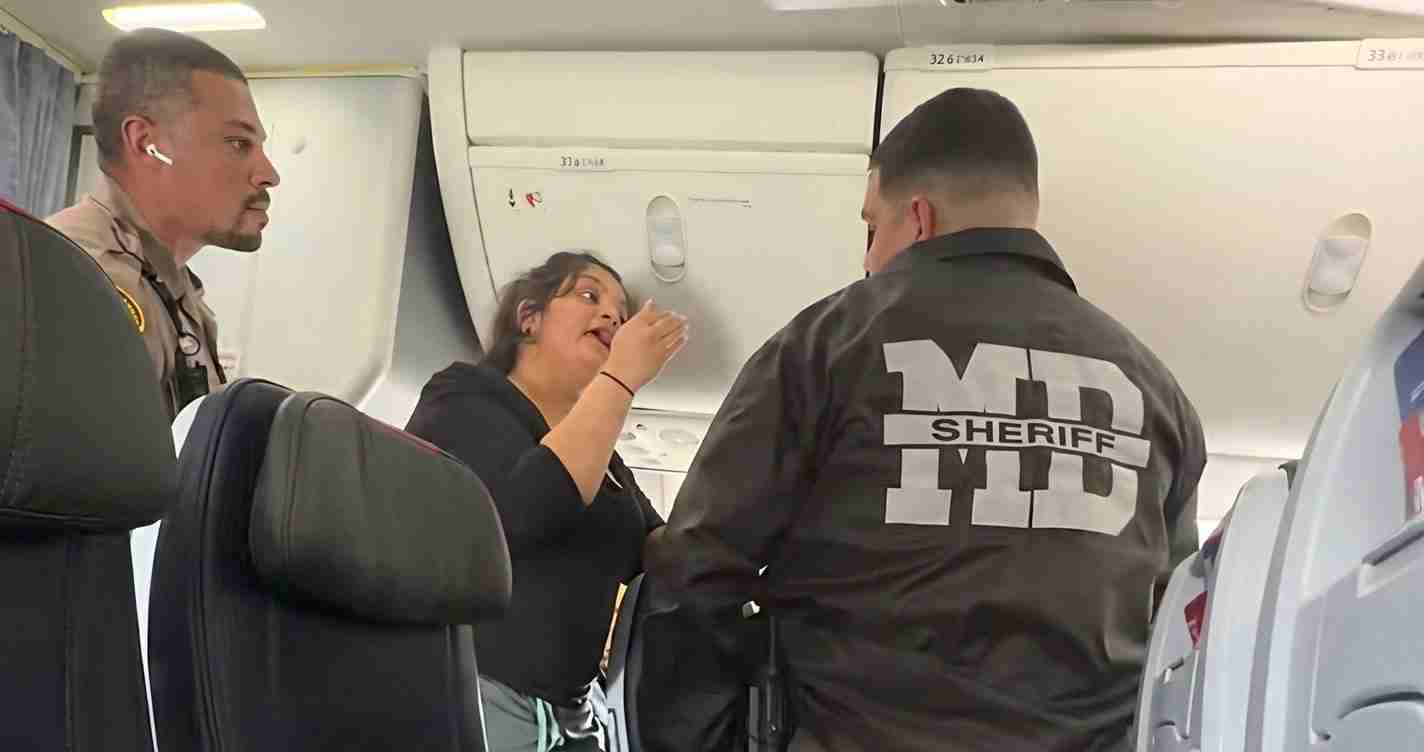
What circulated: A social media video shared on TikTok and reposted elsewhere — dated Feb. 26 on the post — appears to show a woman swearing at cabin crew and arguing with police as she is led off a plane. In the clip she says she “played a video for 30 f**king seconds at 50% sound” and asserts she stopped after a second warning.
Verification limits: As of this report, no independent news outlet or public record reviewed here confirms the exact incident, the route (reported as Miami to Tampa), or the identity of the woman in the video. Key details in the social post could not be verified.
What we found about the American Airlines passenger removed for playing a phone video on loudspeaker
A short clip circulating on TikTok appears to show a passenger using profane language while being escorted off an aircraft by two police officers and flight attendants. In the footage — dated Feb. 26 on the post — the traveler says she played a clip “for 30 f**king seconds at 50% sound,” claims she stopped after the crew’s second warning and challenges officers about free speech while being led down the aisle.
Important caveat: Reporters were unable to independently confirm the date, flight number, Miami-to-Tampa route, the passenger’s identity, or whether alcohol was a factor. Descriptions calling the passenger “drunk” appear to originate from other passengers’ commentary in the video. No matching news release, police report, airline statement or Department of Transportation filing was found at the time of this report; treat the social post as unverified material.
Patterns seen in related American Airlines incidents
Although this exact video lacks independent confirmation, it fits broader trends documented across American Airlines and other carriers:
- Intoxication and abusive language: Several verified incidents involved passengers appearing intoxicated and directing profanity or racial slurs at crew and fellow travelers. One widely shared example is documented by Live and Let’s Fly — “Drunk passenger launches racist tirade on American Airlines flight; removed before takeoff”.
- Preflight disruption: Passengers have been removed for interrupting safety briefings or refusing to comply with crew instructions; one such report is archived by AOL — “Rude passenger booted off American Airlines flight after arguing with crew”.
- Common features: These cases frequently involve social-media posts, crew intervention before or after departure, and engagement by airport security or local police. Airlines cite safety and rule enforcement when removing passengers.
Why airlines remove passengers and how enforcement works
Crew responsibility: Flight crew are charged with safety and may refuse carriage to passengers who ignore instructions, create hostile environments, or threaten operations. Federal law permits penalties for interfering with crew duties.
Practical aims: Removing a passenger before takeoff reduces the risk of in-flight escalation, diversions or safety incidents. When law enforcement responds, outcomes range from warnings and citations to arrests, depending on local statutes and the behavior involved.
Social media’s role: amplification and uncertainty
TikTok, Twitter and other platforms have become primary channels for these episodes to reach the public. Viral clips spur debate over airline responses, passenger conduct, and crew treatment.
At the same time, rapid sharing often obscures context: posts may omit beginnings of incidents, mislabel routes, or lack official follow-up, making verification essential.
Flight attendant abuse incidents: the human and operational toll
Flight attendants report cumulative stress from repeated verbal abuse, threats and harassment. Alcohol-fueled confrontations and profanity increase safety concerns and lower morale. For travelers, disruptions lead to delays, missed connections and cancellations; for airlines, recurring incidents raise operational costs and reputational risks.
Source attributions and reporting limits
This article draws on social-media posts about the Feb. 26 video and on reporting of similar, verified incidents. The Live and Let’s Fly item is available via Live and Let’s Fly — “Drunk passenger launches racist tirade on American Airlines flight; removed before takeoff”. A separate account of a passenger removed for interrupting a safety briefing is archived at AOL — “Rude passenger booted off American Airlines flight after arguing with crew”.
Searches of public records and news databases did not find a confirmed match to the Miami-to-Tampa scenario or any official statement from American Airlines, local police, or airport authorities tied to the social video described. If airline or law enforcement statements are released, this story will be updated.
Implications for California
Airport safety and delays: Major California gateways (LAX, SFO, SAN) handle millions of travelers; disruptive passengers can cause cascading delays that affect national schedules.
Law-and-order expectations: Many Californians expect consistent enforcement, including firm but fair removal of disruptive passengers to support safety and deter repeat offenses.
Business and tourism: Visible incidents that make headlines can erode confidence in air-travel reliability and influence corporate travel decisions.
Crew safety and staffing: Repeated abuse can harm morale and complicate recruitment and retention for airline staff operating in the state.
Practical traveler advice: Follow crew instructions, limit loud or intrusive behavior, be mindful of alcohol, and remember that viral clips may not show the full context. Removal of a passenger can cause delays, gate changes, and rebooking.
How readers can help verify incidents
Eyewitness social posts can aid reporting but often lack essential details. Reporters welcome flight numbers, official statements, police report numbers or other documentation. Official statements from American Airlines, airport police or municipal authorities are most reliable for confirming whether a removal occurred and why.
Sources
- Live and Let’s Fly — “Drunk passenger launches racist tirade on American Airlines flight; removed before takeoff”
- AOL — “Rude passenger booted off American Airlines flight after arguing with crew”
If airline or law enforcement officials release statements or reports tied to the Feb. 26 social media clip, this story will be updated to include their accounts and any investigative findings.