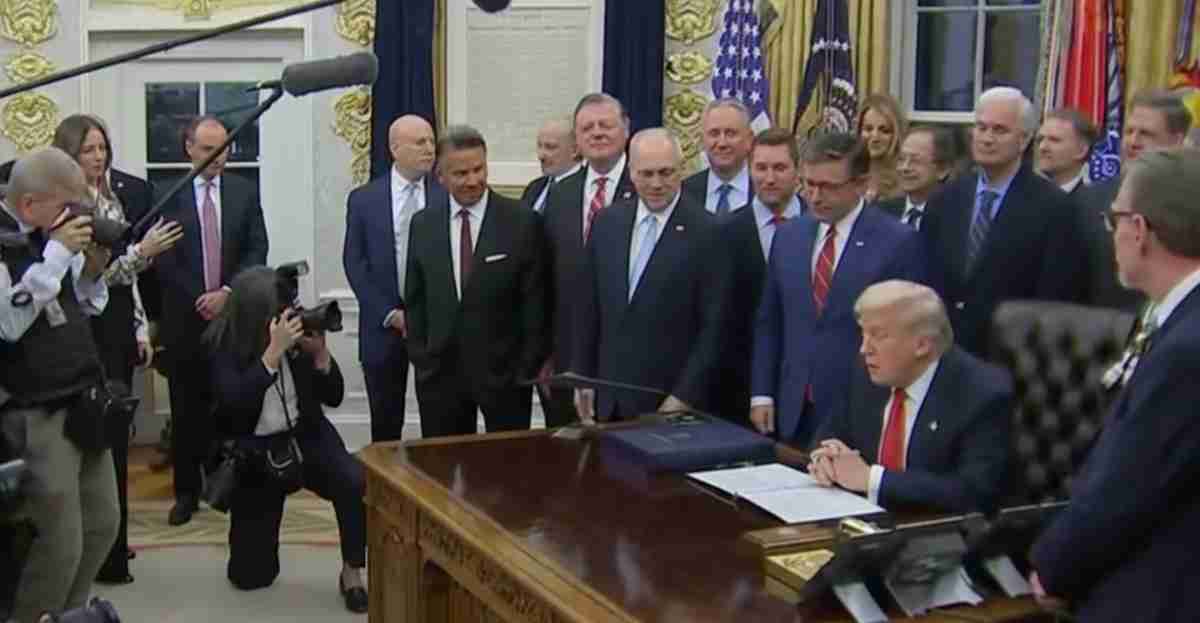
Trump ends government shutdown with stopgap funding; federal workers get back pay as Congress races to avoid another lapse
President Donald Trump signed a stopgap funding bill on November 12, 2025, ending a 43-day government shutdown, restoring operations and guaranteeing back pay for federal workers while Congress negotiates a longer-term deal by January 30, 2026.
- Shutdown ended: stopgap funding bill signed Nov. 12, 2025, after 43 days.
- House vote: Passed 222 Yea, 209 Nay — only six Democrats crossed and two Republicans opposed.
- Short-term fix: The bill fully funds three annual appropriations and keeps the rest of the government running through Jan. 30, 2026.
- Workers covered: Federal employees are ordered back to work and guaranteed back pay; agencies will resume curtailed services.
What the bill does and what returned
The stopgap package fully funds three annual appropriations bills and temporarily funds remaining government operations through January 30, 2026, buying lawmakers time to negotiate a full-year deal. Agencies that curtailed or halted services during the shutdown are ordered to resume normal operations.
Restored services include airport screening and air travel security, certain economic data releases, and assistance programs such as SNAP that were disrupted. Agencies will prioritize clearing backlogs, but some restarts will take days to weeks to normalize.
Federal employees and back pay
Federal workers are being recalled and are guaranteed back pay for the period they were furloughed or ordered to work without pay. The legislation reverses layoffs that were ordered or threatened during the shutdown and protects workers at least through the January deadline.
How quickly employees see payments depends on agency payroll processing; the bill creates the legal basis for those payments and requires agencies to process arrears.
Political dynamics that led here
The 43-day shutdown intensified partisan divisions over budget priorities. President Trump publicly blamed Democrats, calling opponents “extremists” in some statements, while Democrats argued the stopgap omitted extensions of Affordable Care Act tax credits they demanded.
“Extremists” — a term used by the President in the debate over spending and priorities during the shutdown.
The stopgap cleared after a small number of senators and only six House Democrats broke with their party; the narrow 222-209 House vote highlights how contentious negotiations remain and signals difficult budget talks ahead.
What happens next: key deadlines and fights ahead
- Jan. 30, 2026 deadline: Congress must pass a longer-term funding package before this date to avoid another shutdown.
- Mid-December health care vote: Republicans pledged to hold a vote by mid-December on extending ACA subsidies and tax credits, but passage is not guaranteed.
- Budget negotiations: Expect fights over health care subsidies, discretionary spending levels, border security and other priorities; failure to compromise risks renewed disruption.
- Political aftershocks: Lawmakers who voted for or against the stopgap may face scrutiny from primary voters and interest groups.
Economic and operational fallout still to settle
The shutdown cost agencies time and money, creating staffing shortfalls, slower processing and backlogs. Restarting operations will take varying lengths of time; analysts will monitor how data interruptions affect economic series. The guaranteed back pay helps workers, but contractors, seasonal staff and small businesses may face lingering effects.
Implications for California
Economic impact: California employs more than 300,000 federal workers and many contractors; restoring federal operations means paychecks, resumed contracts and renewed grant flows for research and infrastructure.
Social services: SNAP and Agriculture Department programs that were disrupted will resume, easing pressure on food banks and social service agencies.
Travel and ports: Restored TSA and customs staffing reduces bottlenecks at airports and ports (including Los Angeles and Long Beach), helping holiday travel and cargo movement.
Border and immigration services: Resuming staff is essential for processing asylum claims, naturalization applications and other services that affect families and employers in border communities.
State planning: California officials can proceed with planning for disaster assistance, grants and programs, though the temporary nature of the bill means continued caution.
What this means for Californians who work for or with the federal government
Federal employees in California will return to their jobs and are eligible for back pay covering the 43-day disruption. Contractors and businesses dependent on federal activity should see increased work as agencies restart, but the Jan. 30 deadline means uncertainty remains until Congress reaches a full agreement.