Noem criticizes CBS News after Margaret Brennan names ICE agent in Renee Good shooting
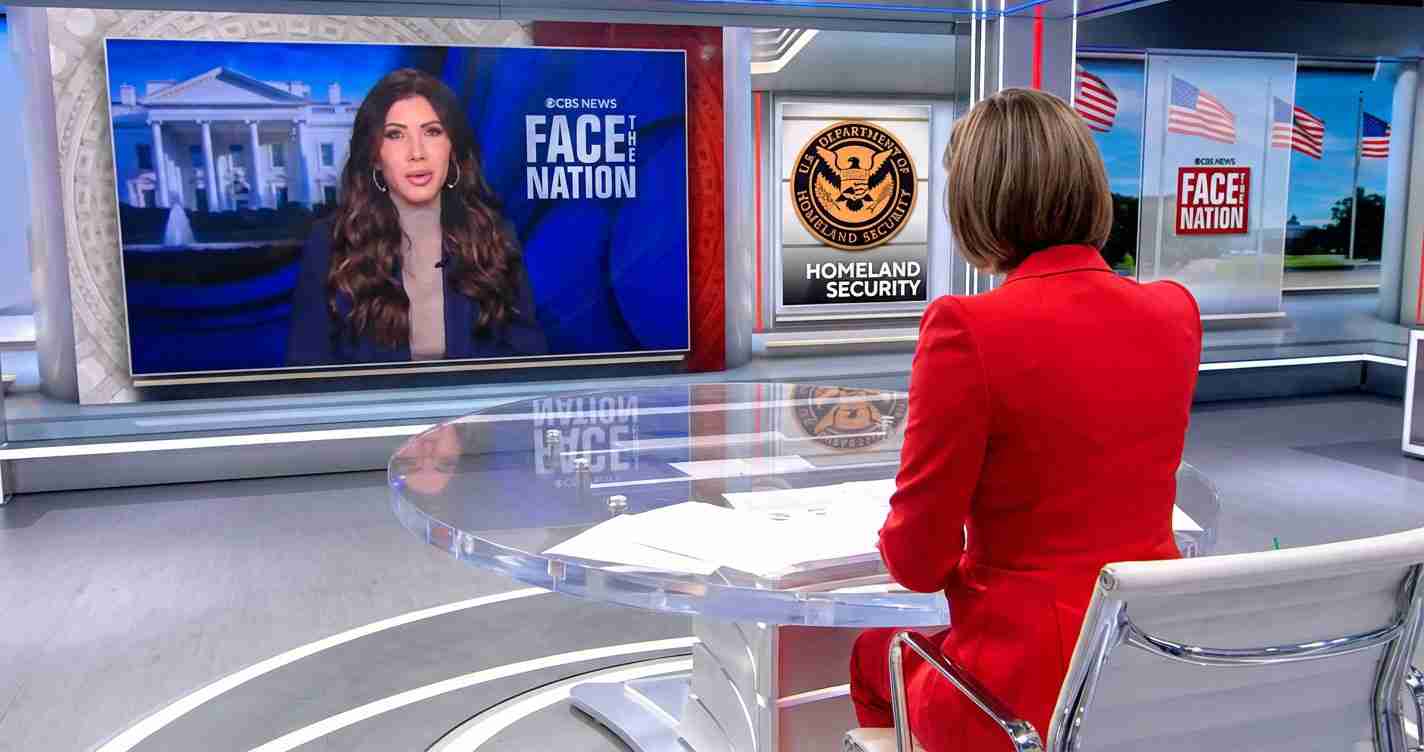
DHS Secretary Kristi Noem rebuked CBS News host Margaret Brennan after Brennan identified ICE agent Jonathan Ross — the officer who fatally shot Renee Good — saying naming him sparked a dramatic spike in threats and risked doxxing.
- Noem interrupted the interview: “Don’t say his name,” urging restraint after Margaret Brennan named the ICE agent during a CBS News segment (CBS News).
- Agent identified: Jonathan Ross is reported as the ICE officer who shot Renee Good on Jan. 7, 2026, in Minneapolis (Wikipedia; CBS News).
- Tensions over transparency vs. safety: Noem warned of an 8,000-percent increase in death threats after the name circulated, while critics argue identifying officers can be essential for accountability (CBS News).
What happened in Minneapolis
Video footage reviewed by investigators shows Renee Good in her vehicle stopped sideways in the street. ICE agent Jonathan Ross approached on foot; as Good moved the car to drive away, Ross fired three shots — one through the windshield and two through the driver’s side window, striking Good in the chest, forearm and head. She was treated and later died at Hennepin County Medical Center. CPR on the scene began about eight minutes after the shooting, according to reporting (Wikipedia; MPR).
Official accounts and disputes
Federal officials and DHS described the shooting as an act of self-defense, saying agents were put at risk and that Ross believed the vehicle posed a threat. Local leaders and outside analysts have questioned parts of that account; reviewers noted they could not independently confirm whether Good’s vehicle struck the officer (CBS News; Wikipedia).
The agent’s injuries and status
Two U.S. officials and DHS sources told reporters that Ross suffered internal bleeding in the torso; he was treated in a hospital and released the same day. DHS described him as an experienced officer and noted prior injuries on the job; Ross is a 10-year ICE veteran who had been seriously hurt previously (CBS News).
CBS reported Ross has not returned to duty and is in a safe location after receiving multiple death threats — a claim Noem referenced when warning about doxxing and threats (CBS News).
The Noem–Brennan exchange
During a televised interview, Margaret Brennan asked Noem about the ICE agent’s injuries and whether he had returned to work. Brennan named the officer — identified in reporting as Jonathan Ross — and Noem interrupted:
“Don’t say his name. I mean, for heaven’s sakes, we shouldn’t have people continue to dox law enforcement when they have an 8,000-percent increase in death threats against them.”
Brennan replied that no one condones violence and referenced reporting that the agent had internal bleeding but was released the same day (CBS News).
Public reaction and protests
The shooting prompted nationwide reaction: large protests and demonstrations followed, including a major peaceful protest outside an ICE facility in Broadview, Illinois, and clashes in Minneapolis. Community mobilization has included vigils, rallies and calls for accountability (ABC7 Chicago).
Public polling shows the incident split opinion: a Quinnipiac survey reported by ABC News found 53% of voters said the shooting was unjustified, reflecting broad concern about use of force in immigration enforcement (ABC News/Quinnipiac poll).
Local and federal leaders
Minneapolis Mayor Jacob Frey criticized the federal narrative after reviewing video, calling some claims “bullshit.” Minnesota Gov. Tim Walz declared Jan. 9 “Renee Good Day” to honor the victim. Federal authorities announced investigations and later said they were reviewing the conduct of local officials for possible obstruction (Wikipedia).
Family statements and scene care
Good’s family has spoken publicly; her wife, Becca Good, released statements expressing grief and calling for accountability. Reports note that although ICE agents receive CPR training, medics on scene did not administer immediate CPR — a point drawing further scrutiny (MPR; MPR on CPR).
Notably, Good’s dog at the scene was reported unharmed.
Legal and investigative status
Federal investigators opened probes into the use of force; local leaders and state officials are also under scrutiny for their handling of the aftermath. Sources indicate the investigation is ongoing and accounts remain contested. Media reporting continues to evolve as investigators review video and evidence (CBS News; Wikipedia).
Why the naming of the agent matters
Noem’s rebuke frames a wider debate: she argued that naming the agent exposed him to doxxing and threats that could endanger safety and hamper investigations. Critics counter that transparency and public accountability sometimes require identification, especially when force results in death — revealing a tension between protection of officers and public oversight (CBS News).
Implications for California
Public safety and policing: The national spotlight could intensify local calls for body-camera access, independent reviews, and clearer timelines for sharing video in officer-involved deaths. Agencies may face renewed pressure to explain policies on CPR, use of force and officer identification (MPR; CBS News).
Immigration enforcement: California’s large immigrant population and federal facilities mean the case may sharpen debates over cooperation with ICE and sanctuary policies (Wikipedia).
Political consequences: Moderate conservatives may weigh officer safety against transparency; lawmakers could push for reforms that protect officers from targeted threats while improving accountability (ABC News/Quinnipiac poll).
Risk management: Noem’s warning about a spike in death threats suggests agencies should review threat assessment practices and media outlets may revisit editorial guidelines on naming officers in active investigations (CBS News).
Community impact: Expect demonstrations, vigils and policy campaigns focusing on immigration enforcement, police practices and victim advocacy across California communities (ABC7 Chicago).
Reporting notes and sources
This report draws on national reporting and public records cited by news organizations. Key sources include CBS News, the compiled incident timeline on Wikipedia, local reporting on medical response (MPR), protest coverage (ABC7 Chicago), and national polling reported by ABC News/Quinnipiac.
Note: This story will be updated as investigators release new information and as local and federal reviews continue.