
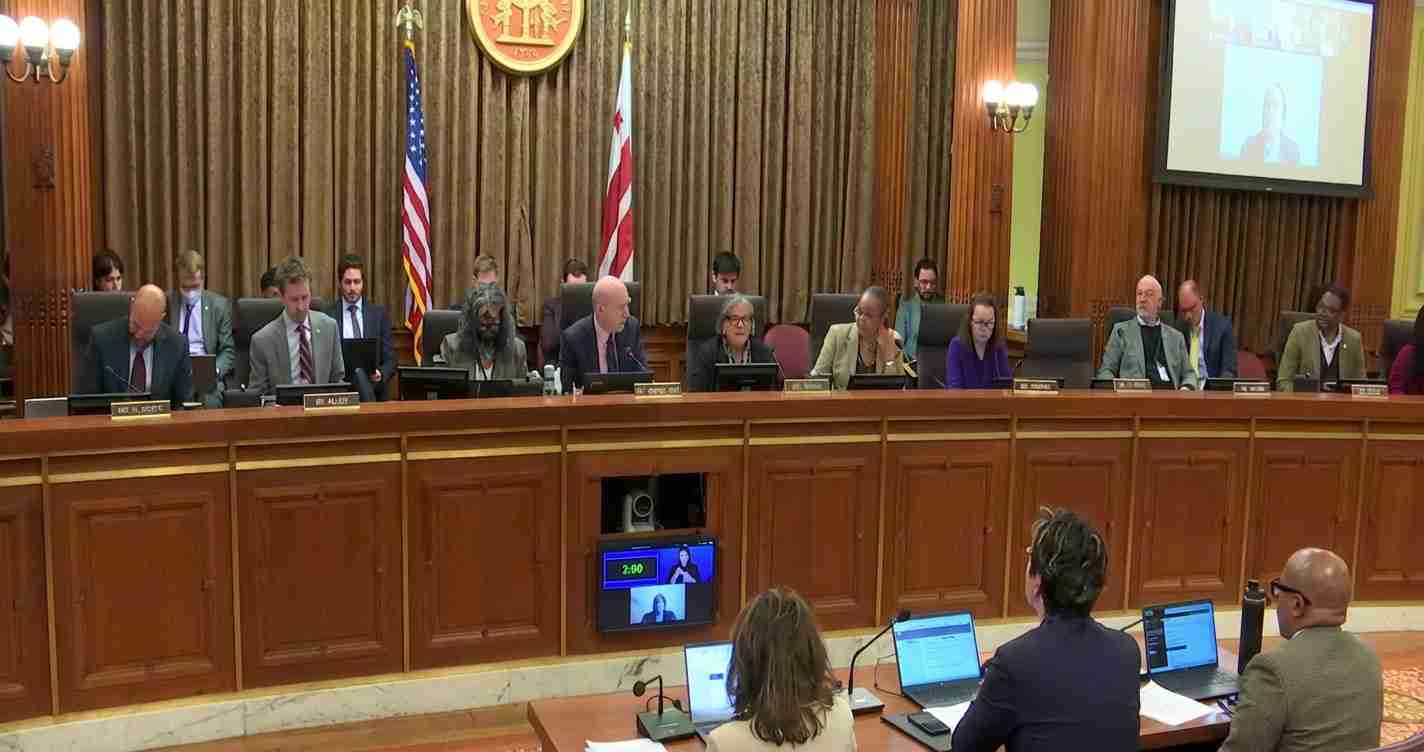
House moves to overturn D.C. tax decoupling, setting up clash over local revenues and federal tax policy
The House is set to vote on February 4, 2026, on a resolution seeking to overturn Washington, D.C.’s December 2025 tax decoupling, a move city officials say could create a $600–$658 million revenue shortfall and force cuts to essential services.
- House action: The House passed a disapproval resolution, 215–210, aimed at blocking D.C.’s December 2025 tax decoupling.
- Local impact: D.C. officials estimate a $600–$658 million multiyear revenue loss that could threaten education, public safety and human services.
- Political divide: Republicans led by Rep. Brandon Gill framed the vote as tax relief; Democrats and D.C. leaders call it an attack on home rule and local anti-poverty measures.
Background: What D.C.’s decoupling does
In December 2025, the Washington, D.C. City Council approved emergency measures to decouple the District’s local tax code from changes at the federal level. The move was designed to shield local revenues from provisions in President Trump’s One Big Beautiful Bill Act that would eliminate taxes on tipped income, overtime pay and certain business tax items.
Decoupling lets D.C. compute taxable income under local rules rather than automatically adopting federal changes. The package also expanded local benefits — including a local child tax credit and a larger earned income tax credit — aimed at helping low- and moderate-income families. Local advocates and the DC Fiscal Policy Institute say those credits could lift roughly one in five D.C. children out of poverty.
Source: video reporting
Federal response: The House resolution
House Republicans introduced a disapproval resolution intended to undo D.C.’s decoupling, forcing a political test over Congress’s oversight of the District and whether federal tax policy should preempt local efforts to preserve municipal revenues.
Rep. Brandon Gill (R-Texas) led the effort and told Fox News Digital he did not expect any Democrats to support the bill.
The House vote was largely along party lines and tight — 215–210 — reflecting a national split over tax priorities and local control.
Timing and procedure
The vote, originally slated for February 3, 2026, was pushed to February 4, per D.C. Delegate Eleanor Holmes Norton. Under the Home Rule Act, congressional disapproval resolutions can bar the District from implementing certain local laws if Congress votes to overturn them — a procedure used previously in disputes between Congress and the D.C. government.
Source: YouTube reporting on the scheduled House vote and D.C. officials’ warnings
Washington D.C. budget impact: the numbers
D.C. officials — including the Mayor’s budget staff and Delegate Norton — warn invalidating the decoupling law would create a multi-hundred-million-dollar hole in the city’s budget. Estimates reported by local officials put the five-year impact at roughly $658 million, while others describe an immediate annual shortfall near $600 million.
Those shortfalls could force cuts to education funding, reductions in first-responder staffing, and scaling back of human services programs relied on by vulnerable residents. City leaders say the loss would come while the District already faces congressional restrictions that have prevented D.C. from using roughly $1 billion of its own funds.
Sources: local video reporting on D.C. decoupling; video reporting on scheduled vote and warnings
Positions: Republicans and Democrats
Republicans backing the resolution argue the priority is returning more money to people and businesses as tax relief — eliminating taxes on tips and overtime and trimming business taxes to help working families and small employers.
Democrats and D.C. officials counter that implementing those federal tax changes locally would be devastating to the District’s budget and disproportionately harm low-income residents who would lose newly expanded credits. City leaders say decoupling was a targeted emergency step to preserve a stable tax base and protect anti-poverty measures.
Both sides frame the debate in values attractive to moderate conservatives: Republicans emphasize putting money in private hands and limiting government reach; D.C. leaders stress fiscal responsibility and protecting funding for core services.
Legal and political stakes
The dispute raises fundamental questions about the balance between Congress’s oversight of the District and D.C.’s ability to set tax policy for local needs. Democrats say federal intervention undermines home rule; Republicans say Congress has a role when local laws conflict with federal priorities.
The vote has electoral implications: members of Congress may use it to signal priorities — tax relief vs. defense of local self-governance — and the narrow margin highlights how closely divided lawmakers are on enforcing federal tax policy uniformly.
Reporting and sources
This report draws on public statements, congressional coverage and local video reporting. Key source material includes:
- YouTube reporting on D.C. decoupling and congressional action
- YouTube reporting on the scheduled House vote and D.C. officials’ warnings
- Public comments reported by Fox News Digital from Rep. Brandon Gill (cited by the author)
Implications for California
A federal rollback of D.C.’s decoupling could have indirect consequences for California budgets and taxpayers. If Congress reasserts that localities must follow federal tax rules, California policymakers might face pressure to re-examine how state and local taxes interact with federal changes.
Local governments across California could look to D.C.’s example to shield municipal revenues or expand credits for low-income residents, while businesses operating across jurisdictions would monitor payroll, tipped-worker and business tax treatments.
Politically, the dispute highlights competing priorities for moderate conservative voters in California: targeted tax relief for working families and small businesses versus preserving local funding for public safety, schools and human services. Local officials should review whether their tax codes automatically conform to federal changes or allow decoupling and update budget forecasts accordingly.
Sources: YouTube reporting; YouTube reporting
Bottom line
The House vote on D.C.’s decoupling pits federal tax priorities against local fiscal stability. If the resolution passes and Congress invalidates the decoupling, D.C. officials warn of substantial budget cuts that could affect thousands of residents and strain city services.



