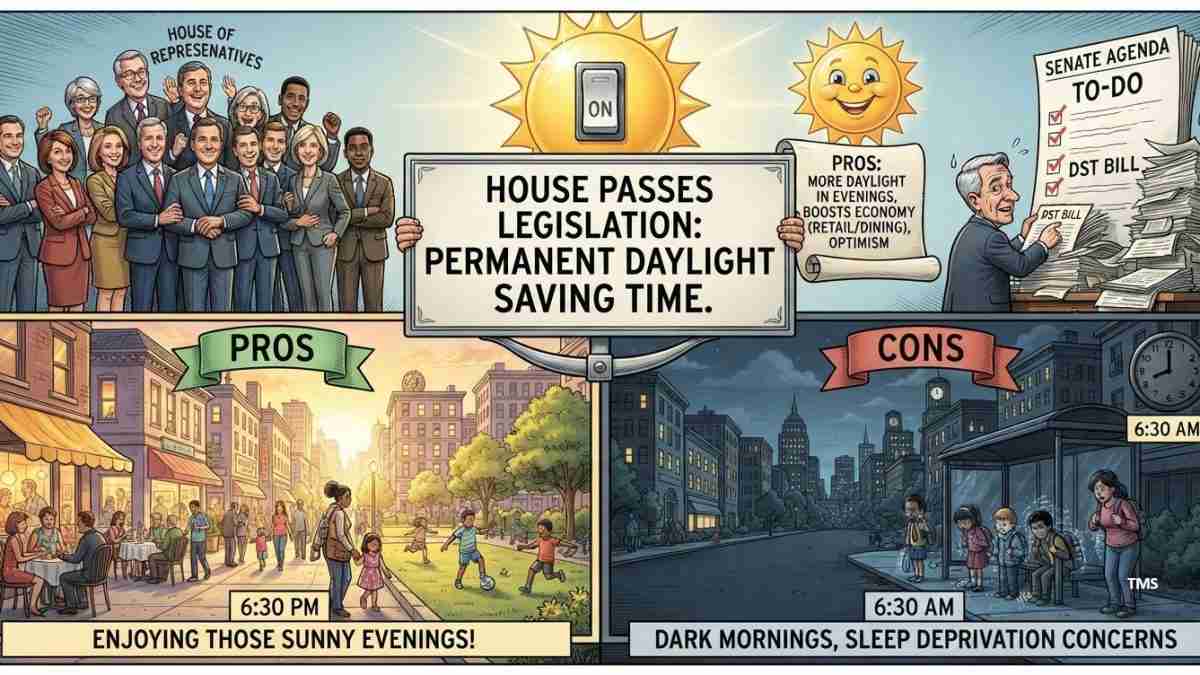
WASHINGTON, July 17 (DC Times Online) — The U.S. House of Representatives voted 308-117 on July 14 in Washington to pass H.R. 139, the Sunshine Protection Act, a bill that would make daylight saving time permanent nationwide.
If the measure eventually becomes law, the country would stop changing clocks twice a year. Right now, most of the United States moves clocks forward in the spring and back in the fall.
What the bill would change
Daylight saving time is the part of the year when clocks are set one hour ahead. Supporters say keeping that schedule year-round would end the seasonal clock changes that can disrupt sleep, schedules and travel.
In a House Committee on Energy and Commerce press release, Rep. Vern Buchanan called the measure his bipartisan Sunshine Protection Act and said, “Today, the House took an important step toward ending the outdated practice of changing our clocks twice a year by passing my bipartisan Sunshine Protection Act.”
The same committee release said Chairman Brett Guthrie and Rep. Gus Bilirakis also backed the bill.
Would every state have to follow it?
Not necessarily. Reuters, NBC News, CBS News and The New York Times each reported that the legislation includes some form of state opt-out or exemption, although the outlets described that process differently.
CBS News noted that Hawaii and most of Arizona already stay on standard time year-round, which shows that timekeeping rules can already vary in limited ways across the country.
What happens next?
The House vote sends the bill to the Senate. The Senate would still need to approve it before the change can become law.
The reporting reviewed does not show the Senate taking up the measure yet, so the bill’s future remains uncertain.
The committee release also does not spell out an effective date. That means the exact timing of any change would depend on the final law’s wording and the rest of the legislative process.