
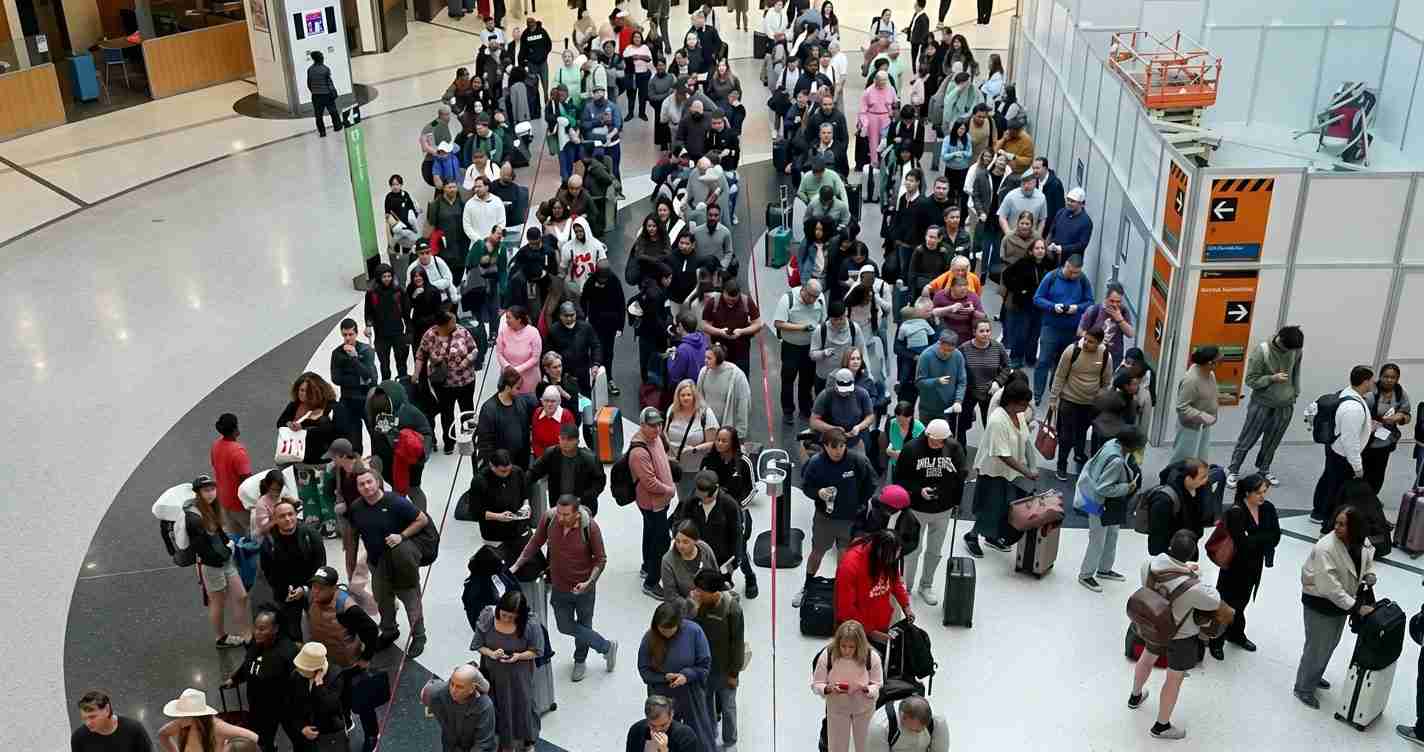
Trump orders ICE agents to airports to help TSA amid DHS shutdown, sparking security and civil‑liberties questions
WASHINGTON (Times Media Service) — President Donald Trump announced ICE agents would deploy to U.S. airports beginning March 23 to assist unpaid TSA officers amid a partial DHS shutdown, aiming to ease long security lines and travel disruptions during the busy spring‑break period.
Key takeaways
- ICE deployment: The president said Axios that ICE agents will go to airports to help TSA amid a partial DHS shutdown and staffing shortages.
- Operational gaps: The White House referred reporters to the president’s social post; DHS and TSA provided no immediate operational specifics (Axios).
- Training limits & risks: Officials say ICE would handle non‑technical tasks, but critics warn untrained personnel at checkpoints could miss threats and spark confrontations (CNN State of the Union clip; video reporting).
What the administration says
“Going to airports to help our wonderful TSA Agents,” the president posted, blaming Democrats for blocking funding and saying operations would include immigration enforcement. He did not list airports, exact duties, or the number of agents to be sent — the White House instead pointed reporters to his social post (Axios).
Acting DHS Assistant Secretary Lauren Bis emailed that the president is using “every available resource” to help travelers facing nationwide delays (Axios).
Planned roles and training limits
Tom Homan said he is coordinating with acting ICE Administrator Todd Lyons on plans intended to free TSA officers for technical screening (X‑ray and other operations). Homan emphasized ICE personnel do not receive the typical four‑to‑six months of TSA training for complex screening work; instead, he said ICE would perform simpler tasks such as guarding exits, verifying IDs and securing lanes to speed passenger flow (CNN State of the Union clip; Axios).
Former TSA Administrator John Pistole said there are no legal barriers to authorizing ICE to staff checkpoints but warned it would be unwise without proper training; untrained screeners could miss threats, creating a security risk (Axios).
Unions, lawmakers and safety experts push back
AFGE, the largest TSA union, criticized the plan. AFGE President Everett Kelley said placing untrained personnel at checkpoints creates a security gap and undermines public safety (Axios).
Sen. Patty Murray (D‑Wash.) warned sending ICE to airports risks wrongful detentions and harassment of travelers. The Association of Flight Attendants‑CWA said the move would create “chaos” instead of paying TSA officers who are working without pay during the shutdown (Axios).
Reports from airport terminals showed mixed public reactions: some welcomed measures to cut long lines, while others feared immigration agents in security areas and potential clashes (video reporting).
Operational unknowns and legal questions
Officials have not specified which airports will see ICE agents, how many will deploy, or how immigration enforcement will be balanced with screening duties. The White House repeatedly pointed back to the president’s post for details, leaving operational specifics unclear (Axios).
Experts say legal authority exists for ICE to work in airports but stress that moving immigration enforcement into checkpoints raises civil‑liberties concerns and practical challenges. Security specialists note screening is technical: missing threats at a checkpoint could have catastrophic results, and confrontations between travelers and immigration officers could slow operations and erode trust (Axios).
Why the move now: the shutdown and staffing gaps
A partial DHS shutdown began in mid‑February after a budget standoff. Democrats sought policy changes related to ICE and CBP in exchange for funding; Republicans resisted tying funding to those changes and to separate funding for agencies including the Coast Guard, TSA and FEMA. Negotiations have repeatedly failed, and Democrats blocked DHS funding for the fifth time last Friday, prolonging the shutdown (Axios).
Since Feb. 14, roughly 366 to 400 TSA officers have resigned, worsening delays and long lines during a peak travel season (Axios; video reporting).
A related flashpoint: the January 2026 deaths of U.S. citizens Renée Good and Alex Pretti during federal immigration operations in Minneapolis have intensified Democratic demands for ICE oversight and policy limits; Republicans opposed tying funding to such policy changes, contributing to the impasse (Axios).
Risks to travelers and TSA morale
Security experts warn mixing immigration enforcement and checkpoint duties could create openings for bad actors. Untrained officers may not reliably identify weapons, explosives or cleverly concealed contraband. Even if ICE remains in non‑screening roles, their presence could lead to disputes over immigration status and detentions in busy terminals, slowing passenger flow and causing crowding (Axios).
TSA officers working without pay may feel further demoralized if outside agents take over essential work or if duties shift without clear protections. Unions argue the solution is restored funding so TSA staff can be paid and normal operations resume (Axios).
Implications for California
- Economic impact: Major hubs such as LAX, SFO and SAN face high spring‑break travel volumes; longer lines or operational changes risk flight delays, missed connections and lost tourism revenue (Axios; video).
- Public safety: Replacing technical screening with untrained staff could miss threats; local law enforcement and airport agencies may need to manage any confrontations or detentions involving undocumented travelers.
- Political consequences: Deploying ICE at California airports could become a flashpoint, prompting protests, legal challenges from civil‑rights groups, and responses from local leaders (Axios).
- Social effects: Communities with large immigrant populations may fear increased encounters with immigration agents, potentially deterring travel and raising profiling concerns (Sen. Murray; unions — Axios).
- Practical advice: Californians should arrive earlier, carry valid ID, monitor airline and airport notices, and expect potential changes to operations. Legal aid groups may see increased demand if immigration actions occur in terminals (Axios; video reporting).
Sources and further reading
- Axios: “Trump says ICE agents will go to airports to help TSA amid DHS shutdown”
- CNN State of the Union clip (Tom Homan)
- Video reporting from airport terminals
Update note
This report will be updated as officials release operational details about which airports are affected, how many ICE agents will deploy, and what rules will govern their work in security areas.



