Valley City meteor lights up daytime sky, triggers sonic booms across Ohio and neighboring states
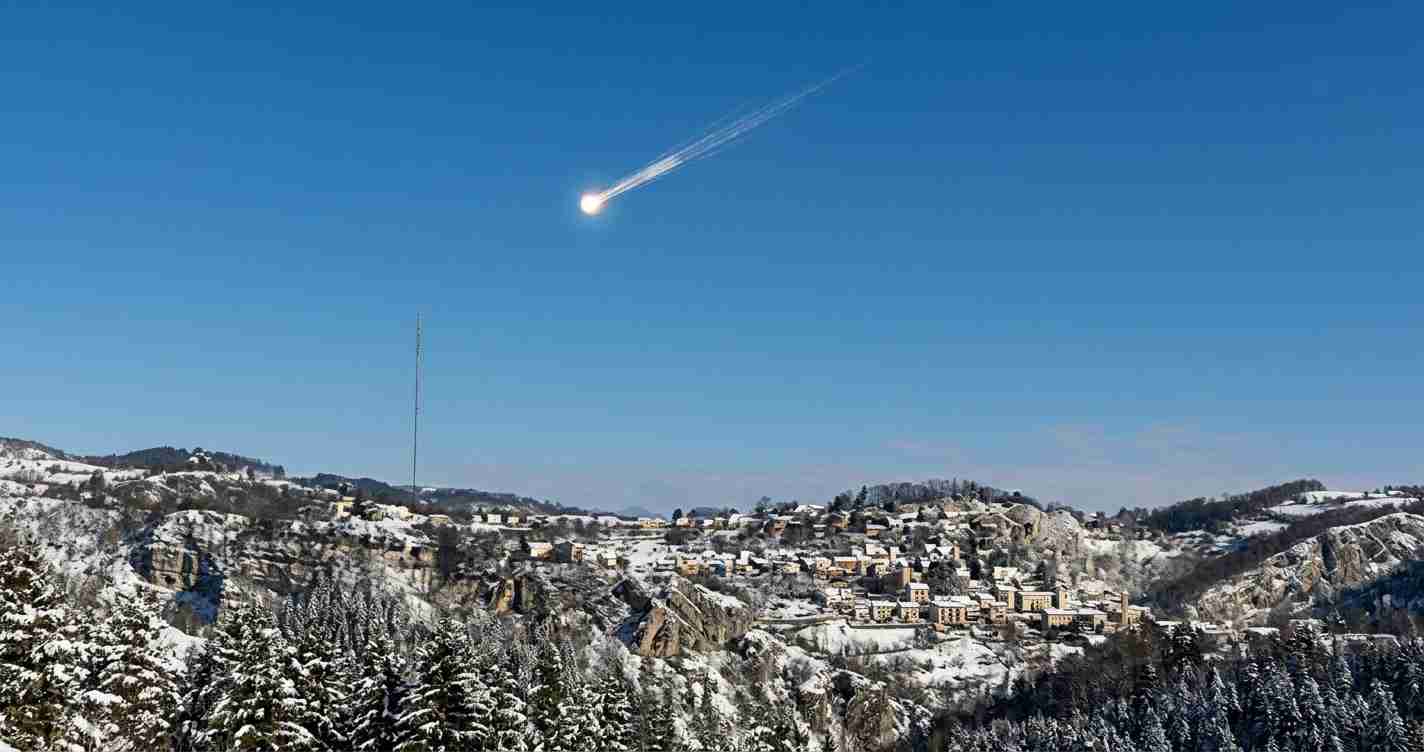
A roughly six-foot, 7‑ton meteor flashed across Northeast Ohio just before 9 a.m. ET on March 17, 2026, fragmenting above Valley City and producing a daytime fireball and sonic booms heard across multiple states, startling residents.
Key takeaways
- Object: ~6 feet in diameter, about 7 tons; fragmented ~30 miles above Valley City.
- Energy: Fragmentation released energy estimated at ~250 tons of TNT, creating pressure waves that reached the ground.
- Visibility: Daytime fireball seen from Lake Erie to the District of Columbia; booms reported across several states.
- Impact: No immediate injuries or infrastructure damage reported; meteorite recovery efforts may follow in Medina County.
What happened
A bright daytime fireball entered the atmosphere over Lake Erie just before 9 a.m. ET and streaked southeast at about 40,000 mph, passing through roughly 34 miles of the upper atmosphere before fragmenting above Valley City, Ohio. (Sources: Signal Cleveland, Los Angeles Times.)
The video and the boom
An employee at the National Weather Service office in Pittsburgh recorded dramatic video showing a bright, fast-moving object with a glowing trail that burst and vanished. The visual record corresponded to loud, thunder-like booms reported across the Ohio Valley and beyond. (Report and video: Signal Cleveland.)
How the boom formed
Experts say the meteor produced successive booms rather than a single sonic clap. As the object moved at and above the speed of sound it compressed air along its track, creating pressure waves that reached the ground as a series of explosive-sounding booms. JonDarr Bradshaw of the Great Lakes Science Center explained that air piles up in front of such a fast object, producing sound along the entire track.
NASA’s preliminary analysis — cited in regional coverage — placed the initial sighting above Lake Erie and estimated the fragmentation energy at about 250 tons of TNT, energy that propagated as the pressure waves residents heard. (Los Angeles Times.)
Fragmentation and the chance of meteorites
The object broke into pieces about 30 miles above Valley City, with fragment paths continuing southward toward Medina County. Officials warned that while fragments could produce recoverable meteorites, most of the original mass typically disintegrates; scientists estimate that generally less than 5% of a meteor’s mass reaches the ground.
Local emergency management in Lorain and Medina counties reported no immediate damage or injuries and said recovery teams would use video, eyewitness reports and radar to narrow search areas. (Local report: Signal Cleveland.)
Why a daytime fireball is unusual
Daytime fireballs are rare because an object must be extremely bright to be seen against sunlight. Officials called the Valley City event probably a once-in-a-lifetime thing
for many residents, noting it was remarkable both for its brightness and for producing audible booms across a broad region. (Signal Cleveland.)
What officials are doing and what to watch for
NASA and regional agencies collect video, radar and eyewitness data after such events to map trajectories and identify likely fall zones. Local police, fire, and emergency managers monitored reports of falling debris and encouraged residents to report potential meteorites to authorities and preserve finds for scientific study.
Investigators will use weather cameras, dashcams, security footage and public videos to refine the fall area and measure composition, speed and energy release.
Context: meteors, public safety and preparedness
Large meteors that reach the ground are rare; most burn up high in the atmosphere. Still, sudden loud booms highlight the need for clear emergency communication channels among law enforcement, emergency managers and the public to reduce confusion and guide any search or safety actions.
Implications for California
The immediate economic impact outside Northeast Ohio is minimal, but scientific opportunities — meteorite recovery and analysis — can spur modest research funding and university partnerships. California institutions with planetary science programs may engage in study and exhibits.
Practical lessons for California officials and residents:
- Maintain current, tested emergency contact channels to speed information flow.
- Preserve potential meteorite finds and report them to local authorities and nearby universities or museums.
- Encourage public reporting of videos and eyewitness accounts to help scientists map fall zones.
- Favor cost-effective partnerships with federal and academic programs rather than duplicative systems.
Sources
Signal Cleveland: Meteor sonic boom near Cleveland / Northeast Ohio March 2026
Los Angeles Times: 7‑ton meteor that fell from Cleveland sky is seen several states away
Reporting contributed by Times Media Service; video recorded by a National Weather Service Pittsburgh employee; NASA preliminary analysis cited in Los Angeles Times coverage.