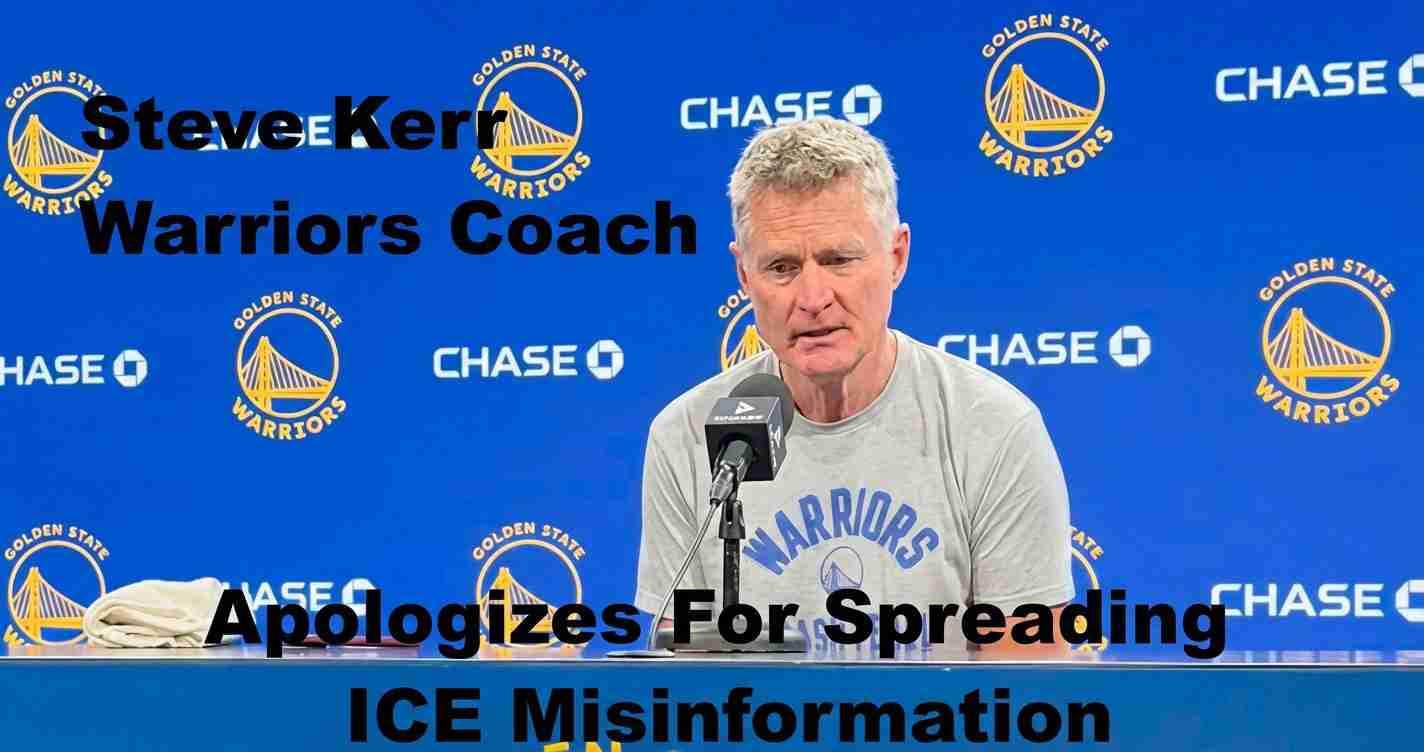
Steve Kerr apologizes for ‘misspeaking’ after ICE comments; DHS, records challenge coach’s account
Golden State Warriors coach Steve Kerr apologized Friday after misstating ICE operations in Minneapolis, saying agents were targeting young children; DHS and operation records disputed his account, noting arrests of convicted violent offenders and detailing a child’s protective custody.
Key takeaways
- Kerr said he “definitely misspoke” when telling OutKick he believed agents were “taking 5‑year‑old kindergartners.”
- The remarks followed tense days in Minneapolis after two fatal shootings and protests, covered by Fox News and Awful Announcing.
- The Department of Homeland Security and Operation Metro Surge records show arrests of convicted murderers, sex offenders and violent offenders, and DHS detailed the circumstances of the child’s custody (OutKick).
- Kerr urged legislative fixes to immigration policy while acknowledging he had overstated aspects of ICE activity (SI; Fox News).
Background: Kerr’s Minneapolis remarks
Steve Kerr made the comments after the Warriors’ loss to the Minnesota Timberwolves during a road trip in Minneapolis. Tensions followed two fatal shootings involving federal agents — the deaths of Renee Good and Alex Pretti — which prompted protests and safety concerns around the game (Awful Announcing; SI).
“It’s not like they’re rooting out violent criminals,” Kerr said after the game. “They’re taking 5‑year‑old kindergartners and U.S. citizens and detaining people.” He referenced the case of a 5‑year‑old boy later identified as Liam Conejo Ramos in his remarks (Fox News; OutKick).
DHS account and operation records
The Department of Homeland Security pushed back on Kerr’s characterization. DHS officials said agents arrested the child’s father, Adrian Alexander Conejo Arias, after he reportedly fled on foot and left the child alone in a running vehicle in sub‑freezing temperatures. Agents attempted to place the boy with his mother, who declined custody despite assurances she would not be arrested, and the child was taken into protective care for his safety (OutKick).
DHS also pointed to Operation Metro Surge activity that week showing arrests of convicted murderers, sex offenders and other violent offenders, which does not align with a broad claim that agents were focusing on small children or solely nonviolent family members (OutKick).
Kerr’s apology and context
At a Friday pregame session at Chase Center, Kerr told OutKick he had “definitely misspoke” and acknowledged ICE was arresting some criminals. “You’re right, I definitely misspoke, and I knew that ICE was arresting some criminals,” Kerr said. “I immediately regretted it because I knew that to be the case. My point is that they’re also arresting people and detaining citizens and people who should not be being detained.”
His apology followed prior comments criticizing misinformation and what he called a “for‑profit” news cycle. Within 24 hours, Kerr moved from criticizing media practices to being accused of amplifying inaccurate information himself (SI; OutKick).
Reactions around the league and the city
The episode drew a range of responses: anti‑ICE protesters gathered outside the Timberwolves‑Warriors game; the NBA observed moments of silence for both Good and Pretti; and the National Basketball Players Association condemned the shootings and expressed support for protesters raising civil‑liberties concerns (Fox News; SI).
Timberwolves coach Chris Finch and other NBA figures commented on the community’s pain and the difficulty of responding. Some fans criticized Kerr for overstating facts; others defended his right to speak on social issues but urged care with public statements. A short clip of Kerr’s original on‑court comments circulated online and accelerated the story’s spread (YouTube short; OutKick).
Kerr immigration misinformation and media responsibility
The episode highlights how quickly allegations can spread and how a single phrase from a high‑profile figure can shape perception. Kerr’s remark — later corrected — is now cited in debates over how sports figures engage in politics and how media outlets amplify claims.
Critics emphasize the need for careful vetting when reporting sensitive law‑enforcement operations; supporters note public figures frequently speak from emotion and can raise important policy questions. Coverage and analysis appeared across outlets including OutKick and SoapCentral.
Implications for California
The incident has several local implications:
- Public trust and debate: The episode may deepen skepticism of federal operations among some communities while others point to DHS records as evidence of targeted enforcement; state lawmakers may face renewed calls to clarify protections.
- Sports figures and civic influence: In the Bay Area, leaders like Kerr shape public discourse; his correction could influence how public figures discuss hot‑button issues.
- Media literacy: Local outlets can emphasize verification and clear sourcing to build trust amid a “for‑profit” news‑cycle critique.
- Community safety and services: DHS’s account that agents tried to place the child with his mother underscores the need for county social services and nonprofits to support families during law‑enforcement interactions.
- Policy and legislative attention: Kerr’s call for congressional action reflects a broader push for legislative solutions; California’s delegation may push for clearer federal rules and oversight.