What “6-7” Means — How a Skrilla Rap Hook Became Gen Z’s Latest Inside Joke
Lede: A new viral phrase, “6-7”, has exploded across TikTok and youth platforms, originating from Skrilla’s hook in “Doot Doot (6 7).” It functions as a playful in‑group chant, height shorthand, and memeable social signal for
Key takeaways
- Origin: The chant comes from Skrilla’s hook in Skrilla’s song “Doot Doot (6 7)”, which social clips repurposed as meme audio.
- Primary uses: A playful chant, a shorthand for height (often basketball), and an in‑joke signaling group membership on youth platforms (FindMyKids explainer; Parade).
- Amplifiers: Video edits of tall basketball players and a viral clip dubbed the “6-7 Kid” helped push the phrase mainstream (NorthJersey).
Origin and spread
The three-syllable chant — often heard as “six-seven” — traces to the repeated hook in Skrilla’s “Doot Doot (6 7)” (2024–2025). Its catchy rhythm made short clips ideal background audio for TikTok and Instagram Reels. Early edits paired the hook with quick cuts highlighting tall figures — especially basketball players — and the lyric detached from the track to become its own meme.
A candid clip of a boy at an AAU game shouting “6-7” with a distinctive gesture — the so‑called “6-7 Kid” — circulated widely and acted as a tipping point, taking the phrase from niche to broad youth circulation (Wikipedia — “6-7 (meme)”; NorthJersey).
How it’s actually used
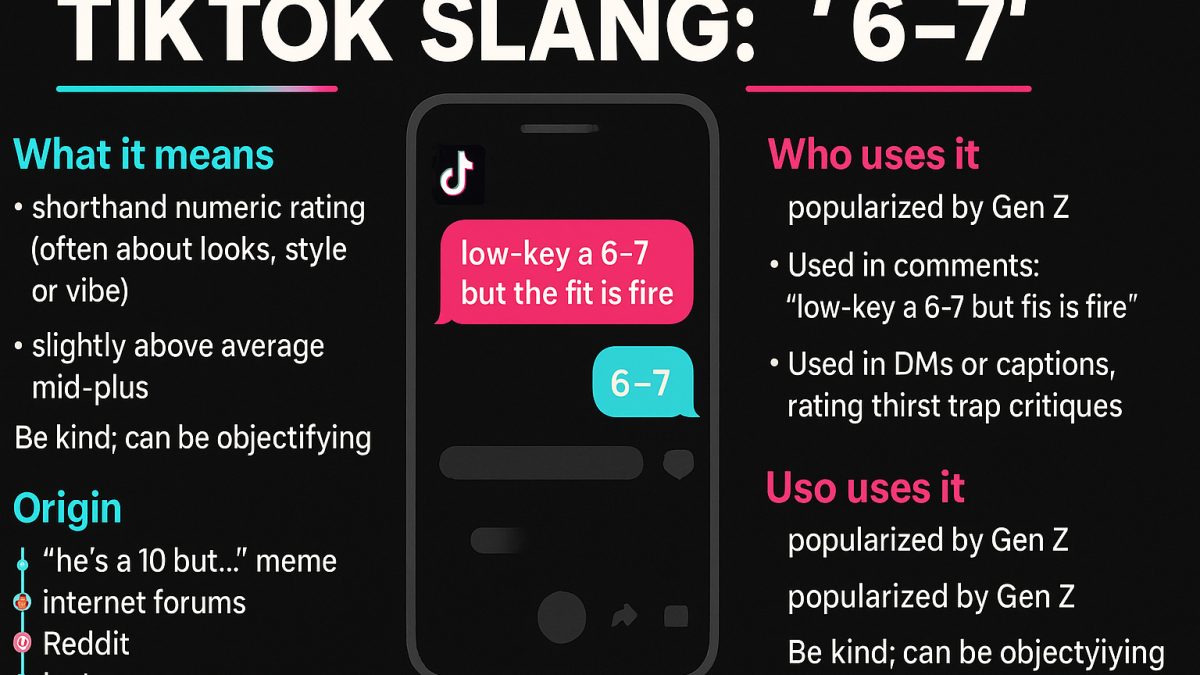
Ask teens to define “6-7” and many will smile — the term is intentionally ambiguous and functions as a social signal more than a dictionary entry. Common patterns include:
- Playful chant or meme: Used as a sound bite in videos, comments, or voice memos to be funny or grab attention (FindMyKids explainer).
- Height shorthand: Frequently tied to height — clips of players listed at 6’7″ or simply very tall athletes are routinely tagged with the phrase (Wikipedia — “6-7 (meme)”).
- In-joke signal: Appears in text, captions, or chat as an “if you know, you know” marker that signals membership in youth meme culture (Parade).
- Surreal or flexible usage: Some creators bend the phrase for comedy — saying it when 6 and 7 appear together, or in count-based challenges (FindMyKids).
Who is saying it
Generation Z and Generation Alpha are the main users. The phrase spreads fastest on TikTok and also appears on Instagram Reels, Snapchat, and Discord. Observers outside youth networks — teachers, parents, and local reporters — note that saying “6-7” often signals cultural awareness among peers (Parade).
Why the trend stuck
Multiple factors explain its rapid rise:
- Musical hooks travel fast: Short, catchy lyrics detach from songs and become social shorthand (Wikipedia).
- Sports visuals are viral fuel: Basketball clips of tall players make the hook feel relevant and shareable (FindMyKids).
- Viral moments amplify reach: A single clip — the “6-7 Kid” — pushed the phrase from niche to mainstream on youth platforms (NorthJersey).
- The appeal of in-jokes: Short, repeatable, and context-light, “6-7” is easy to adopt and share (FindMyKids).
Skrilla, “Doot Doot (6 7),” and music’s role
The meme’s origin point is the Skrilla track that supplied the hook. Music provides memorable lines that sync to recurring visuals; once a clip ties a lyric to a recurring joke, the phrase can escape its source and live as social shorthand (Wikipedia — “6-7 (meme)”).
Implications for California
For California — with its large entertainment industry, youth sports scene, and active creator economy — the meme has practical implications across media, schools, business, and community life.
Economic impact
California brands, DJs, and creators can leverage “6-7” in campaigns, remixes, or club sets. That can generate small revenue and promotional lift, but authenticity matters: audiences react negatively to forced or opportunistic uses.
Schools and youth sports
High school and AAU basketball communities may hear the phrase in locker-room banter, highlight reels, or sideline chants. While often harmless team bonding, educators should monitor whether inside-language becomes exclusionary.
Parents and classroom concerns
For concerned parents and moderate conservative readers: preparation over alarm. 6-7 is mostly silly, but teachers should be ready to discuss trends to spot misuse or bullying stemming from inside jokes.
Local politics and culture
The term itself won’t shift policy, but it illustrates how swiftly youth culture moves — a reminder for leaders to support media literacy and community engagement about online trends.
Business and media opportunities
Creators, radio stations, and event promoters can use the meme to boost engagement. Small businesses targeting young consumers — from sneaker shops to concert promoters — may benefit if usage feels authentic.
Social cohesion and identity
The meme shows how numbers, music, and short videos create quick cultural markers. Saying “6-7” can be a friendly shorthand that signals belonging; for adults, it’s a moment to connect with youth and open conversations about online life.
Practical advice for Californians
- Parents: Ask kids what trends they are seeing and listen without immediate judgment; use trends as conversation starters about online behavior.
- Educators: Add brief media‑literacy lessons showing how songs and short clips become memes and why context matters.
- Businesses: If using the phrase in marketing, ensure it fits your brand voice and target audience.
- Coaches and youth leaders: Monitor whether meme language is playful or exclusionary and address issues in team settings.
Further reading and sources
- Wikipedia — “6-7 (meme)”
- FindMyKids — “What does 6-7 mean?”
- Parade — “What Does 6-7 Mean?”
- NorthJersey — explainer on TikTok use
Reporting by Times Media Service