Trump, Japan’s First Female PM Takaichi Forge Rare-Earth Pact and Pledge “New Golden Age” for US-Japan Alliance
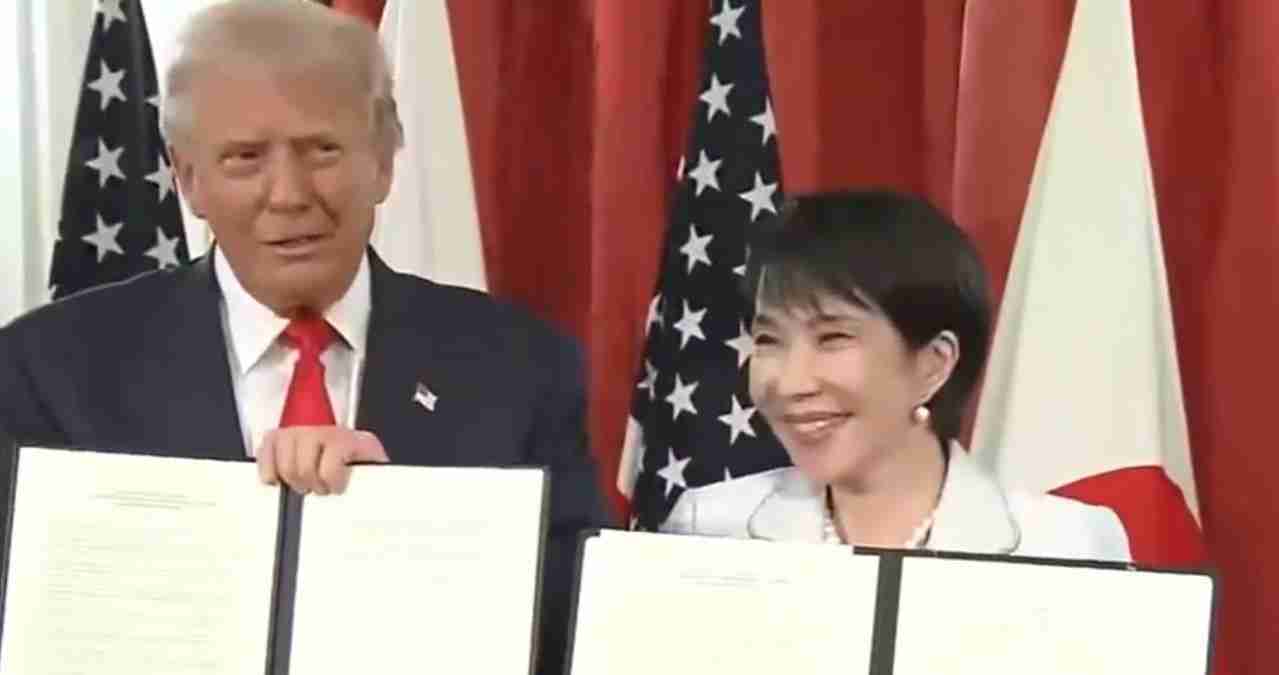
Donald Trump and Japan’s newly appointed first female prime minister, Sanae Takaichi, met in Tokyo on October 28, 2025, announcing a landmark pact to secure rare earths and critical minerals and pledging a “new golden age” for bilateral ties.
- Strategic minerals pact: Leaders signed an agreement to secure rare earths and critical minerals to reduce reliance on China and stabilize high‑tech and defense supply chains.
- Economic push: Trump sought up to $550 billion in new Japanese investment while raising trade and tariff topics.
- Defense and diplomacy: The visit included stepped-up security cooperation, pressure for higher Japanese defense spending, and ceremonial displays at Akasaka Palace.
- Soft power ties: Japan pledged cultural gestures — 250 cherry trees and fireworks sponsorship — and Takaichi announced plans to nominate Trump for a Nobel Peace Prize.
Historic meeting and political context
The October 28 summit in Tokyo was both ceremonial and strategic. Sanae Takaichi, Japan’s first female prime minister (appointed Oct. 21, 2025), framed the visit as the start of a “new golden age” for US‑Japan relations and cited the influence of her late mentor, Shinzo Abe, in shaping her foreign‑policy outlook.
Takaichi is widely described as an ultraconservative and a protégée of Abe, entering office with a clear agenda to strengthen Japan’s economic and security posture and to align more closely with the United States as a counterweight to China.
Official ceremony footage and remarks are available from the President Trump welcomes Prime Minister Sanae Takaichi at Akasaka Palace and extended video coverage is available via the Japan visit coverage and remarks (video).
Rare‑earths and critical minerals agreement
The centerpiece of the summit was a pact to secure rare earths and other critical minerals vital to semiconductors, electric vehicles, renewable energy, and defense technologies. Officials described the deal as a step to diversify supply chains, encourage domestic processing and recycling, and reduce vulnerability to export controls.
The agreement includes mechanisms for joint procurement, shared investment incentives, and measures to build conversion and recycling capacity — intended to make both economies more resilient to market disruptions and reduce dependence on China. Extended video coverage of the announcement is available in the rare‑earths agreement and Asia tour reporting (video).
Economic and investment agenda
Trump pressed Japanese business leaders and officials for a large economic package, reportedly seeking up to $550 billion in new Japanese investment in the United States. Discussions touched on trade barriers, potential tariffs, and incentives aimed at invigorating U.S. manufacturing and jobs.
The minerals pact dovetails with the economic push by creating investment opportunities across mining, refining, and advanced manufacturing projects that could attract private capital and joint ventures.
For reporting on the economic aims and summit coverage see Arab News reporting on the summit and economic aims.
Defense, security and regional stability
Security issues were central. Trump urged Japan to raise defense spending and deepen military‑technical cooperation as a response to growing uncertainty in the Indo‑Pacific. Demonstrations of alliance readiness included a public address to U.S. service members aboard the USS George Washington and ceremonies highlighting forward‑deployed forces.
“We must secure the supply chains and stand together to deter coercion,” officials said, emphasizing joint exercises and procurement cooperation.
Video and ceremony footage is available from official sources including the White House welcome ceremony and related public remarks (video).
Diplomatic symbolism and soft‑power measures
Beyond strategic agreements, the visit included classic public‑diplomacy gestures: Japan pledged to donate 250 cherry trees to the United States and announced that Akita Prefecture will sponsor fireworks for the U.S. 250th anniversary. Takaichi also said she intends to nominate President Trump for a Nobel Peace Prize, a personal diplomatic gesture that drew attention.
These cultural initiatives aim to cement long‑term goodwill and community ties between the two nations.
Ceremonies, security and logistics
The visit unfolded under tight security: authorities deployed roughly 18,000 police officers across Tokyo. The official itinerary included a formal welcome at Akasaka Palace, a bilateral meeting, a signing ceremony for the minerals agreement, and engagements with business and military communities.
Official footage of the welcome ceremony and public remarks can be viewed at the White House video and in the extended on‑the‑ground coverage (video).
Regional and global backdrop
The summit occurred amid rising regional tensions and as part of an Asia tour that included stops in Malaysia and South Korea. The trip was also expected to include talks with Chinese leader Xi Jinping to advance broader trade talks and strategic questions in the region.
Analysts say the rare‑earths pact and the public show of alliance unity signal a renewed push to create an economic and security architecture in the Indo‑Pacific less dependent on China. Implementation will require detailed negotiations on financing, regulatory alignment, and industrial policy.
Voices and sources
Coverage draws on official White House materials, video reports, and on‑the‑ground reporting. For official ceremony footage and extended remarks see the White House video of the welcome ceremony, and for broader video coverage see Japan visit coverage and remarks (video) and rare‑earths agreement and Asia tour reporting (video). On‑the‑ground reporting and analysis appeared in Arab News and U.S. local summaries such as U.S. local summary reporting.
Implications for California
Economic impact: California’s high‑tech, electric vehicle, semiconductor, and clean‑energy sectors could benefit from eased supply constraints, reduced price volatility, and joint investment in refining and recycling facilities.
Trade and business: If Japanese investment approaches the scale discussed, it could target California’s technology, defense, and clean‑energy industries — though terms, tariffs, and regulatory alignment will shape how capital flows to the state.
Security and defense: With major naval bases and defense contractors in California, deeper US‑Japan cooperation and allied supply‑chain initiatives may produce contracts and partnerships involving local firms.
Social and community effects: New jobs in processing, recycling, and advanced manufacturing could emerge, accompanied by workforce training needs and environmental permitting debates at the local level.
Cultural ties: The cherry‑tree donation and other gestures can deepen California–Japan ties in cities such as San Francisco and Los Angeles through festivals, planting ceremonies, and sister‑city projects.
Practical takeaways for Californians
- Businesses should monitor announcements on joint projects, incentives, and procurement tied to the rare‑earths agreement.
- Local officials can seek commitments that favor domestic hiring and state‑based facilities for processing and recycling.
- Residents should expect federal and state discussions about supply‑chain resilience that may translate into new grants, training programs, and procurement opportunities.
Sources and further reading
- President Trump welcomes Prime Minister Sanae Takaichi at Akasaka Palace — White House video
- Japan visit coverage and remarks (video) — extended footage of public remarks
- Rare‑earths agreement and Asia tour reporting (video) — coverage of the minerals pact
- Arab News reporting on the summit and economic aims
- U.S. local summary reporting