Trump Urges Calm After Threatening 100% Tariffs on China as Beijing Warns of Retaliation
President Trump urged calm after proposing a 100% tariff on Chinese imports following Beijing’s rare-earth export curbs; China warned “corresponding measures” and called for dialogue, raising trade-war fears and economic risks for industries and markets globally.
Key takeaways
- Tariff threat: Trump proposed doubling duties to a 100% tariff on Chinese imports in response to Beijing’s rare earth export curbs.
- Beijing’s response: China’s Commerce Ministry warned against “threats” and pledged “corresponding measures,” urging resolution through dialogue (Fox Business).
- Strategic leverage: China controls roughly 70% of rare earth mining and nearly 90% of processing capacity, a key supply-chain vulnerability (Fox Business).
- Domestic stakes: U.S. industries, especially in tech, clean energy and defense, face higher input costs and potential supply disruption if tensions escalate.
Main content
Key information
- Tariff proposal: President Trump threatened to impose a 100% tariff on Chinese goods after China announced new curbs on exports of rare earth minerals used in electronics, clean energy and defense systems (Fox Business).
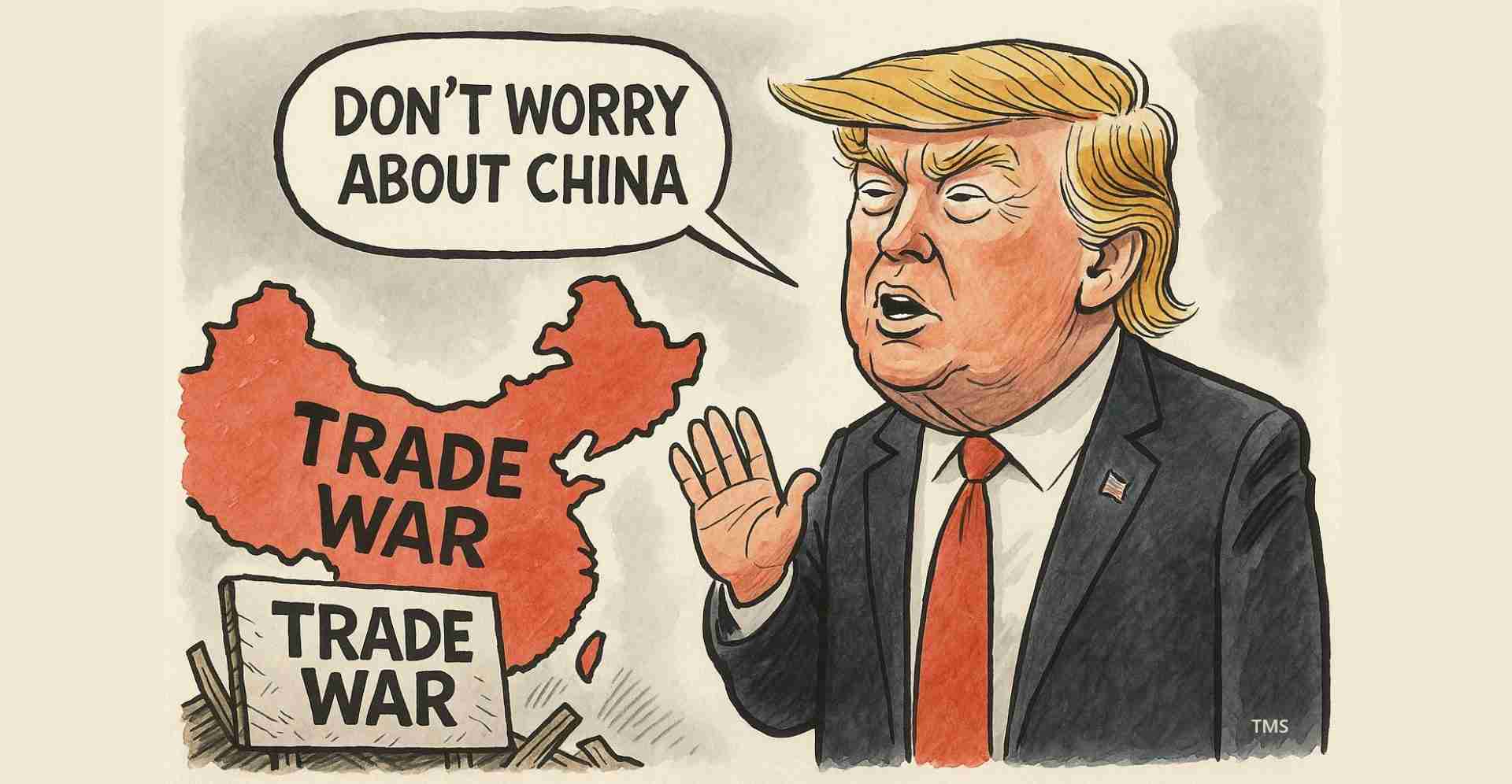
- Presidential message: Trump posted on Truth Social: “Don’t worry about China, it will all be fine!” and argued both leaders want to avoid economic harm (Fox Business).
- Beijing’s stance: China’s Commerce Ministry warned the U.S. not to use “threats” and promised “corresponding measures” if Washington moved forward, while urging dialogue (Fox Business).
- Market leverage: Beijing controls roughly 70% of global rare earth mining and nearly 90% of processing capacity, giving it leverage in key technology and defense supply chains (Fox Business).
- Political backing: Vice President JD Vance supported Trump’s approach, calling China’s rare earth dominance “the definition of a national emergency” and saying the U.S. has “far more cards” if a showdown occurs (Fox Business).
Background and context
How it started: The dispute began when Beijing announced export curbs on rare earth minerals — materials small in volume but outsized in strategic importance. They are used in smartphones, electric vehicles, wind turbines and guided munitions.
Processing bottleneck: China’s near‑monopoly on processing gives it a strategic advantage that alarms U.S. policymakers and industry leaders. Even mines outside China often depend on Chinese processing capacity.
In response, the president proposed doubling duties to 100% on Chinese imports — a sharp jump from the roughly 55% average tariff cited in recent reporting and one of the most aggressive trade moves in recent U.S. history (Fox Business).
Potential economic and diplomatic consequences
Economic fallout: Tariff increases on the scale threatened would raise costs for U.S. manufacturers that rely on Chinese components — tech, automotive and defense supply chains could face higher input costs and disrupted production timelines.
Consumer impact: Higher import costs can feed into higher consumer prices and tighter margins for firms. Middle- and lower-income households may feel disproportionate effects.
Diplomatic strain: The move clouds diplomacy and casts doubt on a planned high-level meeting between Trump and Xi Jinping. Both sides have incentives to avoid a prolonged showdown, yet both also face domestic pressure to show resolve (Fox Business).
Statements from key actors
- President Trump: Posted on Truth Social urging calm and stressing both countries want to avoid economic harm:
“Don’t worry about China, it will all be fine! Highly respected President Xi just had a bad moment. He doesn’t want depression for his country, and neither do I. The U.S.A. wants to help China, not hurt it!!!”
(Fox Business).
- China’s Commerce Ministry: Warned the U.S. against “threats” and promised “corresponding measures” if tariffs proceed, while urging dialogue to resolve differences (Fox Business).
- Vice President JD Vance: Framed China’s rare earth dominance as a national emergency and defended strong U.S. responses (Fox Business).
Investigative analysis: leverage, risks and alternatives
Leverage: Rare earth minerals are not interchangeable; processing is the bottleneck. A shutdown or throttling of exports would hit U.S. manufacturers faster than many expect.
Signaling vs. substance: A 100% tariff proposal functions largely as a signaling tool that raises the stakes and pressures Beijing, but it also risks immediate economic harm to U.S. importers and supply chains.
Alternatives: Targeted export controls, increased investment in U.S./allied processing, temporary import waivers for critical sectors, and multilateral coordination can reduce immediate risks while addressing long-term vulnerabilities.
Trade policy and legal paths
Imposing a 100% tariff would require legal and administrative steps and likely prompt legal challenges and World Trade Organization scrutiny. China could retaliate with tariffs or non‑tariff barriers targeted at U.S. exporters, including agricultural and high-tech goods.
Policymakers must weigh short-term pain against long-term supply-chain security. Politically, toughness on China appeals to parts of the Republican base and voters concerned about manufacturing and national security, while business groups urge calibrated steps.
Implications for California
Economic impact
- California’s high-tech, clean-energy, aerospace and defense industries rely on rare earths; tariff spikes or supply disruptions could raise costs for semiconductors, EVs, wind turbines and consumer electronics (Fox Business).
- Major ports (Los Angeles, Long Beach, Oakland) could see volume shifts, affecting jobs in logistics, warehousing and distribution.
Political consequences
- California lawmakers may face pressure to seek exemptions or targeted relief for tech and agriculture if tariffs threaten supply chains or export markets.
- The episode could accelerate scrutiny and support for onshoring or diversifying critical mineral processing, a policy with bipartisan backing within the state.
Social effects
Manufacturing communities could feel strain if tariffs raise costs or disrupt contracts, but investments in domestic processing and recycling could create new local jobs if federal incentives and private investment follow.
Practical applications and responses
- Businesses: Review supply chains, identify components tied to rare earths, and pursue contingency plans — alternative suppliers, inventory buffers, or design changes to reduce reliance.
- Policymakers: Press for targeted waivers, export controls that spare civilian supply lines, and fast-track investments in U.S.-based processing facilities and recycling projects.
- Workers and communities: Prepare workforce development programs for shifts in manufacturing demand; jobs in processing, recycling and advanced manufacturing could expand with new investment.
Sources and further reading
Fox Business reporting on President Trump’s remarks, China’s response, and the rare earths dispute: Fox Business