
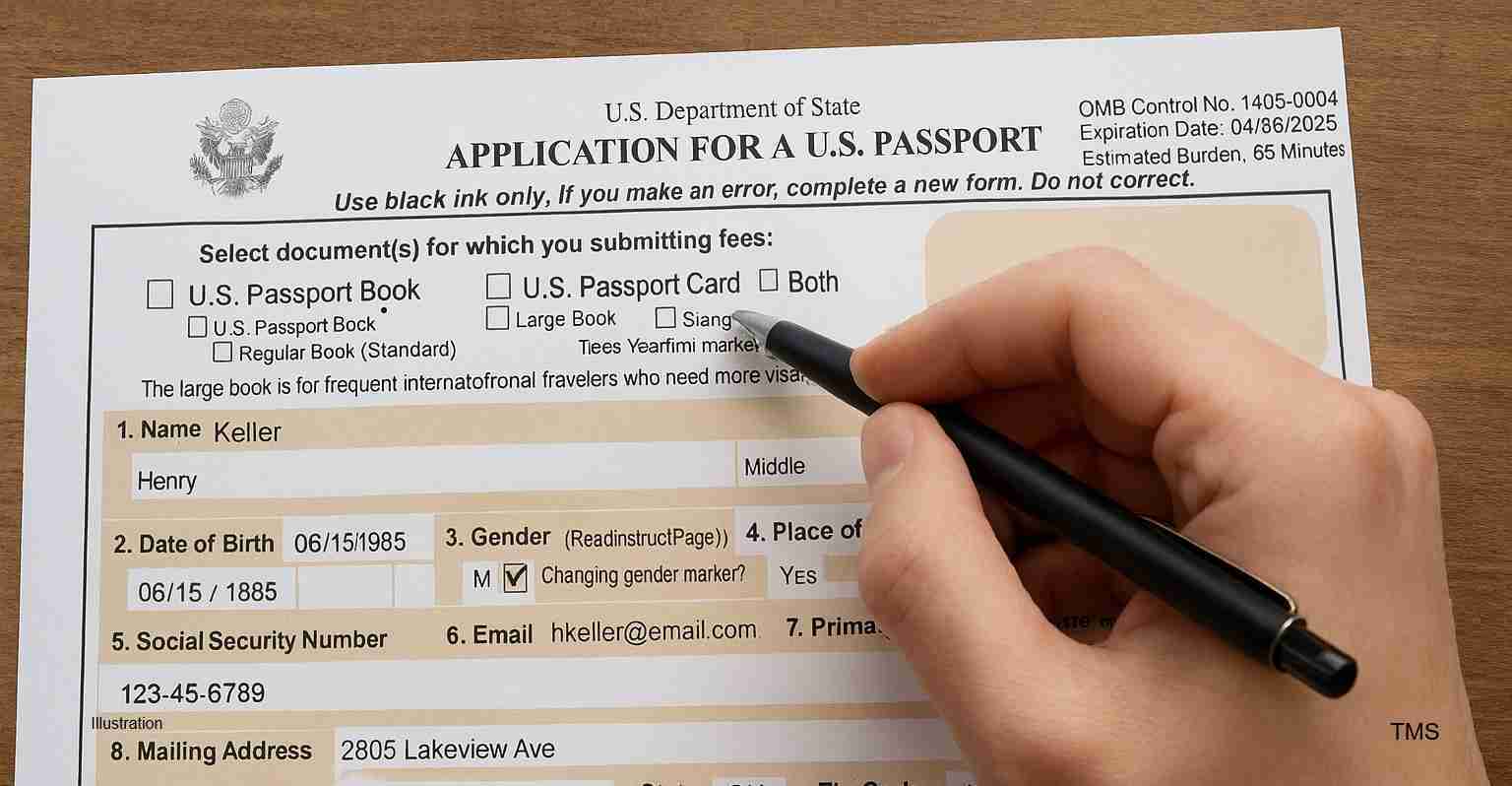
Supreme Court allows Trump passport gender policy, blocking nonbinary and gender-identity markers
The Supreme Court has stayed lower-court orders, allowing the Trump administration to enforce a passport sex-marker policy limited to “male” or “female” based on birth certificates, blocking nonbinary and gender-identity markers while litigation continues in federal courts.
- High court’s conservative majority stayed lower-court rulings, pausing requirements to issue passports reflecting self-identified gender and an “X” marker (SCOTUSBlog; Supreme Court opinion).
- The stay came via the Court’s emergency “shadow docket”, through a brief unsigned order that allows the Trump policy to take effect while lower-court litigation continues (Politico; SCOTUSBlog).
- Immediate effect: passports must list only “male” or “female” as shown on birth certificates; the “X” option is unavailable for now (ABC7; WABE).
Background: how policy changed and why this reached the Court
Under the Biden administration the State Department allowed people to select a sex marker based on their gender identity, including an “X” nonbinary option and changes without medical proof. The Jan. 20, 2025 executive order reversed that, directing federal agencies to rely on “biological classification” and the sex on a person’s birth certificate — a change the State Department is now allowed to apply because of the Court’s stay (ABC7; Supreme Court opinion).
Litigation and plaintiffs’ claims
Seven transgender and nonbinary plaintiffs sued, arguing the restriction causes concrete harms: mismatched passports can lead to harassment, denial of entry, safety risks, and emotional and economic tolls. Civil-rights groups joined the challenge and labeled the policy discriminatory (ACLU; Lambda Legal).
Legal arguments on both sides
The administration’s defense: officials say the president and the State Department have broad authority over passports and foreign affairs, and contend that relying on fixed, “biological” markers preserves reliable identification and national security (ABC7).
Plaintiffs’ position: lawyers argue the rule violates equal protection and other federal laws by denying identity documents that match a person’s gender, treating trans and nonbinary people differently and increasing travel risk (SCOTUSBlog).
Supreme Court dynamics and the shadow docket
The Court issued a short, unsigned order staying the lower-court decisions via the emergency “shadow docket,” allowing the State Department to follow the executive order while courts below continue the case. Three justices — Ketanji Brown Jackson, Sonia Sotomayor and Elena Kagan — dissented, with Justice Jackson saying the stay causes direct injury to people who relied on the inclusive policy (Politico; SCOTUSBlog).
Immediate impact on passport applicants
- Effective immediately, passports must list only “male” or “female” as shown on birth certificates.
- The “X” marker is not available for now; people with previously issued gender-identity markers may face mismatches.
- Changes affect new applications and some renewals, depending on processing status and ongoing cases (ABC7; WABE).
Advocates warn of practical harms
“The decision is discriminatory and puts people at risk,” said advocacy groups, warning of delays, interrogations, and dangers in countries where being transgender or nonbinary is criminalized. Plaintiffs emphasized emotional and financial burdens of carrying documents that deny identity (ACLU; Lambda Legal).
History and precedent
Sex markers have appeared on U.S. passports for decades. Rules shifted from requiring medical documentation in the 1990s to more recent, identity-based policies that included an “X” option under the Biden administration. The current ruling reverses that expansion and raises questions about federal document policy going forward (ABC7).
Ongoing litigation
The Supreme Court’s stay is temporary; the core lawsuit challenging the executive order proceeds in lower courts. Plaintiffs seek full review and potential reinstatement of the broader policy through ordinary judicial channels. Until then, affected people must navigate the changed rule and plan travel accordingly (SCOTUSBlog; Politico).
Reactions from government and advocacy groups
The State Department said it will follow the Court’s order. Civil-rights groups condemned the decision as harmful and discriminatory. Political leaders reacted along party lines: some Republicans praised the move as restoring uniform ID standards, while Democrats called it an attack on civil rights (ABC7; ACLU).
Implications for California
Economic and travel impact: California — with the nation’s largest economy and major travel hubs — could see more paperwork issues for tour operators, airlines and universities hosting international students. Mismatched IDs risk delays at airports and higher travel costs for affected residents (ABC7; SCOTUSBlog).
Legal and state-policy consequences: California’s progressive state IDs and streamlined gender-change policies may conflict with the federal passport rule, prompting legal challenges or state assistance programs to support residents (Lambda Legal; ACLU).
Social and community effects: Community groups, health centers and employers in California may need to expand services to help people navigate documentation, travel planning and safety assessments.
Practical advice for Californians
- Check state and federal documents before travel; anticipate possible secondary screenings.
- Carry additional proof of identity and consult legal aid or LGBTQ+ organizations if you have a pending application.
- Monitor official state announcements and resources; California agencies may issue advisories or help lines.
- Advocacy groups offering guidance: ACLU, Lambda Legal.
Where to find more information and ongoing updates
Read the full court materials and coverage for legal details and updates:
Note: This stay is temporary and the legal challenge continues in lower courts; affected people and institutions should follow developments closely and seek legal or advocacy help as needed.



