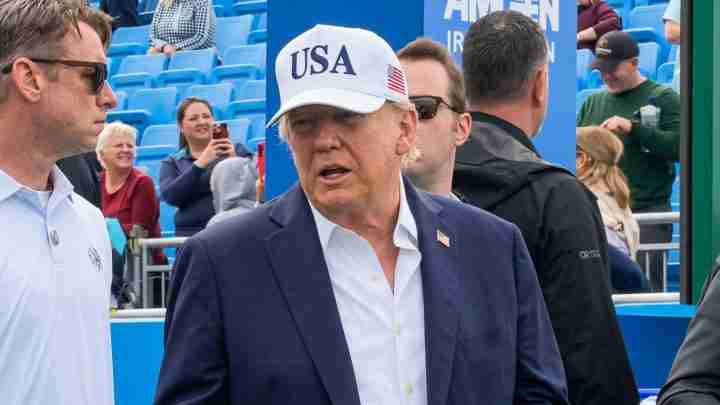
Pakistan nominates Trump Nobel again, citing Trump Gaza ceasefire and “saving millions of lives,” Shehbaz Sharif says
Oslo — Pakistan Prime Minister Shehbaz Sharif announced on Oct. 14, 2025, he has formally refiled a nomination for former U.S. President Donald Trump for a second Nobel Peace Prize, crediting his role in brokering a Gaza ceasefire.
- Pakistan formally refiled a second 2025 nomination for Donald Trump, citing his role in the Gaza ceasefire and an earlier India‑Pakistan truce; source: Mettis Global.
- Sharif praised Trump at the Sharm el‑Sheikh signing, calling his leadership “visionary and relentless” and saying he “once again saved millions of lives” (see Pakistani press conference video).
- Sharif credited regional partners — Egypt, Qatar, Türkiye, Jordan, Saudi Arabia and the UAE — for critical roles in reaching the Gaza agreement.
- No immediate response from the Nobel Committee or Donald Trump had been reported at publication time.
Pakistan’s announcement and Sharif’s remarks
At a public ceremony in Sharm el‑Sheikh on Oct. 14, Pakistan’s prime minister, Shehbaz Sharif, formally refiled a nomination for Donald Trump and spoke at length about what he described as Trump’s role in achieving the Gaza ceasefire. In remarks aired by Pakistani media, Sharif praised what he called Trump’s “visionary and relentless leadership” and said the former president had “saved millions of lives” through his involvement in negotiations.
Sharif also invoked an earlier intervention credited with helping avert a wider conflict between India and Pakistan in May 2025 — the basis for Pakistan’s first 2025 nomination — and framed the two cases together as grounds for a renewed nomination. Source reporting and official remarks are available through Mettis Global and the Pakistani press conference video.
“One of the greatest days in contemporary history,” Sharif said, urging the agreement to “open a new chapter of stability, cooperation, and prosperity in the region.”
What Pakistan says Trump did — the Trump Gaza ceasefire claim
According to Sharif’s statements, Trump led sustained diplomatic pressure and back‑channel negotiations over months that helped bring rival parties to a ceasefire in Gaza. Pakistan’s public case links Trump’s personal diplomatic energy to the halt of hostilities and credits him with preventing further loss of civilian life. The government explicitly noted the Gaza agreement alongside the May ceasefire between India and Pakistan when explaining the grounds for the second nomination (Mettis Global).
Sharif framed these interventions as a series of emergency actions that collectively “held back broader wars and reduced civilian casualties,” and told reporters that Trump had “gone out of his way to stop eight wars” — a sweeping claim intended to position Trump within a global peace narrative. Video excerpts of Sharif’s comments are available in the press conference and related coverage (related video coverage).
The Nobel nomination process and immediate limits of the claim
A formal nomination is not an award. The Nobel Committee in Oslo conducts a confidential review of nominations and typically does not comment publicly. Eligible nominators include elected officials and academics; public announcements by nominators happen but do not influence the committee’s internal deliberations. As of publication, the Nobel Committee had not issued a response to Pakistan’s filing (Mettis Global).
Political context and likely reactions
The decision to nominate a former U.S. president — and a politically polarizing figure — is notable. Pakistan’s second public nomination for Trump this year underscores Islamabad’s public gratitude and diplomatic alignment on the Gaza outcome, a move that departs from the Nobel pattern that often favors non‑Western peacemakers or international organizations.
Expected reactions:
- Supporters will point to the tangible diplomatic outcome — the Gaza ceasefire — as evidence of decisive crisis management.
- Critics will highlight Trump’s broader controversial record and argue the nomination reflects geopolitical gratitude rather than a consensus on peacemaking.
- Neither the Nobel Committee nor Donald Trump had issued public comments at the time of reporting.
Implications for California
Economic impact: A Gaza ceasefire that holds could steady global oil and shipping markets, benefiting California businesses that rely on the ports of Los Angeles and Long Beach through fewer shipping delays and lower fuel volatility.
Political consequences: The nomination may reshape talking points among moderate conservatives in California by bolstering claims of Trump’s foreign‑policy credentials, while intensifying debate among diverse communities affected by the Israel‑Palestine conflict.
Social and cultural effects: California’s sizable Middle Eastern and South Asian diasporas could see increased demonstrations, campus debates and community organizing related to the ceasefire and any recognition of U.S. figures tied to it.
Practical applications: City and state officials, nonprofits, and emergency‑response agencies in California will monitor refugee flows, consular needs, humanitarian support requests and any economic consequences tied to the agreement.
Sources and reporting notes
Reporting for Times Media Service in Oslo drew on Sharif’s public remarks and the coverage cited above. The Nobel Committee had not issued a public response to Pakistan’s filing as of publication time.