Hongqi Bridge in Sichuan Partially Collapses After Landslide — Cracks Seen a Day Earlier Raise Safety Questions
Sichuan Province, China (Times Media Service) — The 758‑meter Hongqi Bridge partially collapsed on Nov. 11, 2025, after a massive landslide undermined its supports. Authorities had closed the bridge a day earlier after cracks appeared, preventing injuries and prompting safety scrutiny.
Key takeaways
- Rapid deterioration: Visible cracks and slope shifts prompted a closure on Monday; the bridge collapsed Tuesday after a major landslide.
- No casualties reported: The pre-collapse closure likely averted injuries or vehicle entrapment.
- Strategic impact: The Hongqi Bridge was a key link in a highway connecting central China and Tibet, raising broader questions about geotechnical safeguards.
- Policy implications: The event will trigger reviews of construction standards, monitoring, and emergency protocols both in China and in regions with similar risks.
What happened
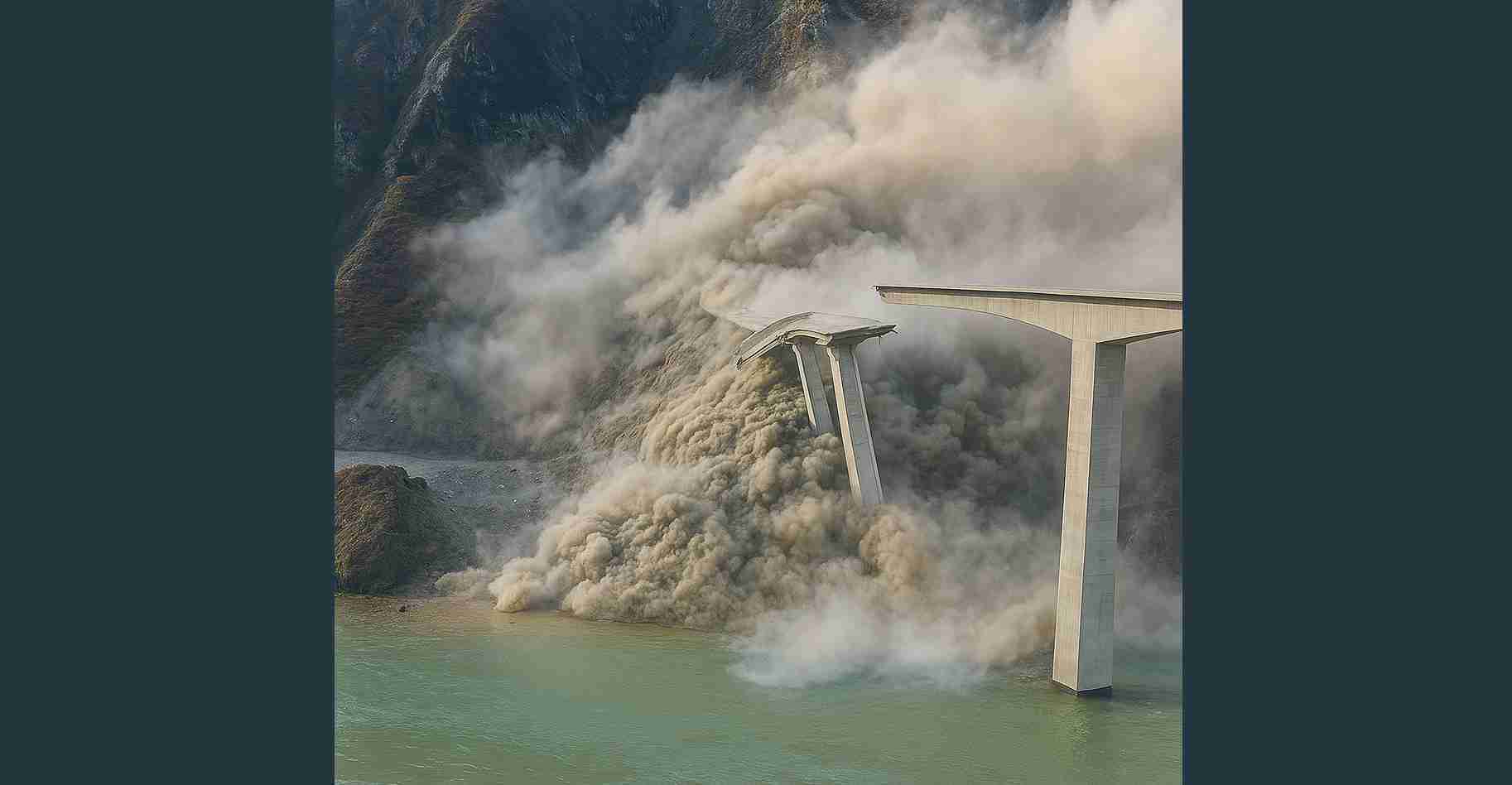
A large section of the 758‑meter Hongqi Bridge in southwestern China fell into the river below after a massive landslide struck the mountain supporting the structure. Video reports from the scene show the roadway fracturing and plunging into the water in stages as supports were stripped away.
Timing
The collapse occurred on Tuesday, November 11, 2025, only months after the bridge’s completion earlier in the year. The close timing between completion and failure intensifies scrutiny of design and geotechnical assessment practices for projects in unstable mountain terrain.
Warnings and response
Local police closed the bridge to all traffic on Monday afternoon — one day before the collapse — after observers reported cracks on nearby slopes and roads and visible shifts in surrounding mountain terrain. That swift action appears to have prevented injuries; officials reported no casualties after the failure.
On-scene evidence: Video records show pre-collapse cracking in slopes and access roads and visible ground movement that prompted the precautionary closure.
How the collapse unfolded
Available footage indicates a major landslide struck the valley beneath the bridge, undermining foundations and sending a large section of the deck into the river. The deck appears to have fractured and dropped in stages, consistent with slope failure that removed supporting soil and substructure.
Visual records: Reporters and analysts are using on-site clips to construct a timeline of failure and to identify which supports and approaches were first affected.
Project background and strategic importance
The Hongqi Bridge was built as part of a major highway route designed to improve connectivity between central China and Tibet, carrying heavy traffic through rugged terrain. Its strategic role means the collapse has both regional transport and political implications.
Questions about construction standards and safety
The failure raises renewed focus on whether slope stabilization, drainage, and other geotechnical safeguards were adequate given known landslide risks in Sichuan. Investigations will examine:
- Design adequacy — Were conservative margins used for foundations and slope support?
- Construction quality — Were materials and contractor practices in line with specifications?
- Monitoring and maintenance — Were early warning systems, inspection schedules, and response protocols sufficient?
- Extreme weather and cumulative erosion — What role did recent weather or progressive slope weakening play?
Safety reporting and visual evidence
Circulating video footage has captured both the moment of failure and the pre-collapse warning signs. These clips — showing shifting earth and cracks in slopes and access roads — are central to reconstructing the incident timeline and will inform technical reviews.
Relevant video material has been cited by local reporting and analysts as primary evidence of ground instability before the bridge gave way.
Implications for Chinese and international infrastructure policy
Beyond immediate repair and investigation, the collapse may affect perceptions of Chinese engineering exports and prompt wider reviews of geotechnical risk assessment on projects in mountainous regions. High-profile failures can influence international confidence in construction services and encourage stricter oversight.
Implications for California
For policymakers and infrastructure managers in California, the Hongqi Bridge failure underscores several practical lessons:
- Oversight and inspection: Maintain rigorous, independent geotechnical review and conservative safety margins on mountain and slope-adjacent projects.
- Early closure protocols: Rapid closures and public alerts when cracks or slope movement are detected can prevent casualties.
- Fiscal accountability: Up-front investment in durable design and qualified contractors reduces long-term failure risk and taxpayer exposure.
- Supply-chain resilience: Redundancy in critical routes protects commerce from single-point collapses.
Sources and visual records
- Video reporting showing the collapse and pre-collapse conditions
- Additional footage and reporting on the landslide and bridge damage
- Visual documentation of the landslide and bridge failure (duplicate source cited in reporting)
Ongoing questions for investigators
Investigators will focus on determining precise causes: whether design choices, construction quality, maintenance lapses, a sudden extreme-weather event, or cumulative slope erosion triggered the failure. The timeline — with cracks detected and a closure occurring one day before collapse — will be central to the inquiry.
Key records to review: monitoring logs, construction plans, inspection reports, contractor qualifications, and any early warnings that may have been missed or underappreciated.
What comes next
Structural and geotechnical experts will examine soils, rock stability, and construction records to guide repair and policy decisions. Local authorities are responsible for securing the site, assessing downstream river hazards from debris, and preventing secondary slides while longer-term engineering studies proceed.
Findings from these analyses will shape not only restoration of the affected highway route but also future standards for building and monitoring critical infrastructure in landslide-prone mountain regions.