Deadly collision derails two high-speed trains near Adamuz in Córdoba province — probe opens into Spain high-speed rail accident
A catastrophic train collision near Adamuz, Córdoba province, Spain, on January 18, 2026, killed at least 39 people and injured over 245. Two high-speed services — an Iryo and a Renfe train — were involved, prompting rescue and a major investigation.
Key takeaways
- When: Jan. 18, 2026, about 6:40–7:45 p.m. CET, shortly after Iryo 6189 left Córdoba-Julio Anguita station.
- Casualties: At least 39 dead and about 245 injured, with ~75 hospitalized and ~15 in critical condition.
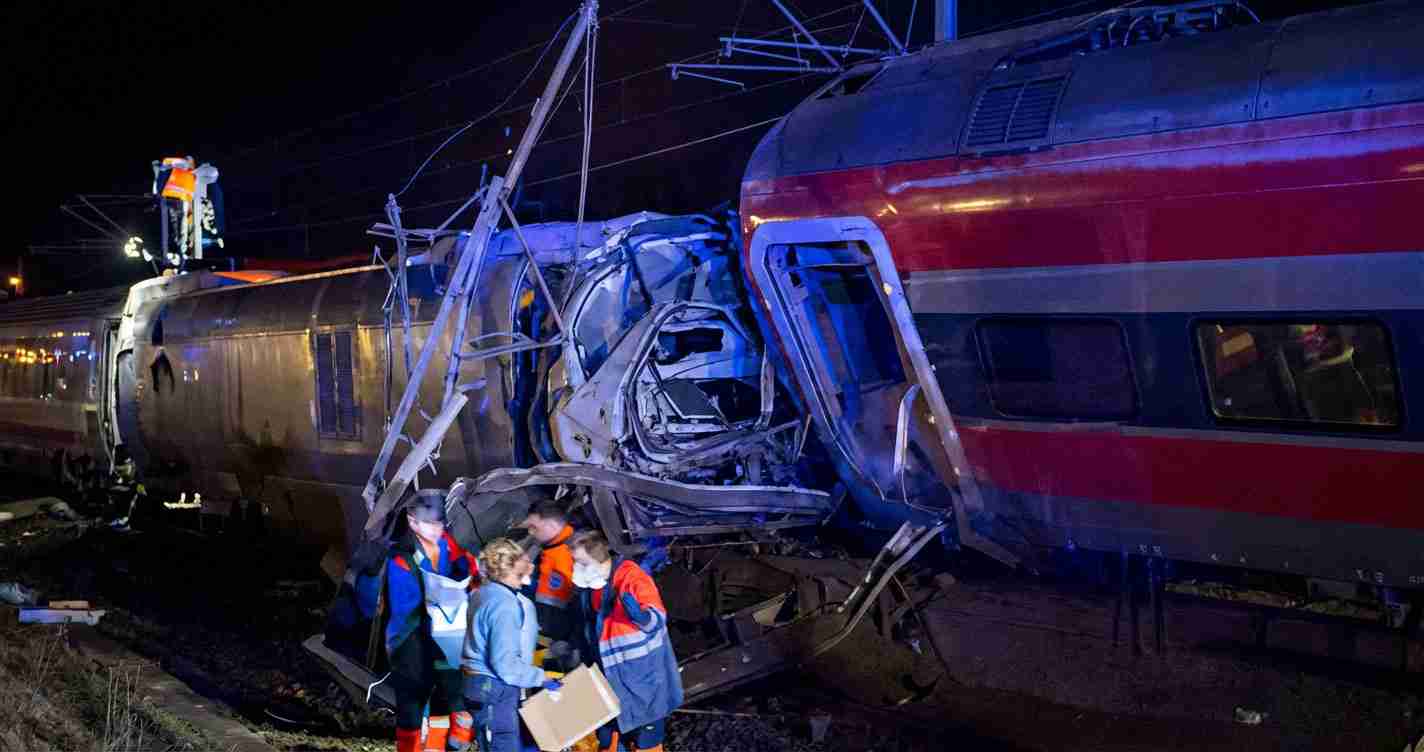
- What happened: Iryo 6189 derailed and struck an oncoming Renfe service after crossing tracks at a switch; the Renfe front carriages tumbled down an embankment.
- Investigation: Authorities opened a formal probe examining the switch, train data recorders, maintenance logs and the recently renovated straight track section.
What happened
Officials and local reports say Iryo 6189 derailed shortly after departing Córdoba-Julio Anguita station. The derailment pushed part of the Iryo across a railroad switch onto the adjacent track, where it collided head-on with a Renfe high-speed train bound from Madrid to Huelva.
The Renfe train suffered severe damage to its front carriages, which derailed and tumbled down an embankment of roughly four meters. The Renfe driver, reported to be 27 years old, was among the dead.
Reporting on the sequence of events and on-scene rescue is available from The Independent and from local coverage summarized at Wikipedia.
Casualties, damage and rescue work
Emergency teams local and national rushed to the scene. Rescuers worked into Jan. 19 amid twisted wreckage and restricted access, using heavy machinery to reach crushed carriages and recover victims.
Official tallies and on-scene accounts put the toll at about 39 dead and ~245 injured, with roughly 75 hospitalized and around 15 in critical condition. Early bulletins had reported lower figures as teams continued searching the wreckage.
Radio and news accounts describing the rescue and casualty updates include reporting compiled by WGLT.
“Horrific,” Adamuz mayor Rafael Moreno said, describing the scene as crews searched through wreckage and recovered victims.
Government response and service suspensions
Spain’s Transport Minister Óscar Puente called the derailment “very strange”, noting the crash occurred on a straight stretch of track that had been refurbished in May 2025 and that the trains were relatively new. Authorities suspended high-speed services between Madrid and Andalusia on Jan. 19 while rescue and recovery continued.
Adif, the national rail infrastructure operator, set up support spaces at Madrid Atocha, Seville, Córdoba, Málaga and Huelva for families of victims. Prime Minister Pedro Sánchez cleared his schedule to coordinate the national response; Andalusian regional president Juanma Moreno offered support and emphasized the force of the impact.
Further reporting and context on service suspensions and official statements are available from The Independent.
Military, medical and aid efforts
The Military Emergencies Unit deployed 15 vehicles and 40 personnel to assist rescue and recovery. The Spanish Red Cross established a help center in Adamuz to support survivors and families. The US Embassy in Madrid issued an alert advising U.S. citizens to follow local instructions.
Track history and safety questions
The collision occurred on a straight section of track that had been refurbished in May 2025 following a major upgrade program. That fact has heightened scrutiny: experts and officials are pressing to learn how a modern train on a renovated line could derail so catastrophically.
Transport Minister Puente noted both trains were relatively new — the Iryo vehicle is about four years old — increasing calls for a meticulous technical review of infrastructure, signaling and maintenance records.
Investigation under way
Authorities opened a formal probe into the Adamuz crash. Investigators are examining the switch where the Iryo reportedly crossed tracks, analyzing train data recorders, reviewing maintenance logs and inspecting the renovated track. Officials warned a full inquiry could take weeks to months.
Preliminary reporting and follow-up are being tracked by outlets including WGLT and by the incident summary at Wikipedia.
Reporting notes and differing counts
Early bulletins gave varying fatality counts — some initial reports cited 21 or 24 dead — while later tallies reached 39 as rescue teams continued searching and confirming identities. Officials cautioned that numbers can change during mass-casualty operations.
Implications for California
The Adamuz crash has several potential implications for California policymakers, operators and communities:
- Economic and travel: Raises U.S. interest in rail safety practices, maintenance standards and oversight of private operators on public infrastructure.
- Political: For fiscally minded audiences, the collision may prompt calls for stricter audits, transparent contractor vetting and accountability tied to funding.
- Community preparedness: Emergency planners and hospitals may review mass-casualty plans and interjurisdictional coordination.
- Practical actions: Consider public safety audits, mandatory access to onboard data recorders, and tying future funding to documented maintenance and independent safety certifications.
Sources and further reading
- The Independent — reporting on the crash and rescue efforts
- Wikipedia — summary of the 2026 Adamuz train derailments
- WGLT — coverage of casualties and rescue operations
- US Embassy in Madrid — alert on the derailment
Investigators continue to search the wreckage, interview crew and passengers, and study technical data. Authorities cautioned that casualty totals could change as recovery and identification efforts proceed.