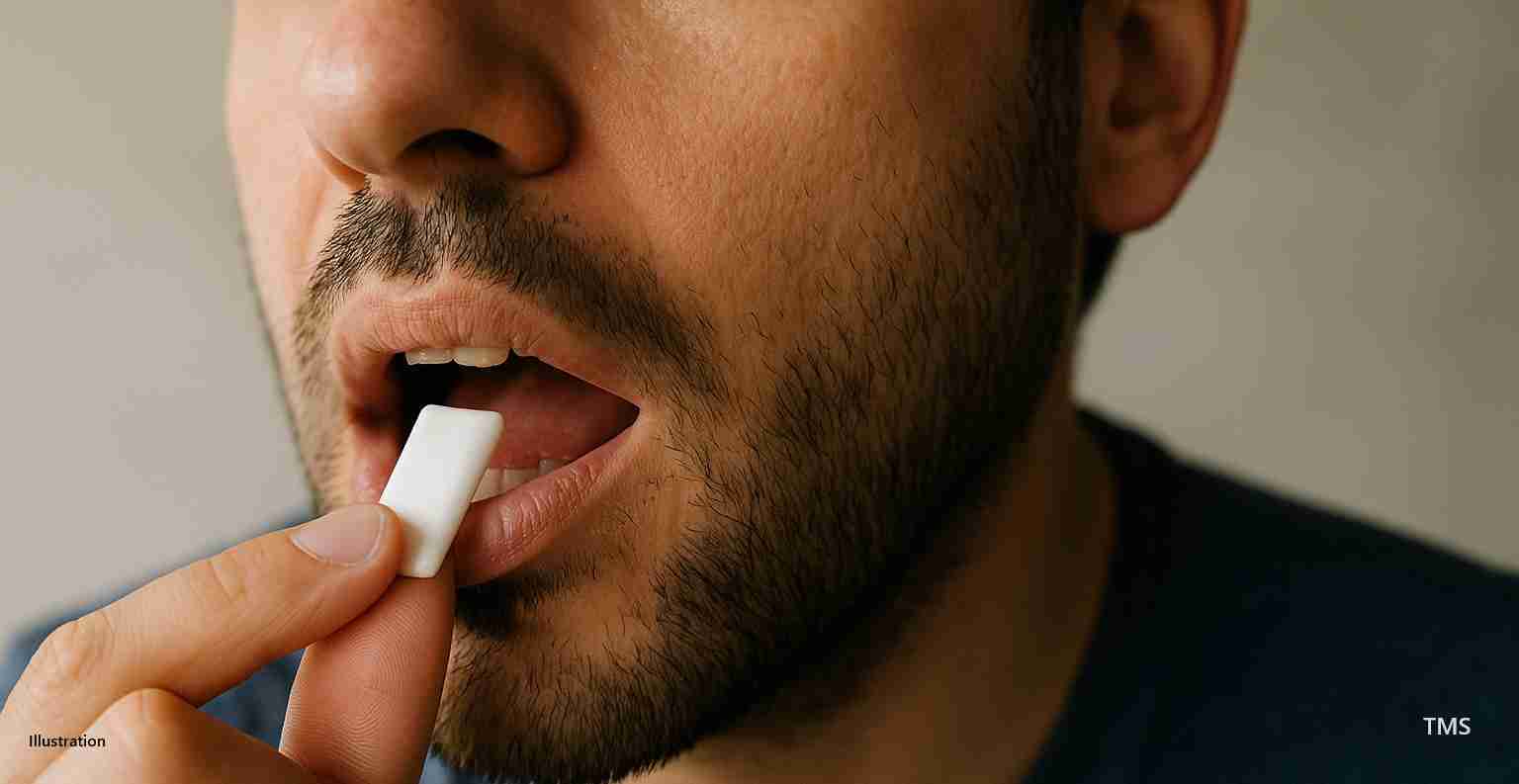
Chewing gum flu test: Edible, taste-based sensor could flag influenza before symptoms
German researchers have created an edible, taste-based sensor—embedded in chewing gum or lozenges—that releases a strong thymol flavor when influenza neuraminidase is present, potentially flagging infection before symptoms and avoiding invasive nasal swabs in many settings.
- Noninvasive detection: A thymol-releasing sensor in gum or lozenges produces a noticeable herbal taste if influenza enzyme neuraminidase is present.
- Rapid lab signal: Thymol release occurred within ~30 minutes in saliva with influenza during lab tests.
- Safety & testing path: Cell tests on human and mouse cells showed no apparent harm; researchers plan human clinical trials next.
- Potential uses: Could enable routine screening in workplaces, schools, airports and at home—pending regulatory approval and trial validation.
How the taste-based flu sensor works
The edible sensor combines a neuraminidase-recognized linker and a flavor molecule, thymol (a compound found in thyme). When influenza virus is present in saliva, the virus’s neuraminidase enzyme cleaves the linker and releases thymol, producing a distinct herbal taste in the mouth. If the enzyme is absent, the gum or lozenge remains essentially tasteless.
This mechanism is described in an American Chemical Society press release and summarized in broader coverage such as the AOL and Fox News reports.
In plain terms: taste = probable infection; no taste = likely negative. The simplicity is deliberate—an immediate sensory signal without instruments.
Lab results and plans for human testing
In controlled laboratory experiments the sensor released thymol in about 30 minutes when exposed to saliva samples containing influenza. Researchers report no apparent harm in tests on human and mouse cells to date, but emphasize these are preliminary laboratory findings that do not prove effectiveness in people.
Primary reporting and technical summaries appear in the American Chemical Society press release, specialist coverage from CLP, and summaries in outlets like Labmedica.
Next step: planned clinical trials with human volunteers will test whether the taste signal appears in pre-symptomatic or early infections and whether it’s reliable in real-world conditions.
Potential uses and advantages
If clinical trials validate performance, the edible taste-based test could offer several practical advantages:
- Rapid screening in crowded public venues where quick, noninvasive checks could reduce spread.
- Workplaces, schools, care facilities for routine screening that’s easier for children and people who dislike nasal swabs.
- At-home convenience: an easy option for consumers wanting quick reassurance without special equipment.
- Potential cost and acceptability benefits: simple signal (taste) may improve uptake versus invasive sampling—though manufacturing and regulatory costs remain unknown.
Limitations and unanswered questions
Researchers and reporters stress caution. Key uncertainties include:
- Sensitivity and specificity: How often will the gum correctly identify infected people versus false positives?
- Timing: How early after exposure will the sensor detect infection, and for how long does the window last?
- Viral variation: Will different influenza strains—with differing neuraminidase properties—trigger the same response?
- Individual variability & safety: Differences in saliva chemistry and taste perception could affect results; edible diagnostics must meet food and medical safety standards.
- Regulatory review: Agencies such as the U.S. Food and Drug Administration would require human trial data before authorizing use in the U.S.
Mainstream coverage that balances promise and limits includes Fox News and AOL.
What researchers say about next steps
The research team plans to run clinical trials with human subjects to determine whether the taste-based sensor reliably produces a detectable flavor in people who are pre-symptomatic or newly infected. Positive clinical outcomes would be required before regulatory review and any move toward production (American Chemical Society press release).
Implications for California
Economic impact
California’s diverse economy could gain if a low-cost chewing gum flu test proves reliable. Employers—from Silicon Valley tech firms to Central Valley agriculture—might use rapid screening to reduce absenteeism and maintain productivity.
Political consequences
State and local health agencies, such as the California Department of Public Health, would need to evaluate any taste-based sensor for program use. Policymakers will balance support for private-sector tools with the need for rigorous oversight and trial evidence.
Social and community effects
For families, schools, and senior centers, a noninvasive edible test could increase acceptance of routine screening. Earlier detection may reduce outbreaks in classrooms and protect vulnerable nursing home residents.
Cultural relevance
California’s culture of innovation and personal choice may welcome a consumer-friendly, low-intervention option—provided clinical evidence supports its accuracy and safety.
Practical applications and next steps for residents
- Employers and schools should monitor trial results and regulatory guidance before piloting the test.
- Health care providers and pharmacies could be early distribution partners if the test gains approval.
- Travelers at California airports might benefit from a rapid screening tool during peak flu seasons, subject to federal and international rules.
Bottom line: The chewing gum flu test is a promising, noninvasive concept that could expand screening options, but human clinical trials and regulatory review are essential before it can be deployed widely. Read the technical announcement in the American Chemical Society press release and reporting from CLP, Labmedica, AOL, and Fox News.