Breeze Airways expands U.S. network and adds Cancun flights as budget carrier doubles down on underserved cities
Breeze Airways is expanding its U.S. and short‑haul international network, adding new domestic cities like Atlantic City and Brownsville, returning to San Antonio, and launching direct Cancun flights from New Orleans, Providence and other gateways to serve underserved markets affordably.
Key takeaways
- Route growth: Breeze added or announced service to multiple U.S. cities, plus four new Florida routes and returns to San Antonio and additional destinations.
- International launches: New Orleans‑Cancun began Feb. 7, 2026; Providence‑Cancun began Feb. 14, 2026, and other Caribbean/Mexico routes are rolling out.
- Business model: Low base fares with ancillary fees, but perks such as free family seating, Wi‑Fi and limited change‑fee relief.
Main coverage
Key information and recent additions
Breeze’s schedule updates added or announced service from Raleigh‑Durham, Hartford, Columbus, Atlantic City, Charleston, Memphis, Louisville, Los Angeles, Madison, Pittsburgh and Greenville‑Spartanburg, plus four new Florida routes (including Fort Lauderdale, Tampa and Orlando) and a return to San Antonio after a four‑year pause. The carrier named Atlantic City and Brownsville among new or inaugural destinations and added Nassau to its map; San Antonio was noted as a returning route. These details are summarized in Simple Flying’s overview of new routes.
Domestic expansion: a push into underserved markets
Breeze’s route strategy emphasizes point‑to‑point nonstop service to mid‑sized and leisure markets where options are limited. Airport and local officials have applauded the new connections as a boost to connectivity and tourism. Multiple Florida gateways reflect sustained leisure demand, while service from large metros such as Los Angeles and regional hubs like Madison and Pittsburgh show the carrier expanding beyond purely tourist corridors.
International push: Cancun service and short‑haul Caribbean links
Breeze inaugurated New Orleans‑Cancun nonstop on Feb. 7, 2026, operating Airbus A220‑300 equipment with weekly Saturday frequencies to start; one‑way fares were advertised from about $108 (MSY‑CUN) and $123 (CUN‑MSY). New Orleans CityBusiness’s report on MSY‑CUN provides the initial service details. Providence‑Cancun began service on Feb. 14, 2026, and Breeze has started other short‑haul international routes such as Norfolk‑Cancun and Charleston‑Cancun; summer 2026 plans include Nassau, the Bahamas. See the Aviation Week route calendar for the February rollouts: Aviation Week’s route list.
Executive perspective
“Breeze’s convenient, direct service to underserved destinations continues to resonate with travelers, and we’re eager to introduce Brownsville and Atlantic City to our unique, elevated product offering,” said founder and CEO David Neeleman in a company release, as reported by Simple Flying.
Business model scrutiny: fares, fees and passenger experience
Breeze positions itself as a premium low‑cost carrier: low advertised base fares with optional ancillary fees for services such as checked baggage, aisle seats and early boarding. At the same time, the airline highlights consumer‑focused perks including free family seating, complimentary Wi‑Fi and limited change/cancellation fee relief in certain circumstances. The tradeoff is clear for travelers and advocates: attractive headline fares but a menu of optional charges that can raise the final price.
Operational footprint and aircraft
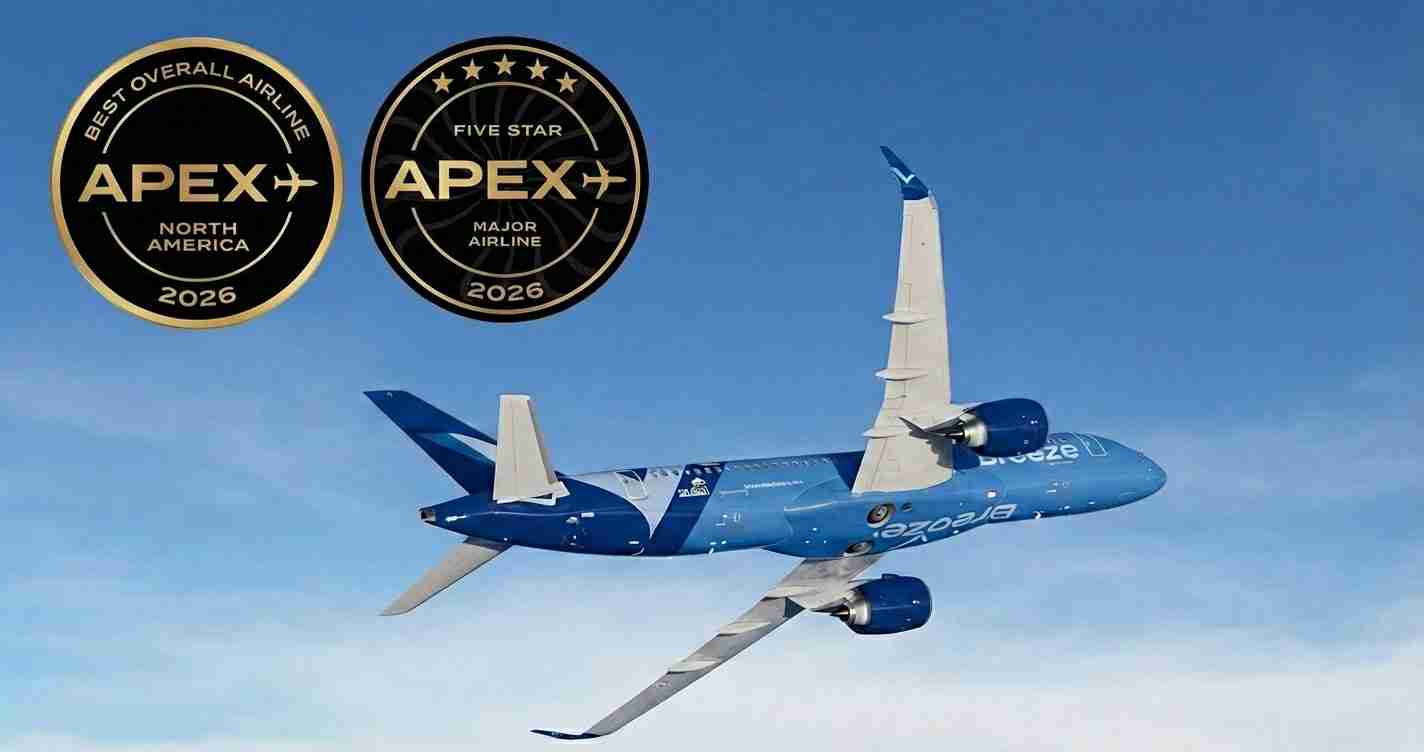
Breeze operates Airbus A220 aircraft across domestic and short‑haul international routes. The carrier now lists more than 300 year‑round and seasonal routes to 81 U.S. and international cities, reflecting rapid expansion since launching in 2021. New Orleans functions as an operational base with 17 nonstop routes, demonstrating Breeze’s small‑market to leisure pairing and hub‑and‑spoke flexibility referenced in the carrier’s announcements: Breeze’s news pages.
Context and competition
Breeze’s moves mirror a broader industry trend of pursuing thin routes—point‑to‑point flights with modest but steady demand that legacy carriers often deem unprofitable. Low‑cost entrants can make those markets viable with lower unit costs and direct schedules. While communities gain nonstop access, observers continue to question long‑term sustainability and the transparency of fee‑driven pricing as fuel and labor pressures mount.
Implications for California
Economic impact: New nonstop service to and from California markets could lower travel costs and boost tourism and business travel if Breeze expands beyond Los Angeles.
Airport competition and fares: Breeze’s entry may pressure legacy carriers and other low‑cost airlines on overlapping routes, potentially lowering fares and restoring service to smaller regional airports.
Consumer transparency: California regulators and advocates will watch ancillary fee disclosures closely—families and travelers who need checked bags or seat selection may see higher final prices than headline fares suggest.
Jobs and infrastructure: A Bay Area or Southern California presence could create ground and support jobs; however, major airports’ slot and gate constraints may steer Breeze toward secondary airports or off‑peak schedules.
Sources and reporting
This article draws on Breeze’s announcements and aviation coverage, including Simple Flying’s overview of new routes, reporting on New Orleans‑Cancun by New Orleans CityBusiness, the Aviation Week route calendar and Breeze’s own pages at Breeze’s news and route support information.
Booking and route details
Travelers seeking schedules, fares and the carrier’s route calendar should consult Breeze’s official announcements and route calendar and the carrier’s route support pages for details on seasonal timing and service frequency. Additional reporting on specific launches is available from Aviation Week and Simple Flying.
For consumers: compare total ticket prices (base fare plus ancillary charges) and check schedules carefully to confirm nonstop availability and seasonal timing.