Bay Area food banks overwhelmed as SNAP benefit delays leave thousands scrambling
Delays to federal SNAP/CalFresh benefits have triggered a surge at Bay Area food banks, leaving millions without expected aid and pushing local charities and state agencies into emergency response to feed tens of thousands of families.
- 42 million Americans experienced halted SNAP benefits during the federal funding lapse.
- In California, roughly 5.5 million recipients were affected.
- Bay Area food banks reported surges — often more than 30% increases — prompting emergency distributions.
- State action included plans to deploy the National Guard and fast-track funding.
Scale of the crisis
The lapse in federal funding produced a nationwide shock: an estimated 42 million Americans saw SNAP benefits halted. In California, that translated to roughly 5.5 million households suddenly without their standard monthly benefits.
Locally, the problem concentrated in high-cost areas of the Bay Area. For example, Santa Cruz County reported about 40,000 families who did not receive expected CalFresh payments, leaving many households scrambling for emergency food.
Impact on food banks and community response
Food banks shifted operations in days: adding distribution sites, creating drive-through and walk-up events, and arranging home deliveries for the homebound. Second Harvest Food Bank Santa Cruz County expanded site locations and began mass distributions to meet urgent demand.
“Food banks have always been the second line of defense against food insecurity. SNAP has always been the first,” said Erica Padilla-Chavez, CEO of Second Harvest Food Bank Santa Cruz County, underscoring that food banks are not designed to replace federal nutrition programs.
Community volunteers, churches, schools and nonprofits stepped up as temporary distributors. However, increased volume drove up costs for storage, transportation and staffing, forcing emergency appeals to donors and partners (local reporting).
Government action and relief efforts
State officials acted to bridge gaps as federal responses lagged. California announced plans to deploy the National Guard to help food banks and to fast-track state funding for emergency purchases and logistics.
At the federal level, legal action attempted to force benefit payments: a judge ordered the administration to pay some benefits from a contingency fund on Oct. 31, a step that provided partial relief but left questions about timing and full coverage (reporting).
How the gap exposed system weaknesses
This episode revealed a structural weakness: SNAP/CalFresh is intended as the first line of hunger prevention, and when it falters, food banks are forced into a front-line role for which they lack sustained funding and infrastructure. As one analysis observed, food banks were never built to feed millions each month for prolonged periods (Local News Matters).
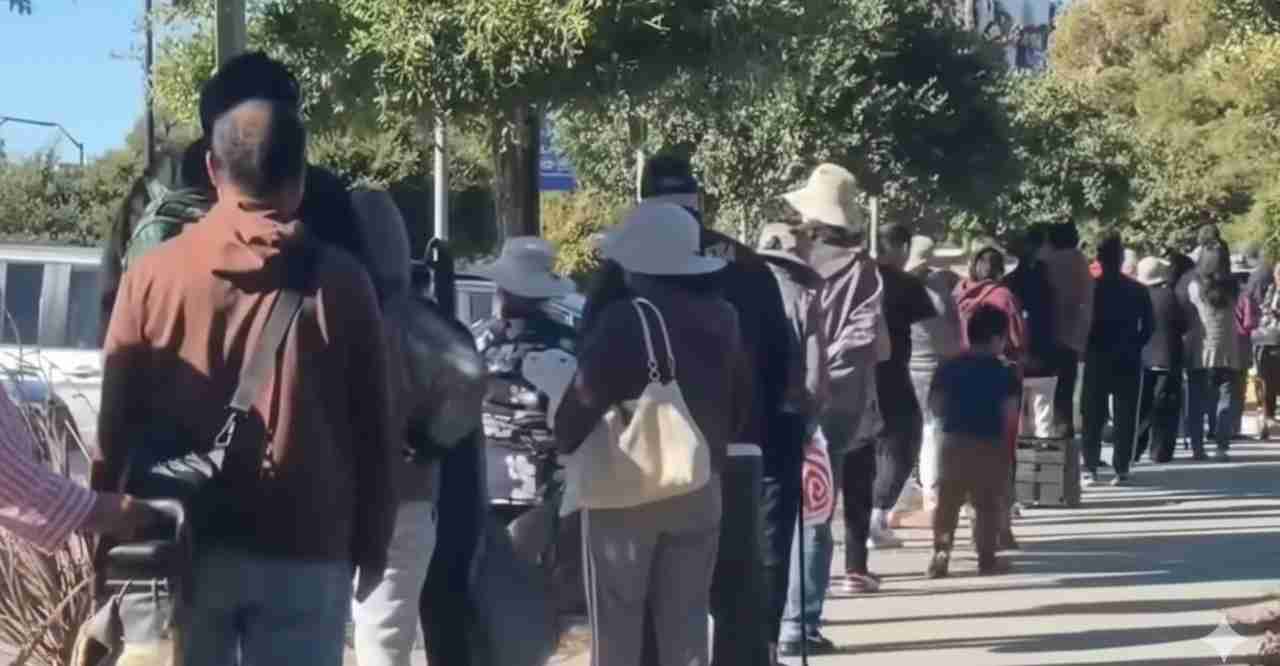
Many families who had never used emergency food assistance found themselves in lines, showing how quickly interruptions to income or benefits can push households into food insecurity—especially in high-cost regions like Silicon Valley.
Voices from the field
Regional reporting documented long lines at distribution sites, staff working extended hours, and families stressed by missing benefits (CBS News San Francisco; OPB).
Implications for California
Economic impact
Increased demand puts pressure on local budgets and charities: emergency purchases, added staff coordination, and higher transportation costs may force local governments to reallocate funds. Employers—especially in hospitality, retail and service industries—may see productivity and retention impacts as workers face food insecurity (reporting).
Political consequences
The crisis is likely to shape policy debates. Voters may demand more reliable benefit delivery and contingency funding. California’s quick move to deploy the National Guard illustrates state-level willingness to intervene—and could fuel calls for federal reforms.
Social effects
Families new to emergency food lines face stigma and stress, and institutions like schools and clinics may see rising demand as child health and learning are affected. Rapid hunger responses can prevent wider social costs.
Cultural relevance
The surge has both united neighborhoods and exposed inequality in a region known for wealth and innovation, prompting reflection on how community values align with social supports (local coverage).
Practical applications for residents
- Residents who rely on CalFresh should check official state and county channels for timing updates (guidance).
- Those who can help should donate to local food banks, volunteer at distribution sites, or support nonprofits coordinating emergency deliveries (local appeals).
- Policymakers and community leaders should plan contingencies—pre-arranged state funding lines, contracts with distributors, and streamlined logistics between state and community groups—to keep food moving during future interruptions (state actions).
Reporting and sources
This article draws on regional and national reporting documenting the surge in demand and the response by community and state officials. Key sources include:
- Oregon Public Broadcasting (OPB)
- Scotscoop
- CBS News San Francisco
- ABC News
- Office of the Governor of California
- Local News Matters
Reporting by Times Media Service