Alito invokes Scalia “microwave” analogy as Supreme Court hears fight over birthright citizenship
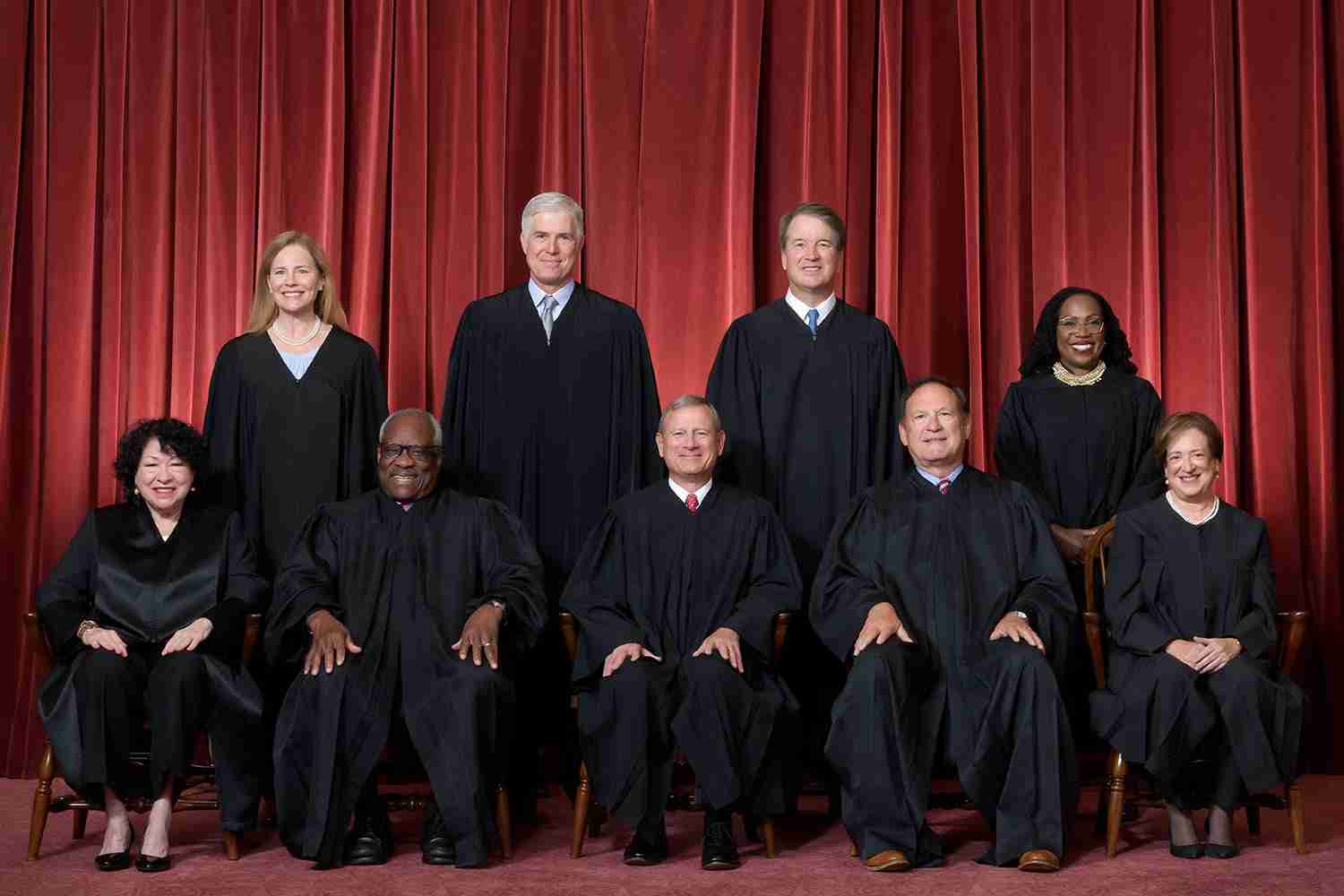
Supreme Court Justice Samuel Alito invoked Justice Antonin Scalia’s microwave analogy during April 1, 2026, oral arguments in Trump v. Barbara, a case challenging President Trump’s Executive Order 14160 that seeks to end birthright citizenship under the 14th Amendment.
Key takeaways
- Case: Trump v. Barbara — oral arguments heard April 1, 2026; Video transcript and coverage; Video transcript and coverage.
- Legal issue: Whether the 14th Amendment’s Citizenship Clause grants automatic citizenship to children born in the U.S. to undocumented immigrants (reporting and analysis).
- Court dynamic: Justice Alito (invoking Scalia’s textualist example) and Justice Thomas appeared most receptive to the government; several other justices were skeptical.
- Government stance: The Trump administration defends Executive Order 14160 as consistent with principles of allegiance and domicile; Solicitor General D. John Sauer’s argument.
Background: the argument and the analogy
During high-stakes oral arguments, Justice Alito turned to a Scalia-style textualist argument to explain how a broadly worded rule should apply to novel facts. He recalled Justice Antonin Scalia’s hypothetical about a theft law written before microwave ovens existed: when someone later is charged with stealing a microwave and argues they cannot be convicted because microwaves were unknown at the time the law was passed, Scalia’s response was that the general rule applies to future situations and to new items the drafters could not have imagined.
“Suppose a theft statute was written long before microwaves were invented. If someone later stole a microwave, the statute would still apply — the text reaches items the drafters could not foresee,” Alito paraphrased Scalia.
Applying that logic, Alito asked whether the 14th Amendment’s broad language should cover children born in the United States to parents who entered illegally — a circumstance he described as “basically unknown” in 1868. He noted the drafters recognized explicit exceptions then — children of foreign diplomats and certain Native Americans — and suggested those narrow exceptions could imply a broad general rule that reaches later, unforeseen situations. Video of Alito’s remarks is available (Video of Alito’s remarks).
Government’s argument and alignment with Alito
Solicitor General D. John Sauer defended Executive Order 14160 by arguing the Citizenship Clause must be read to reflect principles of jurisdiction tied to allegiance and domicile. Sauer told Justice Alito he agreed there is a general principle that should apply to later factual developments — effectively endorsing the microwave analogy as a way to apply old text to new problems (Sauer’s remarks and exchanges).
Sauer’s briefing and arguments highlighted two focal points: temporary visitors and the proposition that certain non‑citizen presences are not covered for citizenship purposes. That framing prompted Justice Elena Kagan’s questioning: she noted the government cannot have it both ways — if the government’s case rests on temporary visitors, that emphasis undermines a broader exclusion of unauthorized immigrants. Kagan pressed the government to identify a principle existing at the time of the 14th Amendment to exclude particular groups.
Justices’ reactions and where the Court leaned
Video and reporting show the justices reacted sharply and in different directions. Justices Alito and Clarence Thomas appeared most receptive to the government’s reading that applies the text broadly while carving out narrow historical exceptions. Several other justices voiced skepticism, questioning whether the executive branch could override settled understandings without clear textual support. The back-and-forth is captured in coverage and clips (Report and video; argument clip).
Justice Kagan directly confronted the government’s shifting emphases, emphasizing that if the government seeks a reading that excludes certain groups it must show a principle tied to the Amendment’s time. Her line of questioning underscored skepticism about reading broad parental-based exclusions into the Clause without clear historical grounding (see transcript and analysis).
Textualism, counterarguments and SCOTUSblog analysis
Alito’s reliance on Scalia’s textualist method emphasizes plain language and original meaning: if a rule is broadly phrased, it may apply to facts the drafters could not have foreseen. But outside analysis warns the government’s order may conflict with a plain reading of the Citizenship Clause. A detailed examination at SCOTUSblog argues the Clause emphasizes birthplace and jurisdiction — it does not mention parents — and that the executive order effectively invents parent-based exclusions not found in the text.
The SCOTUSblog piece also notes that historical exceptions were explicit in practice — diplomats and certain Native Americans — and that courts and commentators have treated the clause largely as a birthplace rule. That counterpoint undercuts the government’s attempt to read in a broad parental exception absent textual support (SCOTUSblog analysis).
Source material and full video
The exchanges, including Alito’s Scalia example and the back-and-forth between the justices and attorneys, are available in video clips and transcripts. Major available sources include Fox News coverage and clips and direct Supreme Court audio and video excerpts (full argument video; full argument video). A Fox News video excerpt is also available (Fox News video clip).
Implications for California
Economic impact: California’s large immigrant population and many households with mixed immigration status mean a ruling narrowing birthright citizenship under Executive Order 14160 could affect federal benefits eligibility and tax filings for U.S.-born children. Schools and health systems may face changes in enrollment documentation and eligibility verification; employers could see new uncertainty about workforce documentation.
Political consequences: As a diverse, heavily immigrant state, California could see state leaders and voters push for state-level protections, sanctuary policies, or legal challenges. The decision could sharpen political divides and become a central issue in statewide and local campaigns.
Social effects: Communities with large immigrant populations may face increased fear and confusion if birthright citizenship is restricted. Families could incur legal costs and paperwork burdens; community organizations and legal aid groups will likely see higher demand for assistance.
Cultural relevance: California’s identity is closely tied to immigration and multicultural communities. A move to restrict birthright citizenship could prompt public demonstrations, advocacy, and sustained civic debate across cities from Los Angeles to the Central Valley and the Bay Area.
Practical applications for residents: Parents and hospitals may need updated guidance on birth certificates and citizenship verification. Schools and local clinics should prepare to answer questions and coordinate with state agencies; counties and cities may issue guidance for vital records offices to reduce confusion while litigation continues.
Reporting note and sources
This report draws on coverage and court video of the April 1, 2026 oral argument and analysis of the constitutional issues. Key sources include Fox News coverage and clips, direct Supreme Court audio and video excerpts (audio/video excerpt; audio/video excerpt), and a legal analysis at SCOTUSblog. These sources confirm Justice Alito’s citation of Justice Scalia’s microwave analogy and document the range of questioning over the scope of the 14th Amendment’s Citizenship Clause and arguments about Trump Executive Order 14160.
Full argument videos and clips: full argument video; full argument video; Fox News clip.