NTSB Releases Frame-by-Frame Images Showing Engine Separation in UPS Flight 2976 Crash
The NTSB released a preliminary report and frame-by-frame surveillance images showing the left engine and pylon separating from UPS Flight 2976’s MD-11F during takeoff in Louisville, a failure sequence that preceded a crash killing 14 people.
- Key takeaways:
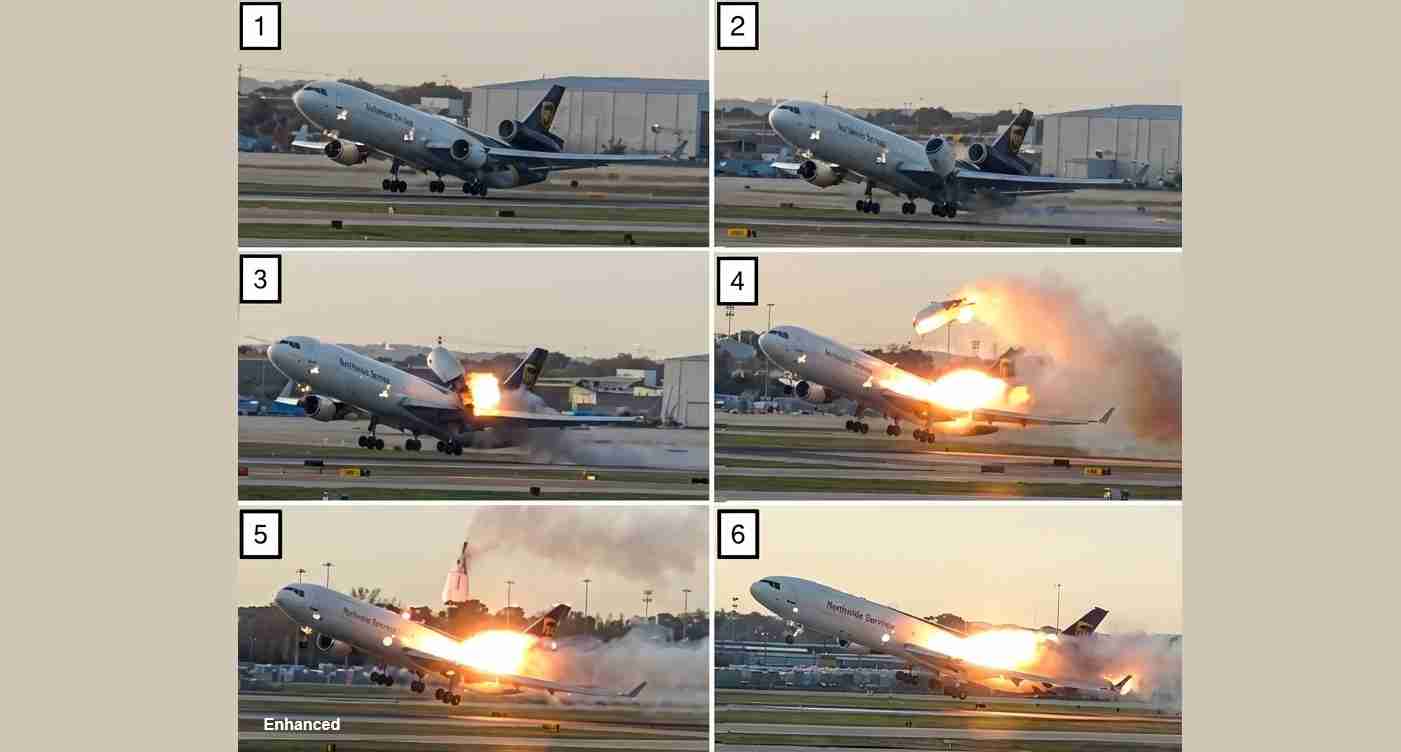
- Surveillance frames document the left engine and pylon detaching during rotation and a near-immediate fire at the wing-pylon junction.
- Investigators focus on fatigue cracks in the left engine pylon as the likely initiating structural failure.
- The crash killed 14 people (three crew and 11 on the ground) and has prompted scrutiny of inspection, maintenance and design oversight.
Key information
- Aircraft: McDonnell Douglas MD-11F cargo jet, equipped with GE CF6 engines (see NTSB preliminary report (PDF)).
- Flight: UPS Flight 2976.
- Date and place: November 4, 2025, near Louisville Muhammad Ali International Airport (KSDF) (reported by ABC News).
- Casualties: 14 fatalities — three crewmembers and 11 people on the ground (coverage by Flying Magazine).
- Visual evidence: Frame-by-frame airport surveillance images show the left engine and pylon detaching during rotation and a visible fire at the wing-pylon attachment (see reporting by ABC News, AVweb, and video excerpts linked below).
- Investigation focus: NTSB work centers on fatigue cracks in the left engine pylon as the apparent cause of structural failure (Flying Magazine; FreightWaves).
What the images show
The NTSB released a set of frame-by-frame surveillance images documenting the moments around takeoff rotation. The sequence shows the MD-11F taxiing and accelerating normally. At rotation — when the pilots lift the nose — the left engine and its pylon visibly separate from the wing and appear to travel upward over the fuselage.
A burst of fire or a flaming trail is visible near the wing‑pylon attachment and continues until the aircraft impacts buildings near the airport. The aircraft climbed only briefly after rotation, reaching an estimated height of no greater than 30 feet before losing control and striking structures adjacent to the runway (ABC News; AVweb; Flying Magazine).
Technical focus: pylon fatigue and structural failure
Investigators have concentrated on the left engine pylon — the structure that attaches the engine to the wing. The NTSB’s preliminary material highlights metal fatigue cracks in the pylon that appear to have grown over time and weakened the attachment until it failed.
Fatigue cracking occurs when repetitive loads create microscopic flaws that grow until sudden failure. Investigators are reviewing the pylon’s inspection history, maintenance records and design loads to determine how such cracks progressed undetected (see NTSB preliminary report (PDF) and analysis by Flying Magazine).
Why the images matter
The frame-by-frame footage provides a precise, time‑stamped visual record that helps match wreckage, metallurgical findings and maintenance logs to the instant of failure. Visual confirmation of engine and pylon separation and the immediate fire at the attachment point strengthens the hypothesis that a structural failure — not pilot action or an external strike — initiated the accident.
“The frame-by-frame images add critical evidence to a complex technical investigation that will determine whether inspection rules, maintenance practices or design changes are needed.”
Casualties and community impact
Fatalities: All three crewmembers aboard UPS Flight 2976 and 11 people on the ground were killed. The toll has intensified scrutiny of maintenance practices, oversight of aging airframes, and the safety of flight operations near populated areas.
The NTSB’s full investigation will include metallurgical tests, maintenance-record reviews and interviews to decide whether inspection protocols or design changes are warranted (Flying Magazine; FreightWaves).
Ongoing investigation and industry questions
While the preliminary material centers on pylon fatigue cracks, the full probe could take months or longer. Investigators will evaluate inspection intervals, nondestructive testing effectiveness, and whether MD‑11 installations or similar fleets require design or inspection rule changes (NTSB preliminary report (PDF)).
Aviation experts are already discussing options including more frequent inspections, improved NDT methods, and special attention for older freighters operating heavy cargo loads (Flying Magazine; FreightWaves).
Public access to evidence
The NTSB’s release of surveillance frames follows customary transparency in major investigations. Images and preliminary analysis are now part of the public record, enabling independent experts, manufacturers and the press to review the evidence alongside the NTSB’s technical work (see coverage by ABC News and AVweb).
Implications for California
Economic impact
California relies on fast air freight for electronics, perishable goods and time‑sensitive inventory. Industry responses — grounding, more inspections or fleet retirements — could raise shipping costs and delay deliveries. Ports and logistics firms will monitor advisories affecting MD‑11s and similar freighters (FreightWaves).
Political consequences
State and federal officials in California may press for clear timelines and evidence-based safety measures. Lawmakers could request FAA briefings or oversight hearings that balance safety with minimizing economic disruption.
Social effects
Public concern about cargo jets over communities may rise, especially after 11 ground fatalities. The event could renew calls for buffer zones, stricter land‑use planning near runways, and strengthened community outreach on flight-safety issues.
Cultural relevance
The story intersects Californians’ priorities: safety and efficient goods movement. Stakeholders will likely seek balanced approaches that protect people while keeping logistics networks functional.
Practical applications for residents
- Shippers and businesses should monitor FAA and NTSB updates and ask carriers about contingency plans if inspection mandates affect service.
- Airport and local officials should review emergency response plans and community outreach programs.
- Residents near airports should watch for public meetings and notices from local airport authorities about safety and land‑use planning.
Source links and reporting
- NTSB preliminary report (PDF)
- ABC News coverage
- AVweb report
- Flying Magazine analysis
- FreightWaves reporting
- Surveillance video excerpt (YouTube 1)
- Surveillance video excerpt (YouTube 2)
Conclusion
Investigators say the frame-by-frame images add critical evidence to a complex technical investigation that will determine whether inspection rules, maintenance practices or design changes are needed to prevent a similar MD‑11 engine separation in the future. The NTSB’s continuing work will inform regulators, carriers and aircraft owners as they weigh safety steps against operational impacts.