DOJ sues Newsom in high-stakes racial gerrymandering lawsuit over California redistricting map
The Justice Department sued Governor Gavin Newsom and California officials, alleging Proposition 50 redistricting relied on Latino demographic data to create unlawful racial gerrymanders and asking courts to block the new congressional map for the 2026 elections.
- The DOJ has intervened in a lawsuit challenging California’s new congressional map enacted under Proposition 50 and related filings by the federal team (ACJL filing).
- Federal civil-rights lawyers contend that race — specifically Latino demographic data — was the predominant factor in drawing several districts, an alleged racial gerrymander.
- The DOJ is asking a federal court for an injunction to block use of the map in the 2026 elections while the suit proceeds (further reporting).
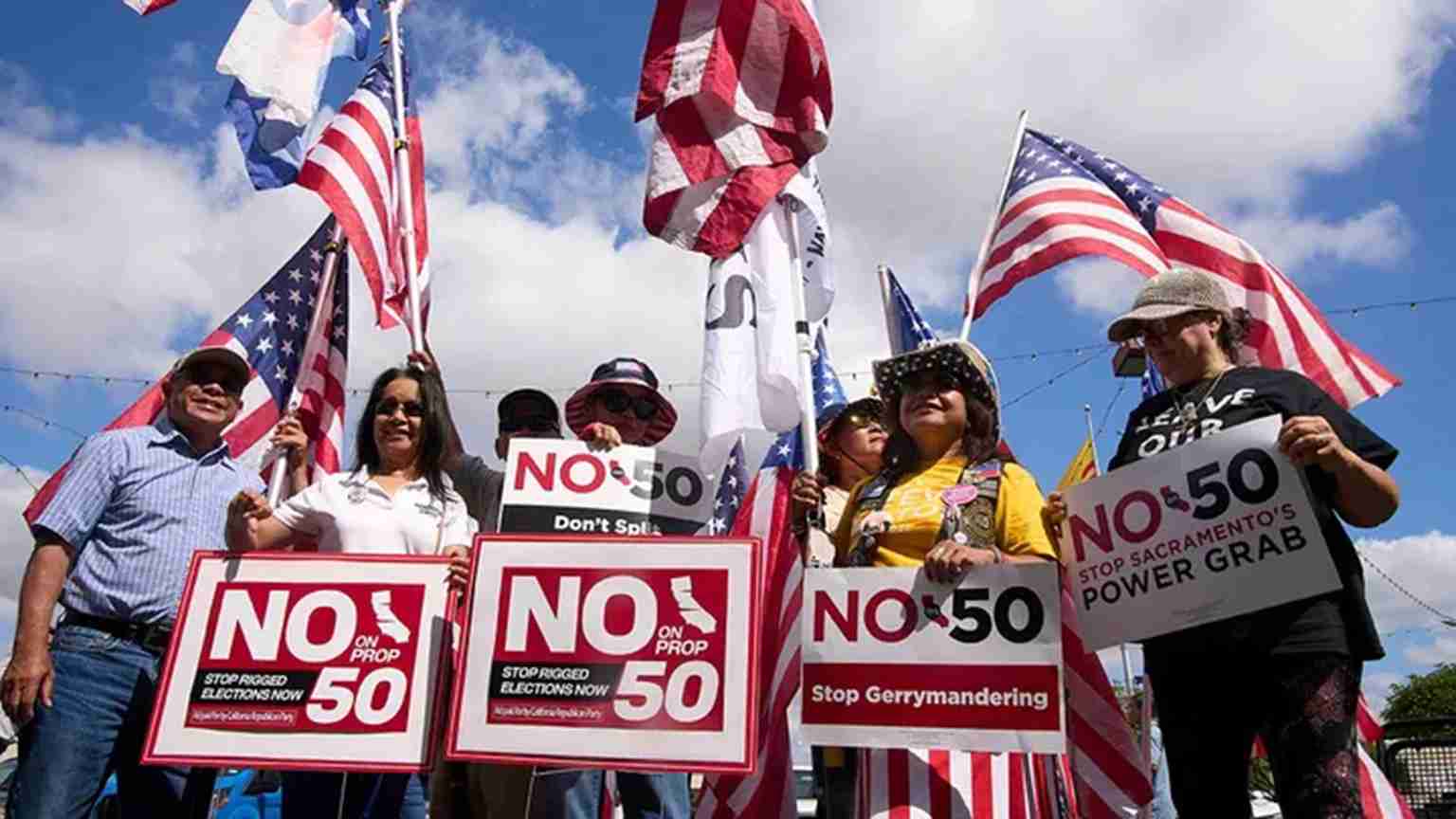
- Supporters of Proposition 50 say it restores minority voting strength (supporters’ view); opponents call it a partisan power grab (critics’ analysis).
What the DOJ alleges
Federal civil-rights lawyers allege the California Legislature, after Proposition 50 returned map-drawing power to lawmakers, relied heavily on Latino demographic data when reshaping several congressional districts. The department’s complaint argues lawmakers drew lines to form Latino-majority districts in ways that served partisan ends, which the DOJ calls an unlawful racial gerrymander under the Equal Protection Clause of the Fourteenth Amendment (SF Standard report, DOJ filing summary).
“Entrench one-party rule,” the complaint asserts, saying lines were drawn to convert as many as five Republican-held seats into Democratic-leaning ones.
How Prop 50 fits in
Proposition 50, approved by nearly 65% of California voters, suspended the state’s independent redistricting commission and returned congressional mapmaking to the Democratic-controlled legislature. Supporters framed the change as necessary to protect minority representation and to respond to partisan maps in other states; critics warned it invited politically driven lines that might violate constitutional protections (analysis, coverage).
Voices on both sides
Attorney General Pam Bondi, representing the federal filing, described the map as a “brazen power grab that tramples on civil rights and mocks the democratic process.” (statement).
Governor Gavin Newsom pushed back, calling Proposition 50 and the legislature’s work a defense of minority voters and signaling his administration will vigorously contest the DOJ’s intervention via social media and legal filings (Newsom response).
Legal stakes and strategy
By intervening, the DOJ has elevated a state-level dispute into a federal constitutional showdown over the role of race and partisan intent in mapmaking. Federal courts have previously invalidated maps where race, rather than traditional districting criteria, dominated the line drawing. The DOJ asks the federal judiciary to enjoin the new map for the 2026 cycle while the suit proceeds (DOJ brief, reporting).
National context
The lawsuit arrives amid nationwide fights over congressional maps. Republican legislatures in states such as Texas, Missouri, North Carolina and Ohio have recently passed GOP-leaning maps, and Democrats have challenged such maps as partisan gerrymanders or suppression. The DOJ’s action places the federal government at the center of disputes about whether race or partisanship predominates in redistricting decisions (analysis, context piece).
How the map would shift seats
Public analyses cited in filings estimate the new map could change the partisan balance of up to five seats, potentially reducing Republican representation in California from nine seats to as few as four. Such a shift would tilt the state’s delegation more uniformly Democratic and alter committee representation and policy influence in Congress (seat-shift estimates).
Process and precedent
California’s return from an independent commission to legislative control is uncommon among large states and raises checks-and-balances questions: when should voters cede authority to lawmakers, and when should independent or judicial oversight prevent constitutional violations? The DOJ suit will test those boundaries in federal court (coverage, legal filing).
Implications for California
Economic impact
A prolonged legal fight could create uncertainty for campaigns, consultants and local governments planning for 2026. Redrawing lines or delays could increase costs for candidates and election officials, and boost demand for firms that provide voter data and legal counsel (economic reporting).
Political consequences
If the court blocks the map, lawmakers may be forced to redraw districts under judicial supervision, potentially restoring competitiveness or changing which party controls key seats — with major consequences for representation and legislative priorities (legal implications).
Social effects
The dispute spotlights tensions between protecting minority voting rights and avoiding race-based line drawing that courts deem unconstitutional. Communities of color, civic groups, and voting-rights organizations will watch closely; reactions could deepen divisions or spur bipartisan engagement efforts (community response).
Cultural relevance
For many Californians, especially voters who backed Proposition 50, the change was framed as restoring minority voice. For others, the DOJ’s intervention underscores fears that partisan power plays can override voter intent and equal-protection principles, fueling debate over race and partisanship in mapmaking (perspectives).
Practical applications for residents
Voters should expect potential changes to district boundaries, representation, and campaign resource allocation. County election offices may delay final voter information until courts rule. Prospective candidates and volunteers should monitor filings closely and prepare for possible redraws or extended litigation (advisory).
Court timeline and next steps
The DOJ has asked a federal court for an injunction to halt use of the map in 2026 while the case proceeds. Expect rapid filings, hearings and legal briefs in the coming weeks as both sides press their arguments; the election calendar pressures the timetable, but complex factual and legal questions about intent and statistical evidence could slow resolution (DOJ filing, coverage).