
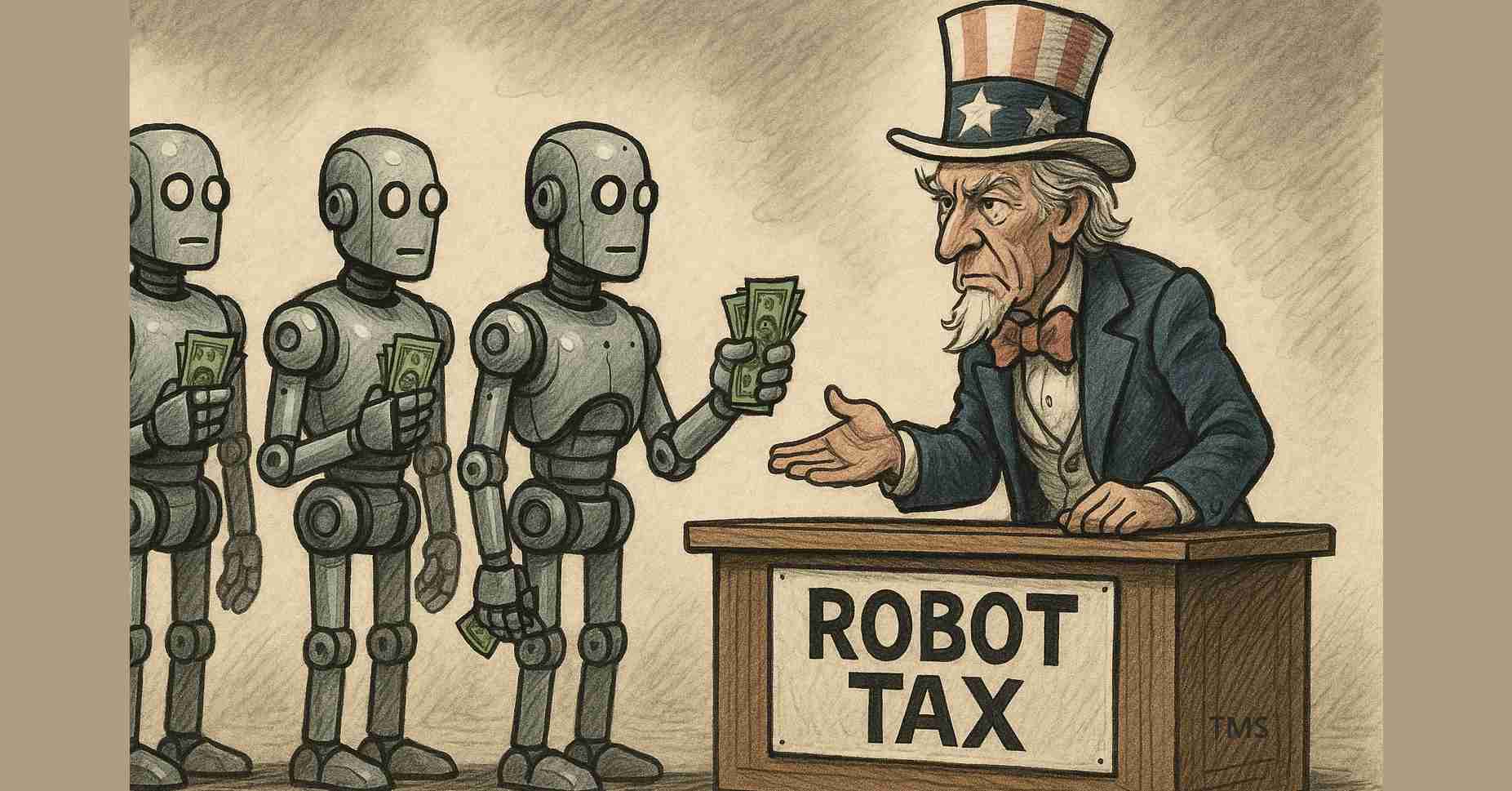
Democrats Push “Robot Tax” as Senate Report Warns AI Could Threaten 100 Million U.S. Jobs
Lede: A Senate HELP Committee staff study warns AI and automation could displace nearly 100 million U.S. jobs over the next decade. Democrats are pushing a proposed “robot tax” to fund retraining and aid for displaced workers.
- Senate analysis: HELP Committee staff estimate automation could threaten nearly 100 million U.S. jobs in the next decade.
- High-risk roles: Fast food and counter workers could face an ~89% replacement rate; other roles (customer service, freight movers, executive assistants) show >80% automation potential.
- Policy response: Democrats propose a “robot tax” to levy firms that replace human workers and finance retraining and transition support.
Report at a glance
A staff analysis for the Senate Health, Education, Labor and Pensions (HELP) Committee reviewed 20 major job sectors and concluded that 15 could see a majority of positions automated. The report warns that, if current trends continue, AI and automation could displace nearly 100 million U.S. jobs over the next decade (source: Fox Business).
Job sectors at risk: what the report found
The analysis maps how automation tools and AI models could replace routine and semi-routine tasks. Fast food and counter workers topped the list with an estimated 89% potential replacement rate, reflecting automation in order taking, food prep, and cashiering (source: Fox Business).
Other occupations—customer service, freight and material movers, and administrative positions like executive assistants—show projected automation rates above 80%. Overall, the staff analysis suggests widespread disruption to middle- and lower-income work.
Broader evidence and industry studies
Industry studies corroborate the risk. The Adecco Group estimates up to 80% of restaurant jobs could be affected by automation driven by kiosks, automated kitchens and delivery technologies. Geographic analyses, including work from the World Economic Forum, show that low-skill, service-heavy states—such as Nevada, Louisiana and Florida—face higher exposure.
What Democrats are proposing: the robot tax
Democratic lawmakers and HELP Committee allies are advocating a “robot tax”—a levy on firms that replace human employees with machines or AI systems. Revenue would fund retraining, job-placement services, and safety-net programs to support displaced workers.
Supporters frame the proposal as a fairness measure: companies that gain efficiency and profit from automation should help cover the social cost of job losses. Coverage of related arguments appears in Mexc, Mitrade, and Fox Business.
Opponents argue a robot tax could slow innovation, raise costs, reduce investment, and weaken U.S. competitiveness—potentially shifting production and jobs overseas.
Where automation could hit hardest
Patterns are clear: low-wage, routine jobs (fast food, retail cashiering, basic assembly, some transportation roles) and middle-skill administrative positions that involve predictable tasks are most vulnerable. Geography amplifies risk—regions with service-, hospitality-, and low-wage manufacturing-heavy economies will likely see sharper impacts (see World Economic Forum).
Industry reaction: restaurants and retail
Restaurants are adopting kiosks, automated food-prep systems and AI ordering to manage labor shortages and off-premises trends. The Adecco Group warns this could affect up to 80% of roles. Retailers use self-checkout, chatbots and automated warehouses, replacing cashier, help-desk and material-handling tasks.
Industry view: Automation can boost productivity but may displace many routine jobs—prompting calls for shared responsibility in easing transitions.
Political and economic debate
The robot tax debate combines policy and philosophy. Democrats emphasize sharing automation gains and protecting workers. Republicans and business groups warn of dampened innovation and competitiveness. Economists are split: some support targeted levies for retraining, others prefer broad investments in education and portable benefits without penalizing automation.
Implications for California
Economic impact: California’s large hospitality, retail and food-service sectors make it especially exposed. Fast food and counter worker displacement could affect millions statewide given tourism and scale (sources: Fox Business; Adecco Group).
Political consequences: State lawmakers may face pressure to adopt worker protections, retraining programs, or tax structures mirroring the federal debate—forcing a balance between worker support and maintaining incentives for tech investment.
Social effects: Displacement risks are greatest for lower-income communities and regions dependent on service jobs. Job losses could strain social services, affect commuter patterns, and shift housing demand in smaller cities.
Practical applications for residents
- Workers: Those in fast food, retail, customer service and warehouses should explore retraining and upskilling now.
- Small businesses: Evaluate automation for cost, productivity and community impact—plan workforce transitions responsibly.
- Local governments: Expand retraining, career counseling and portable benefits to help workers move between jobs and industries.
Sources and further reading
- Fox Business: “Democrats demand robot tax as AI reportedly threatens to replace 100M U.S. jobs”
- Adecco Group: “80% of restaurant jobs could be taken over by robots”
- World Economic Forum: “Here are the states where a robot is most likely to steal your job”
- Mexc: Democrats’ push for robot tax (news summary)
- Mitrade: Coverage of live news related to robot tax discussions
For further context and original reporting, consult the linked sources above. This article preserves the facts and sources cited in the Senate HELP Committee staff analysis and related industry studies.



