Texas man arrested after driving Tesla Cybertruck into Grapevine Lake to test ‘Wade Mode’
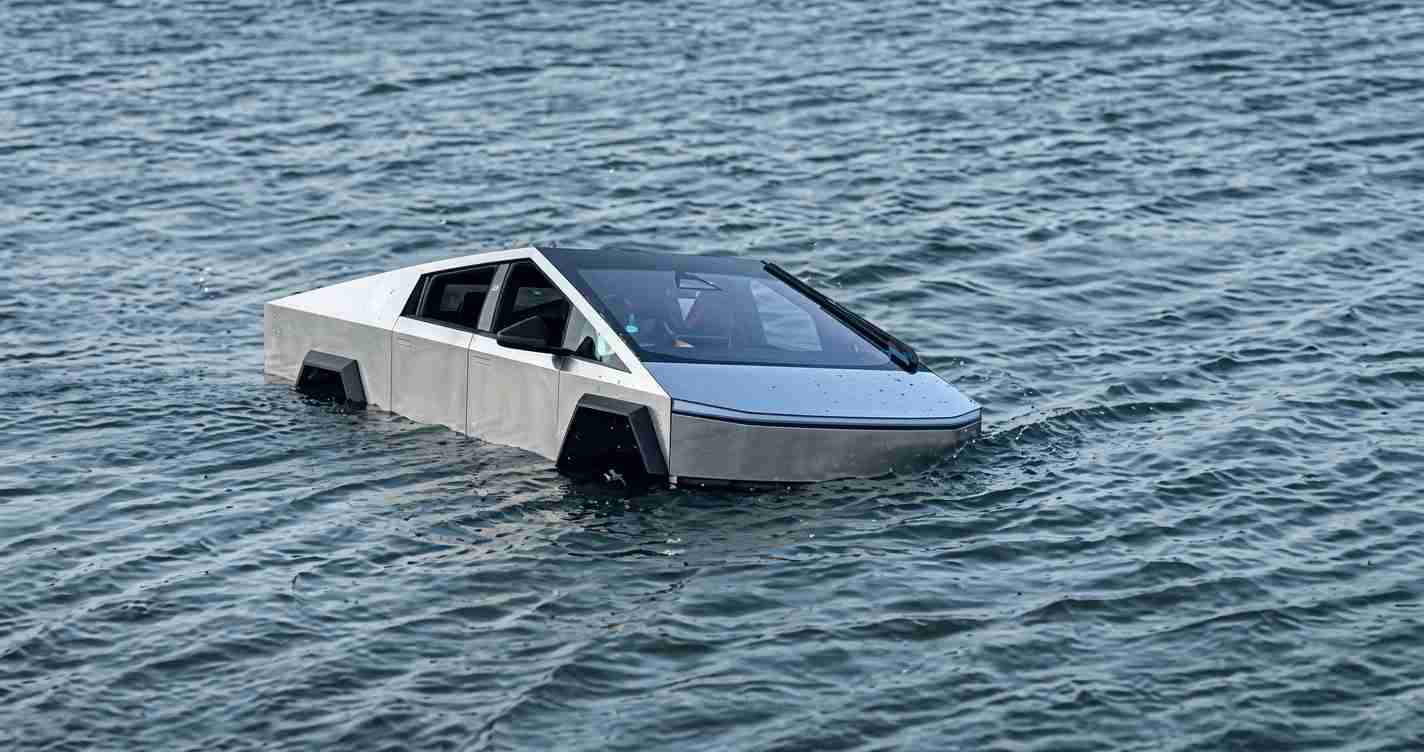
A Tesla Cybertruck became partially submerged in Grapevine Lake Monday after its 70‑year‑old driver, Jimmy Jack McDaniel, said he intentionally drove into the water to test the vehicle’s Wade Mode. Grapevine police arrested him on multiple charges.
- Incident: A Cybertruck was found partially submerged near Katie’s Woods Park boat ramp after the driver admitted he intentionally drove into the lake to test Wade Mode. (Grapevine Police Department Facebook post; Fox 4 Dallas-Fort Worth)
- Occupants: The driver and passengers exited safely; no injuries were reported. (Grapevine Police Department; Fox News Digital)
- Arrest & Recovery: Driver identified as 70‑year‑old Jimmy Jack McDaniel was arrested at the scene; the Grapevine Fire Department Water Rescue Team removed the vehicle from the lake. (KDFW/Fox 4; Grapevine Police Department Facebook)
What happened at Grapevine Lake
Officers with the Grapevine Police Department responded late Monday after reports of a partially submerged Tesla Cybertruck near the Katie’s Woods Park boat ramp. When first responders arrived, the pickup sat near the shoreline, disabled and taking on water, police said.
According to GPD, the driver told officers he had deliberately driven the vehicle into the lake to use the Cybertruck’s Wade Mode. The occupants exited the vehicle before emergency crews arrived and were not hurt. The Grapevine Fire Department Water Rescue Team later assisted in removing the truck from the water; authorities released photos showing the stainless‑steel body partially submerged at the ramp. (Grapevine Police Department Facebook post; Fox 4)
Identity and charges
Local reporting named the driver as 70‑year‑old Jimmy Jack McDaniel, who was arrested at the scene and remained in custody the following day, according to Fox 4 coverage. Police listed multiple charges tied to operating a vehicle in a closed area of the park and violations related to water safety equipment and boat registration laws — statutes that can apply when motor vehicles operate in public waters under Texas law. (KDFW/Fox 4; Fox News Digital)
What Tesla’s ‘Wade Mode’ is — and isn’t
Wade Mode is marketed by Tesla as an off‑road setting to assist with short, shallow water crossings and rough terrain: it temporarily raises ride height and further seals or pressurizes battery and underbody systems to reduce the risk of water intrusion during limited crossings. Tesla’s guidance urges drivers to avoid conditions that exceed the vehicle’s capabilities and warns against prolonged submersion or deep crossings. (Tesla support)
Wade Mode is intended for shallow creeks and quick water crossings, not deep lakes or extended underwater exposure. The Grapevine incident highlights the risks when drivers overestimate a feature’s limits or test it where depth and bottom contours can change suddenly.
Law enforcement and safety perspective
Grapevine Police used the incident to remind the public that just because a vehicle can enter shallow freshwater does not mean it is legal or safe to do so. In a Facebook post, GPD warned that such actions create legal and safety concerns and noted that parts of parks and lakes are closed to vehicle traffic. (Grapevine Police Department Facebook)
“Actions like these can trigger boating laws, require registration and safety equipment, and place emergency personnel at risk,” GPD advised, underscoring the public‑safety burden of preventable water rescues and recoveries.
Context: Cybertruck culture and owner testing
Since its late‑2023 launch, Tesla has promoted the Cybertruck’s rugged design and off‑road ability. Online videos of owners driving through mud, sand and shallow water can encourage copycat behavior, sometimes treating the vehicle as if it has near‑amphibious capability. Automakers and safety experts emphasize that manufacturer features have limits: Wade Mode can help in shallow crossings, but it does not guarantee protection against failure or damage in deeper water, strong currents, or prolonged submersion.
Implications for California
Economic impact: California first responders and park managers face budget pressures; recoveries and water rescues required by vehicle testing in public waterways carry direct costs and increase wear on specialized teams.
Political consequences: For a politically moderate conservative audience, the incident raises questions of personal responsibility and whether enforcement or restitution should cover recovery costs when people ignore posted restrictions.
Social and cultural effects: In California’s outdoor culture, deliberately driving a truck into a lake can be viewed as reckless, prompting calls for education campaigns, clearer signage, and stricter enforcement at popular ramps and shorelines.
Practical advice: Californians who own off‑road vehicles should read the owner’s manual for features like Wade Mode, know the rules for launch ramps and shoreline access, carry appropriate safety gear, and avoid crossings where depth or bottom contours are unknown.
Reporting and source notes
Details on the Grapevine Lake incident were reported after the Grapevine Police Department posted about the event. Coverage and public records include local TV reporting, national outlets and the department’s post. Sources used in this report include:
- Grapevine Police Department Facebook
- Fox 4 Dallas‑Fort Worth (KDFW)
- Fox News Digital
- Tesla support / vehicle manual
Reporting compiled from Grapevine Police Department posts and local and national coverage.