Tesla to End Model S and Model X Production as Fremont Factory Shifts to Optimus Robot Production after Q4 2025 Earnings
Tesla will end Model S and Model X production as Fremont is repurposed for Optimus humanoid robot mass production by Q2 2026, CEO Elon Musk said on the Q4 2025 earnings call, citing declining sales and a strategic pivot.
- Model S/X production ends: Musk said production will wind down next quarter and stop by end of Q2 2026 (Fox Business; Electrek).
- Fremont repurposed: Space will be adapted for Optimus robot mass production and other initiatives, with a goal of up to 1 million Optimus units annually (Fox Business).
- Financial backdrop: Q4 2025 revenue was $24.9 billion (down 3%); full-year revenue $94.8 billion (down 3%); EV sales fell 16% in Q4 and full-year deliveries fell 9% to 1.64 million (Fox Business).
What Musk said and why it matters
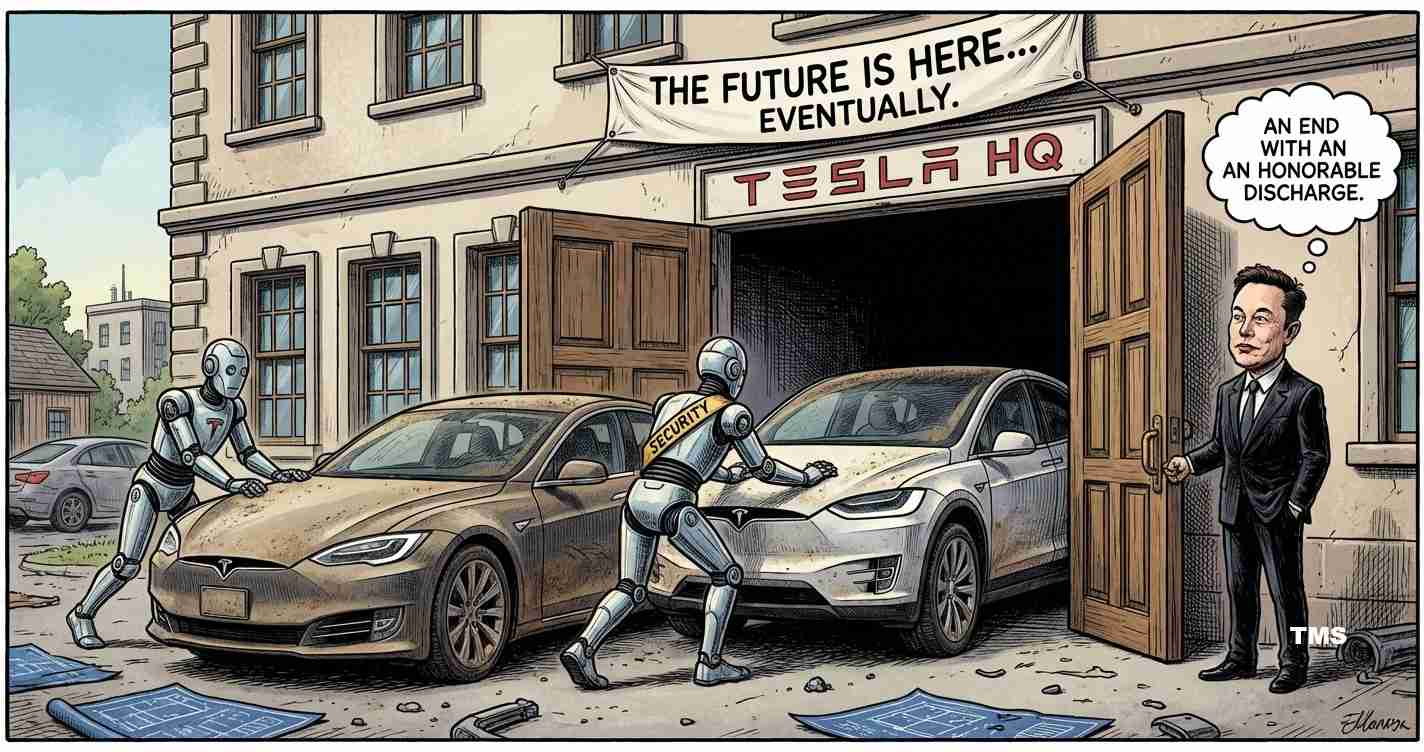
On the Q4 2025 earnings call, Elon Musk framed the move as a strategic pivot away from a shrinking, low-volume product line toward what he described as Tesla’s future: autonomy and robotics. Musk said the Model S and Model X would receive an “honorable discharge” and urged buyers who still want the cars to place orders while inventory lasts (Fox Business; Electrek).
For years the Model S (launched in 2012) and Model X (launched in 2015) served as Tesla’s flagship vehicles and helped establish the company in the premium EV market. But falling demand, periodic price cuts, and limited throughput at Fremont made the two models a small — and shrinking — part of Tesla’s business. Executives say there are no planned direct replacements; the Model 3 and Model Y now account for most deliveries (Edmunds; CarBuzz; Autoblog).
Financial backdrop and delivery trends
Key figures: Tesla reported Q4 2025 revenue of $24.9 billion (a 3% decline year-over-year) and full-year 2025 revenue of $94.8 billion (also down 3%). EV sales declined 16% in Q4 and total 2025 deliveries were 1.64 million vehicles, down 9% from 2024 (Fox Business).
Model S and X deliveries fell sharply: Q4 S/X deliveries were 11,642, down from 23,640 a year earlier. Industry trackers estimate S/X combined deliveries were under 30,000 for 2025 and roughly 50,850 across “Other Models” categories, leaving Fremont operating well below S/X capacity (Electrek; Edmunds).
Repurposing Fremont: cars to robots
Tesla plans to repurpose space at its Fremont, California plant to support Optimus humanoid robot production and other initiatives. Musk said a third‑generation Optimus platform will move to mass production this quarter, with scale lines added next year to support both vehicle and robot production. Tesla stated it intends to build a supply chain capable of up to 1 million Optimus units annually and expects six new production lines in 2026 across vehicles, robots, energy storage and batteries (Fox Business).
“We’re giving Model S and Model X an honorable discharge,” Musk said, framing the change as a reallocation toward Tesla’s next chapter in autonomy and robotics.
The pivot raises practical questions: manufacturing humanoid robots at scale is materially different from auto assembly. Skeptics point to technical challenges, uncertain demand, and economics of mass-market humanoid robots. Supporters counter that Tesla’s automation, battery expertise and manufacturing scale could create a new high-margin business if the company closes the gap between prototypes and high-volume production (Electrek; Autoblog; earnings-call analysis (YouTube)).
Market reaction and corporate strategy
Investors see the decision as a bet: sacrifice short-term sales of low-volume premium vehicles for potential long-term gains in autonomy and robotics. The move comes amid pressure on revenue and deliveries and is coupled with Tesla’s announcement of six new 2026 production lines intended to support vehicles, robots, energy storage and batteries (Fox Business).
Ending legacy premium models may streamline operations but removes a halo product that once drove brand prestige. Dealer, aftermarket and owner communities have reacted across forums, raising concerns about parts availability, resale values and service strategy for long-term owners (Tesla Motors Club; CarBuzz; Edmunds).
Pricing, refreshes and buyer advisory
Tesla provided a minor refresh to the Model S and Model X in June 2025, adding features such as a front bumper camera and improved range. That update pushed sticker prices to about $84,990 for the Model S and $89,990 for the Model X before options. After the earnings call Musk encouraged customers still interested to order while stock lasts. Analysts note price volatility and small inventory runs made volume sales challenging (Fox Business; Electrek).
Implications for California
Economic impact: Fremont is one of California’s largest auto manufacturing sites. Repurposing it from low-volume luxury models to Optimus robot production could change the onsite job mix. If Tesla succeeds at scaling robot manufacturing, the region could see growth in high‑tech roles (assembly, software, supply-chain logistics). But robot production may be more automated and could reduce traditional manufacturing roles. Tesla has not disclosed specific staffing plans tied to the shift (Fox Business; Electrek).
Workforce and training: Transitioning workers from vehicle assembly to robot production will likely require retraining in robotics, software and electronics assembly. Community colleges and workforce programs may need to adapt curricula and reskilling initiatives to meet new employer needs.
Supply chain and local suppliers: Suppliers that supported Model S and X parts could see reduced demand, while opportunities may emerge for firms focused on robotics components, sensors and advanced battery modules. Local businesses tied to worker spending could be affected depending on staffing outcomes (Autoblog; Fox Business).
Political and regulatory angles: State and local policymakers will likely scrutinize job impacts and community outcomes. Regulators will monitor Optimus development closely if robots are marketed commercially or to consumers, raising questions about safety and workplace regulation.
Practical effects for owners: Model S and X owners should watch inventory, parts availability and service updates. Ending production may affect parts, service scheduling and resale values; buyers considering luxury Tesla models should weigh remaining inventory and evolving service strategies (CarBuzz; Edmunds).
Reporting notes and sources
This reporting draws on Tesla’s Q4 2025 earnings call and coverage from multiple outlets and community sources. Key sources cited in this story include:
- Fox Business
- Electrek
- YouTube earnings-call analysis
- CarBuzz
- Edmunds
- Autoblog
- Tesla Motors Club thread
Reporting by Times Media Service.