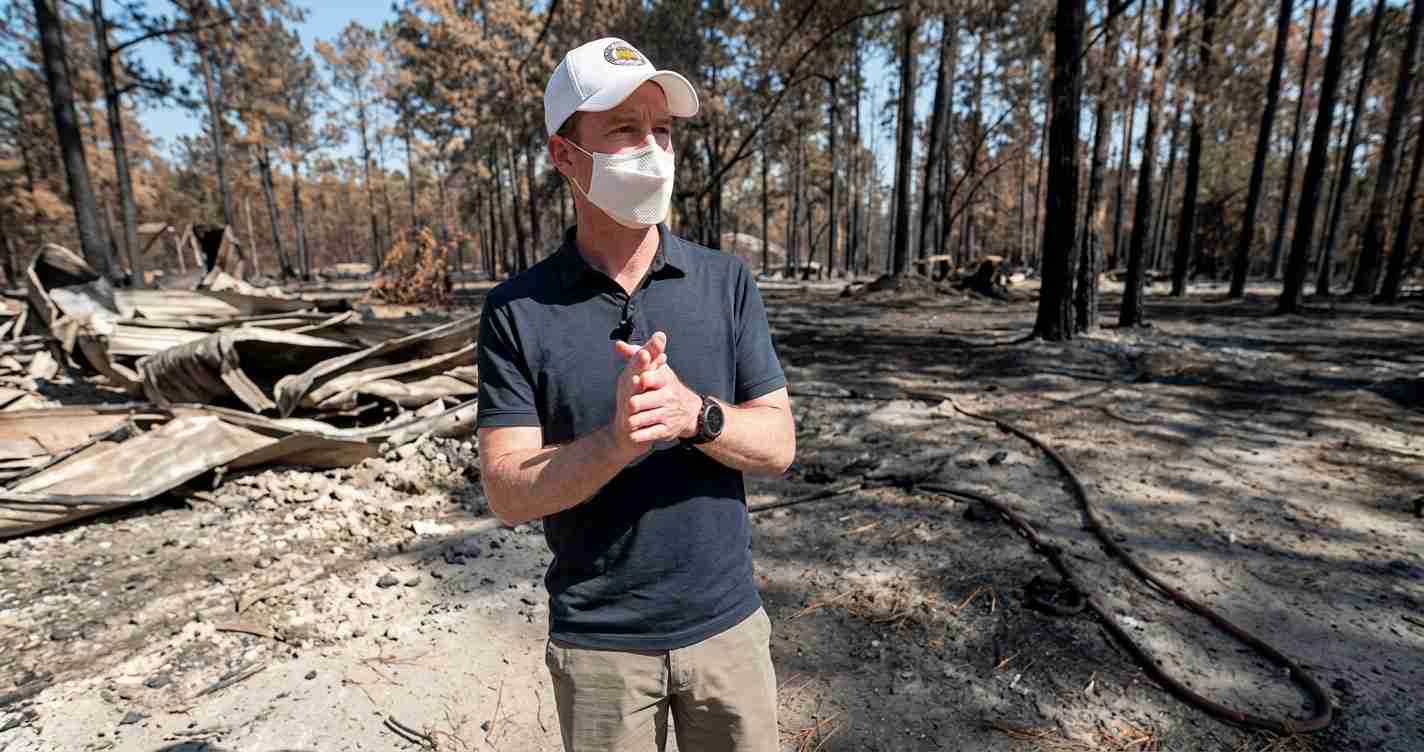
Homeowner Confronts CNN Reporter During Live Brantley County Wildfire Report; Crew Forced Off Private Property
A CNN live report in Brantley County, Georgia, was cut short when a homeowner angrily ordered reporter Derek Van Dam and his crew off private property as nearby wildfires threatened homes, pets and evacuations amid rapidly changing conditions.
Key takeaways
- Fox News video shows the homeowner interrupting Derek Van Dam’s live segment and ordering the crew off her property.
- The homeowner shouted, “I don’t want nobody near my house! My dogs are out there. Get away, get away!” which ended the live shot abruptly.
- Van Dam de‑escalated, telling the homeowner, “You got it, you got it. We are OK. Yeah, we’re going to leave it here. OK? You got it.”
- Earlier in the clip Van Dam described sudden wind shifts and a “putrid chemical burning type smell” that led the crew to don masks; local officials had issued mandatory evacuations and curfews as fires burned across tens of thousands of acres.
Main reporting
What happened on the live shot
The exchange unfolded in the middle of a live field report. Derek Van Dam and his crew were on private property in Brantley County documenting wildfire damage when a homeowner — clearly upset and fearful for her animals and home — confronted them. She repeatedly demanded they leave, shouting that her dogs were still outside and ordering, “Get away, get away!” The encounter cut the live segment short.
Van Dam responded in a measured tone and moved the crew off the property, saying,
“You got it, you got it. We are OK. Yeah, we’re going to leave it here. OK? You got it.”
The network then cut back to the studio, where co-anchor Pamela Brown reacted to the abrupt end of the segment. The video of this confrontation is available from Fox News.
Conditions on the ground
Van Dam’s on-air description painted a picture of unstable, fast-changing fire behavior. He reported that winds shifted while the crew was setting up, bringing a strong, unpleasant odor he described as a “putrid chemical burning type smell” from smoldering material to his left. The air-quality change caused nausea and lightheadedness, prompting the crew to put on masks for protection.
Local authorities had issued mandatory evacuations and curfews in parts of southeastern Georgia as fires spread across tens of thousands of acres. Officials reported dozens of homes destroyed in the region, although precise acreage and updated damage assessments were not available in the initial video reports.
Why residents react strongly
Homeowners in wildfire zones often face sudden decisions as flames and smoke move; stress, fear for loved ones and animals, and uncertainty about property loss can heighten reactions. The homeowner’s shouted concern that her dogs remained outside emphasizes how pets complicate evacuation choices.
From a public-safety standpoint, officials and media crews generally attempt to avoid obstructing evacuations or interfering with emergency operations. Reporters are expected to obtain consent before reporting on private property and to respect requests to leave. In this instance, Van Dam and the CNN crew complied quickly when asked to depart.
Available footage and reporting
Video of the confrontation was posted by Fox News and shows the homeowner’s interruption and Van Dam’s effort to defuse the situation. An accompanying article with further description is available from Fox News Noticias. At the time of those reports, few details were available regarding the homeowner’s identity, the exact number of structures destroyed, or a final acreage tally.
Sources and reporting limits
This article draws on video and reporting provided by Fox News video and an accompanying Fox News article that include the on-air audio and the network’s account of events. Independent confirmation from Brantley County officials or broader damage assessments was not included in the available clips and articles cited.
Implications for California
Wildfires cross regional lessons: the Brantley County confrontation offers several takeaways for California residents, officials and media handling wildfire incidents.
Economic impact
Wildfires can cause large property losses, interrupt local commerce and raise insurance costs. The Brantley County footage is a reminder that displacement and rebuilding strain local economies and increase demand for emergency aid and charitable support.
Political consequences
Images of distraught residents confronting outsiders can shape debates on land use, evacuation policy and emergency communication. In California, where wildfire policy is frequently contested, such incidents may fuel calls for clearer evacuation protocols, improved notification systems, and stronger private‑property protections during emergencies.
Social effects
The emotional strain on homeowners is visible and enduring. Californians who have evacuated with little notice or returned to destroyed homes may relate to the fear and frustration shown in Brantley County. That stress can erode trust between residents and outside responders; investments in community outreach and mental‑health support after fires are critical.
Cultural relevance
The homeowner’s insistence that no one be near her house reflects a cultural priority on private property and personal responsibility. Balancing that value with the public interest in accurate emergency reporting requires clear rules on consent, safety and when public access is necessary for accountability and protection.
Practical applications for residents
- Know evacuation routes and emergency contacts, and have a pet plan — the homeowner’s concern for her dogs highlights this need.
- Stay informed through official county emergency pages and state fire agencies for verified notices.
- Prioritize life safety over property; follow evacuation orders and first-responder directions.
- Understand media access: homeowners can decline on-property filming and ask crews to move to public right-of-way areas for coverage.
Mutual aid and resource allocation
California frequently provides and accepts mutual aid. Watching wildfire behavior in other regions can inform staffing, aircraft availability and equipment staging. Officials can use incidents like this to review pre‑positioning strategies and to ensure safe interactions between crews and residents.
Reporting responsibly
Responsible reporting in wildfire zones requires sensitivity, attention to safety, and clear communication. The Brantley County exchange is a case study for emergency managers, journalists and communities about how fear, property rights and the need for information can collide during fast‑moving fires.
For ongoing updates on conditions in Georgia or guidance for wildfire preparedness in California, residents should consult official county emergency pages and state fire agencies for verified information.