Potomac Interceptor repairs complete after historic Potomac River sewage spill; C&O Canal drained, full flow restored
DC Water says repairs to the collapsed Potomac Interceptor near Clara Barton Parkway are complete, restoring full wastewater flow; crews drained the C&O Canal bypass and began site restoration after the massive January spill into the Potomac River.
- Emergency repairs finished: DC Water restored full flow to the Potomac Interceptor and removed the C&O Canal bypass used during emergency operations.
- Massive spill: An estimated 240 million to 300 million gallons of untreated wastewater was released when the 72‑inch pipe collapsed on Jan. 19.
- Federal response: A presidential disaster declaration enabled FEMA and the U.S. Army Corps of Engineers to join EPA and state partners in stabilization and cleanup.
- Ongoing monitoring: Authorities continue water-quality testing and site restoration while legal and oversight actions proceed.
Repairs and emergency response
What happened: The roughly 72‑inch Potomac Interceptor, built mostly in 1962, failed on Jan. 19 near Clara Barton Parkway, releasing an estimated 240 million to 300 million gallons of untreated wastewater into the Potomac River. Crews moved quickly to stop further releases and reroute flow to protect downstream communities.
Emergency measures: Engineers installed a bypass using the C&O Canal near Lock 10, reinforcing it with extra pumps and a steel bulkhead gate to block and drain the damaged area while replacement crews worked on the failed segment. DC Water announced the bypass has been removed and normal flow has resumed.
Sources and response partners included DC Water, and coordination with federal agencies enabled broader stabilization; see the Wikipedia summary for a detailed timeline and agency roles.
Scale, costs and timeline
Estimates place total emergency and cleanup costs at roughly $20 million, with about $10 million for pipe repairs and $5–$10 million for cleanup. Reports indicated the collapsed segment may have been releasing up to 40 million gallons a day before containment.
Freezing January weather limited some downstream spread, but laboratory testing detected E. coli levels hundreds to thousands of times above EPA recreational limits near the spill site and at downstream locations such as Fletchers Cove. Early coverage and testing details are available from Washingtonian.
Environmental and public-health impacts
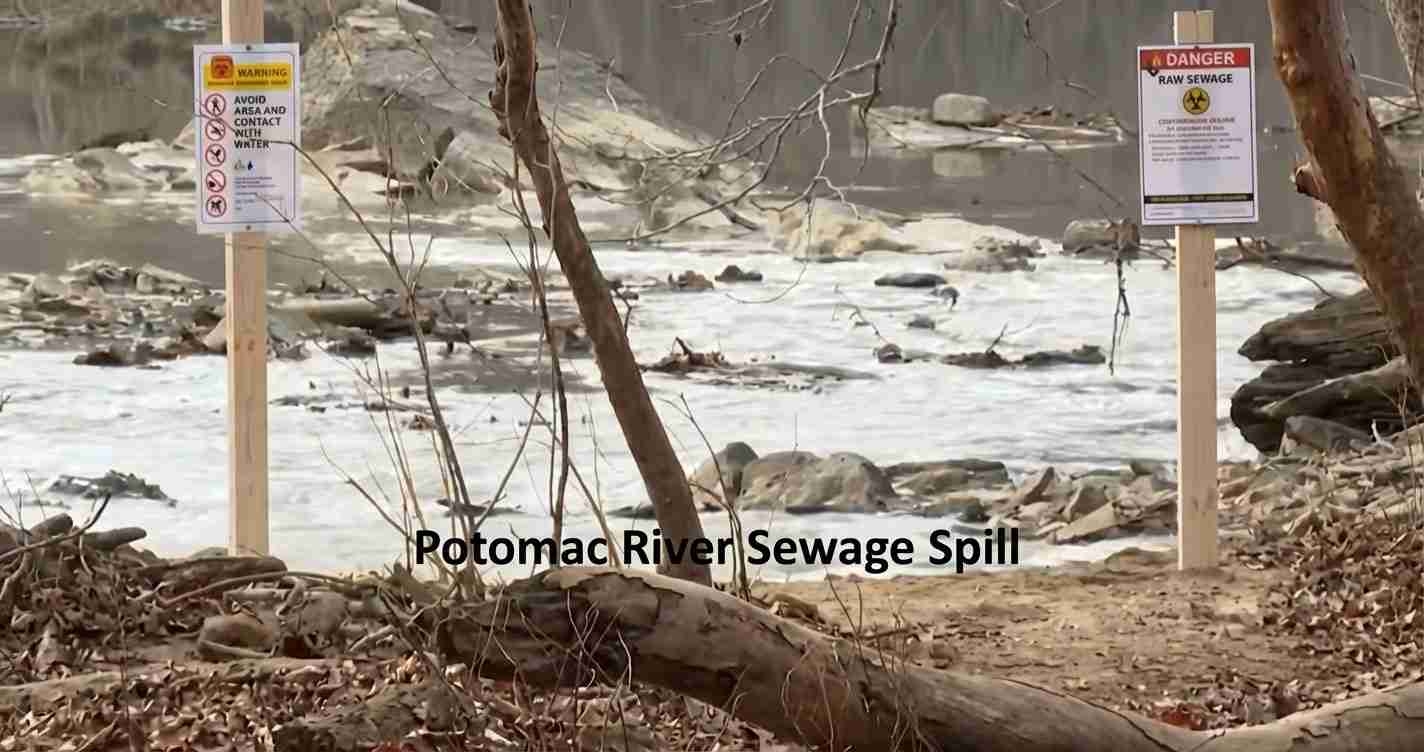
The raw sewage overflow fouled shorelines and C&O Canal banks, leaving visible deposits residents described as sludge and frozen “snowcrete.” Cold temperatures likely reduced some bacterial survival early on, but officials warned that risks remained for swimmers, anglers and boaters until monitoring confirms safety.
Actions taken: State and federal agencies conducted routine water-quality testing. Maryland closed shellfish harvesting in Charles County and issued recreational warnings in several counties. Drinking-water intakes were not impacted due to location or being offline at the time, but officials urged caution and ongoing monitoring.
Legal and political fallout
The spill became a political flashpoint. President Trump approved a disaster declaration and publicly criticized local leaders, while Maryland Gov. Wes Moore pushed back on jurisdictional responsibility. The dispute underscored complexities when critical infrastructure crosses federal, district and state lines.
“We’ve been doing essentially the federal government’s job” — Gov. Wes Moore (summarized in reporting and public statements).
Private legal action has also begun: recreational boater Nicholas Lailas filed a lawsuit against DC Water seeking compensation for impaired use and enjoyment of the river. Federal, state and watchdog oversight continues as cleanup proceeds.
Oversight and aging infrastructure
Experts and local leaders pointed to the incident as an example of aging U.S. water infrastructure and the need for sustained investment. The Potomac Interceptor, largely built in the early 1960s, carries wastewater from Virginia and Maryland suburbs to DC Water’s Blue Plains Advanced Wastewater Treatment Plant.
Advocates and environmental groups criticized aspects of DC Water’s cleanup as insufficient, prompting continued monitoring by the Maryland Department of the Environment, EPA, the District’s Department of Energy and Environment, and watchdogs like the Potomac Riverkeeper Network. Broader context on sewer overflows nationwide is reported by outlets including WSBTV.
Implications for California
Although the spill occurred on the East Coast, it highlights nationwide risks and costs of deferred infrastructure upgrades. California municipalities can draw practical lessons on inspection, preventive maintenance, emergency planning, and funding for rapid response to limit economic and environmental damages.
Practical recommendations for California:
- Prioritize inspections and preventive maintenance on older trunk lines to avoid catastrophic breaks.
- Maintain clear emergency-response plans that include state and federal partners and define jurisdictional roles.
- Consider dedicated emergency funds or insurance mechanisms for rapid response to prevent ballooning costs.
- Invest in improved monitoring and public communication so residents and businesses receive timely advisories about water safety.
Reporting and monitoring links
- Wikipedia summary of the spill and response
- Washingtonian on early impacts and water testing
- KOMO News reporting on continuing remediation needs
- Broader context reporting on sewer overflows nationwide (WSBTV)
Conclusion
Authorities say monitoring will continue as site restoration and water-quality tests proceed. DC Water and federal and state partners remain involved in follow-up work to confirm that the Potomac River and local shorelines are safe for recreation and wildlife after emergency repairs and cleanup.