
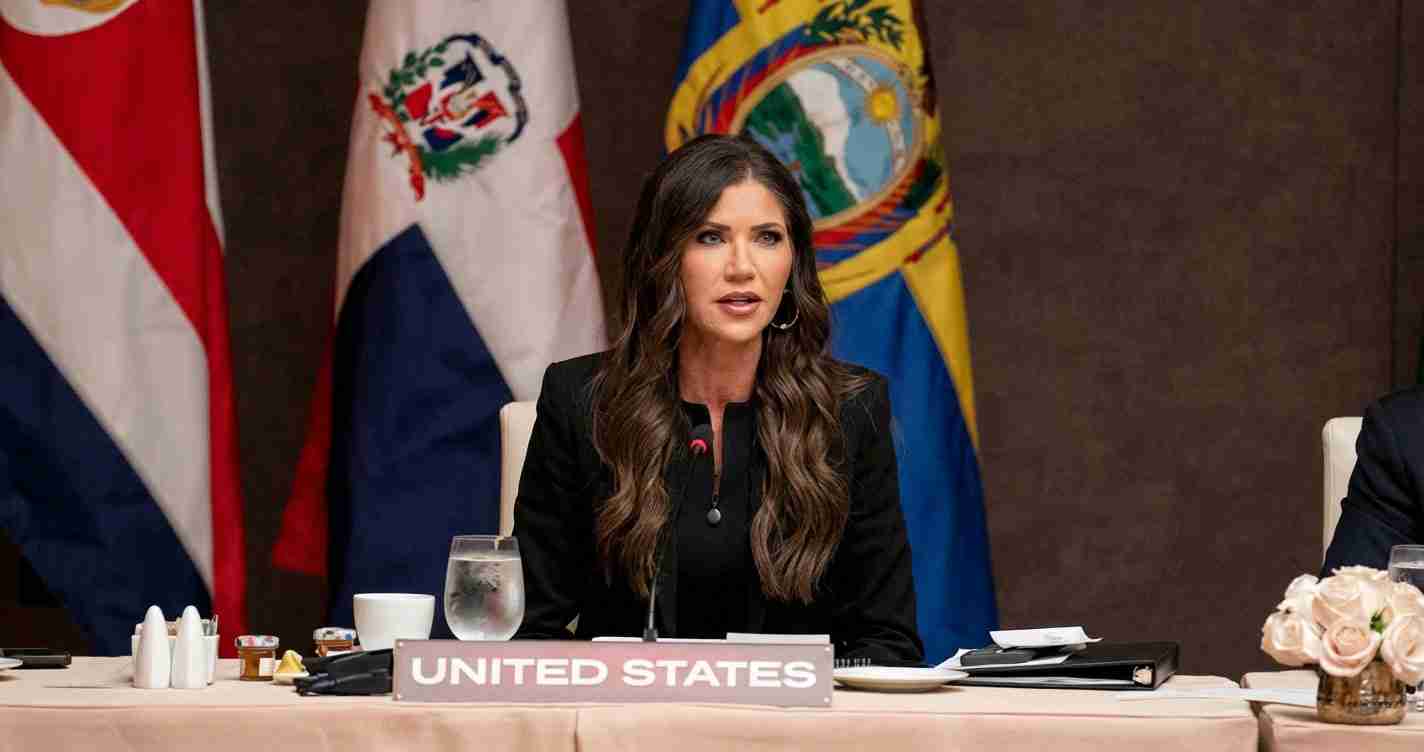
Kristi Noem Appointed Special Envoy for Shield of the Americas After DHS Secretary Removal
Kristi Noem was named Special Envoy for the Shield of the Americas by President Trump on March 7, 2026, moving from her brief tenure as Homeland Security secretary to lead regional efforts against cartels and transnational security threats.
Key takeaways
- New role: President Trump moved Noem from DHS to a newly created envoy post focused on hemispheric security; see ABC News reporting.
- Summit setting: Noem announced and defended the shift at the Shield of the Americas summit at Trump National Doral; read the summit coverage.
- Initiative aim: Shield of the Americas is pitched as a multilateral push to coordinate action against cartels and transnational crime; see WLRN coverage.
Background: the move and the setting
At the Shield of the Americas summit held March 7 at Trump National Doral outside Miami, Noem described the change in duties and expressed gratitude to the president for creating the role. She told attendees,
“I do want to thank the president for creating this and for giving me the honor and the opportunity to serve as a special envoy to this region, to the Western Hemisphere.”
For reporting on her remarks, see ABC News reporting.
Summit context and administration framing
The administration framed the summit as part of an effort to expand the Shield of the Americas as a hemispheric security partnership intended to build cooperative pressure on cartels and transnational crime networks that affect migration and public safety. For analysis of the initiative’s regional aims, see WLRN coverage of the summit.
Noem’s record at DHS and circumstances of her removal
Noem’s move followed what the administration described as a realignment of responsibilities. Her tenure at DHS was marked by internal clashes and two contentious congressional hearings in which some lawmakers — including Republicans — criticized her leadership and management choices. Reporting on those hearings and intra-agency disputes is available from ABC News.
Her defense: On the summit stage, Noem argued the department tightened border security under her watch. She said,
“In the last year, as secretary of Homeland Security, we have focused on securing our border … We’ve secured that border.”
She also claimed more than 3 million people have been deported or removed in the last year — a figure reporters will seek to verify with DHS data and agency releases.
Prior public service and framing the envoy post
Noem used her background — time in Congress and two terms as governor of South Dakota — to frame the special envoy role as a continuation of a security-focused conservative agenda. Her stated intent is to place emphasis on diplomatic and economic cooperation beyond U.S. borders.
New role and stated goals: Shield of the Americas
The envoy role is outward-facing. Noem said it will expand security cooperation beyond U.S. borders and emphasize diplomacy and economic work with neighboring nations. She pledged hands-on engagement, even offering summit attendees her personal contact for regional coordination. Further context on the initiative’s design and objectives is in WLRN coverage.
Political fallout and unanswered questions
The reassignment raises questions about accountability at DHS and how the administration will measure success for the new regional post. Critics say leadership reshuffles in response to congressional criticism can appear to dodge accountability; supporters argue the post enables focused diplomacy and practical cooperation with neighboring countries.
Reporting notes that details remain fluid about who will manage DHS’s day-to-day operations and long-term strategy, and the administration has not released a complete transition plan or measurable targets for the special envoy role. See reporting at ABC News for more.
Reactions at the summit and regional partners
The summit included hemispheric officials and law enforcement partners. The administration presented Noem’s appointment as a diplomatic tool for enhanced cooperation on cartel interdiction and information sharing. How receptive regional governments will be depends on local politics, trust, and capacity; some nations have historically resisted U.S. pressure. For reporting on partner responses and regional dynamics, consult WLRN.
Implications for California and the United States
Economic impact: Border security and anti-cartel operations can affect trade flows and supply chains reaching California ports and industries. If Shield of the Americas reduces trafficking and violence, California businesses could benefit; conversely, aggressive enforcement without coordination could disrupt commerce.
Political consequences: California leaders who favor immigration reform and sanctuary policies will watch how the role shapes federal enforcement and diplomacy. The appointment may be used politically by both parties in state and national campaigns.
Social effects: Changes in deportation and removal patterns could affect immigrant communities in California. Community groups and legal aid providers may see heightened demand for services or clarification on federal priorities.
Cultural relevance & practical applications: Messaging about “shared ideals of freedom and democracy” will land differently across communities. Californians working in ports, logistics, public safety, and immigration law should follow developments closely for potential operational changes.
Accountability and next steps
For state policymakers, watchdogs, and reporters, the key tasks will be to demand clear goals, performance metrics, and transparency. The special envoy’s success should be measured against documented outcomes: reductions in cartel power, safer communities, and minimal undue harm to migrants or commerce. Independent verification of enforcement claims — including the 3 million figure Noem cited — will rely on DHS data releases.



