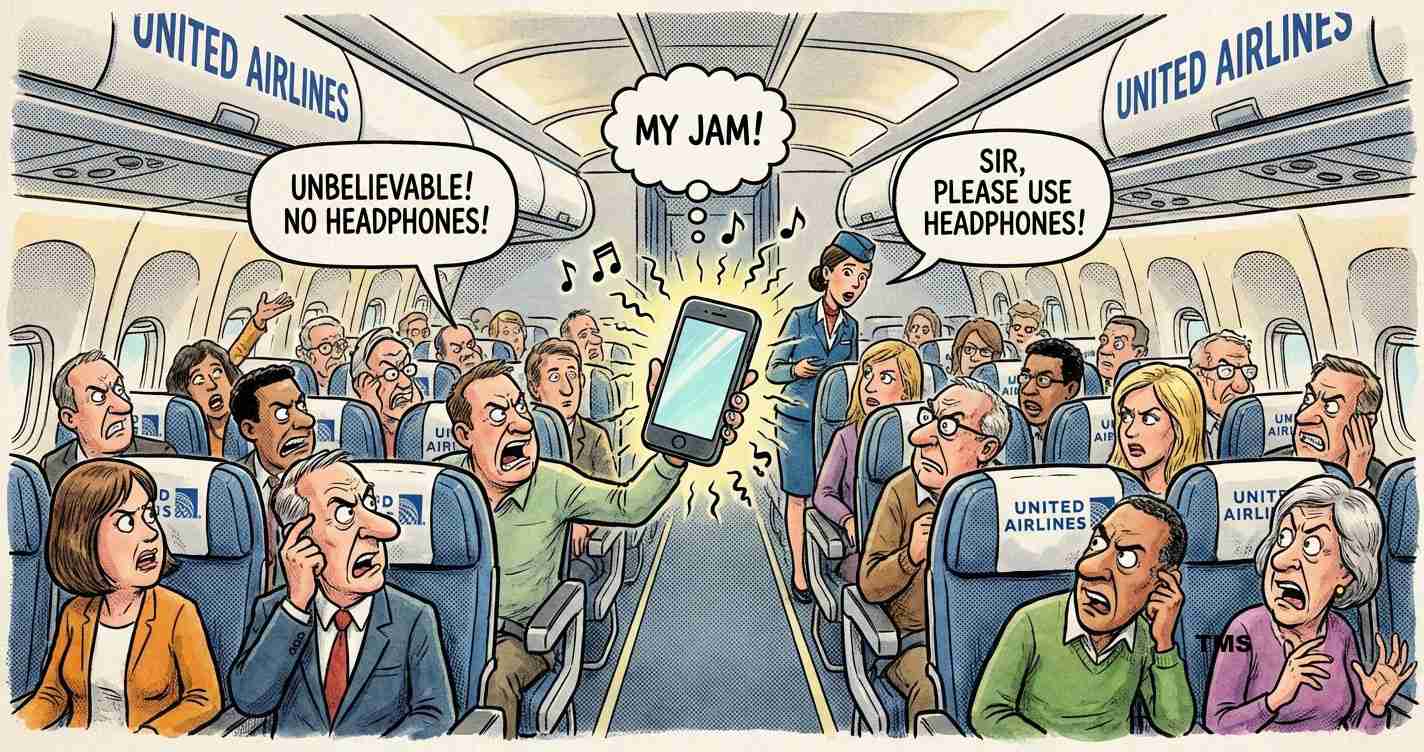
United Airlines makes headphone use a condition of carriage — refuse to comply and you could be denied boarding
United Airlines updated its Contract of Carriage on Feb. 27, 2026, making headphone use mandatory when listening to audio or video on personal devices — failure to comply can lead to denied boarding, removal, or permanent bans.
- Contract change: United added headphone noncompliance to Rule 21 (Refusal of Transport), enabling denial of boarding, removal, or future bans. Sources: Fox13 Seattle, CBS News.
- Why now: United tied the update to wider Starlink deployment and increased device use; headphone guidance moved from etiquette to enforceable contract language. Source: Fox13 Seattle.
- Enforcement & support: Noncompliance sits alongside crew instruction refusal and disruptive conduct; United will offer free basic wired earbuds for those who forget theirs. Sources: Fox13 Seattle, CBS News.
What changed and why it matters
What changed: On Feb. 27, 2026, United updated its Contract of Carriage to add headphone use to Rule 21 — Refusal of Transport. The new text explicitly allows staff to deny boarding, remove a passenger in-flight, or bar travel for those who play audio or video without headphones.
What exactly did United add to its Contract of Carriage?
United placed explicit headphone language under Rule 21, which already covers refusal to follow crew instructions and disruptive conduct. The updated wording names failure to use headphones when listening to audio or video on a personal device as grounds for denial of transport or future bans. Sources: Fox13 Seattle, CBS News.
United framed the change as a practical update tied to technology
United said the change reflects expected increases in device use as Starlink satellite internet expands across its fleet. A spokesperson noted the carrier has long encouraged headphone use and that existing Wi‑Fi rules already reminded customers to use them; the update moves guidance into enforceable contract language. Source: Fox13 Seattle.
How other airlines compare
Most major U.S. carriers treat headphone use as etiquette rather than a contractual requirement. For example, Delta asks customers to use earbuds or headphones “for the comfort of everyone around you,” but does not include removal or bans in its contract language. Travel expert Scott Keyes said no other major U.S. airline has explicit contract terms like United’s and described the move as “a graceful way to handle” the minority who play audio aloud. Source: CBS News.
Enforcement, exceptions and passenger responsibilities
Enforcement: Because headphone use is now listed with other enforceable behaviors, flight crews and ground agents can act if a passenger refuses to comply. The contract also states passengers may be financially responsible for any loss, damage or expense caused by noncompliance — potentially including costs tied to delays or staff time.
Exceptions & support: United says it will offer free basic wired earbuds to passengers who forget theirs, which the airline presents as a way to reduce honest-mistake enforcement. Passengers with disabilities or medical needs should notify crew members and be prepared to explain accommodations.
Public reaction
Coverage across outlets and a viral cockpit announcement underscore passenger frustration with speakerphone calls and loud videos. The announcement captured a pilot saying, “The social experiment on listening to videos on speaker mode and talking on a cellphone on speaker mode, that is over… Use your AirPods, use your headphones, whatever it is.” The clip drew applause and renewed debate over cabin courtesy.
“The social experiment on listening to videos on speaker mode and talking on a cellphone on speaker mode, that is over — over and done in this country… Use your AirPods, use your headphones, whatever it is.”
Investigative note on contract changes and transparency
Contracts of carriage are legally binding and changes are common; how prominently airlines publicize them varies. United briefed media on Feb. 27, 2026, linking the update to Starlink deployment. Frequent travelers should note that what was once etiquette can now be enforced under ticket contract terms.
Implications for California
Economic impact
- Airports & business travel: California hubs (LAX, SFO, SAN, SMF) handle millions of travelers; clearer rules could marginally improve on-time performance by reducing disturbances that lead to passenger removal.
- Consumer costs: United’s option to seek compensation for “loss, damage or expense” means disputes could, in rare cases, affect trip expenses — though free earbuds aim to limit charges for simple forgetfulness. Source: CBS News.
Political consequences
This is a private‑sector rule within an airline’s contract authority. California officials may monitor complaints about enforcement fairness, but the change itself is not state regulation. Expect any political pushback to focus on administration and consistency rather than the rule’s substance. Source: CBS News.
Social effects
- Cabin culture: Codified rules may reduce passenger-to-passenger confrontations by giving crews clear backing to act.
- Accessibility & fairness: Some passengers cannot use particular headphones; staff must balance enforcement with reasonable accommodations and awareness of disability rights. Source: Fox13 Seattle.
Cultural relevance
In tech-forward markets like California, more passengers will stream and use onboard Starlink. The rule signals that increased connectivity does not remove the need for common courtesy in shared spaces.
Practical daily impact for California travelers
- Pack earbuds: Carry a set of headphones; United offers free basic wired earbuds but having your own avoids delays or disputes.
- Know your options: If a crew enforces the rule, comply and then contact United customer service if you believe enforcement was improper — keep receipts and documentation for disputes.
- Expect more streaming: With Starlink expansion, anticipate more passengers using internet services; headphones become an even more important courtesy on crowded flights.