Armadillo vision rises: A’s break ground on $1.75 billion Las Vegas ballpark amid fast-moving construction
Las Vegas, Nevada: The Oakland Athletics broke ground June 23, 2025, on a $1.75 billion, 33,000-seat “Armadillo” ballpark at Las Vegas Boulevard and Tropicana, with owner John Fisher declaring, “We are Vegas’ team,” and a targeted 2028 Opening Day.
Key takeaways
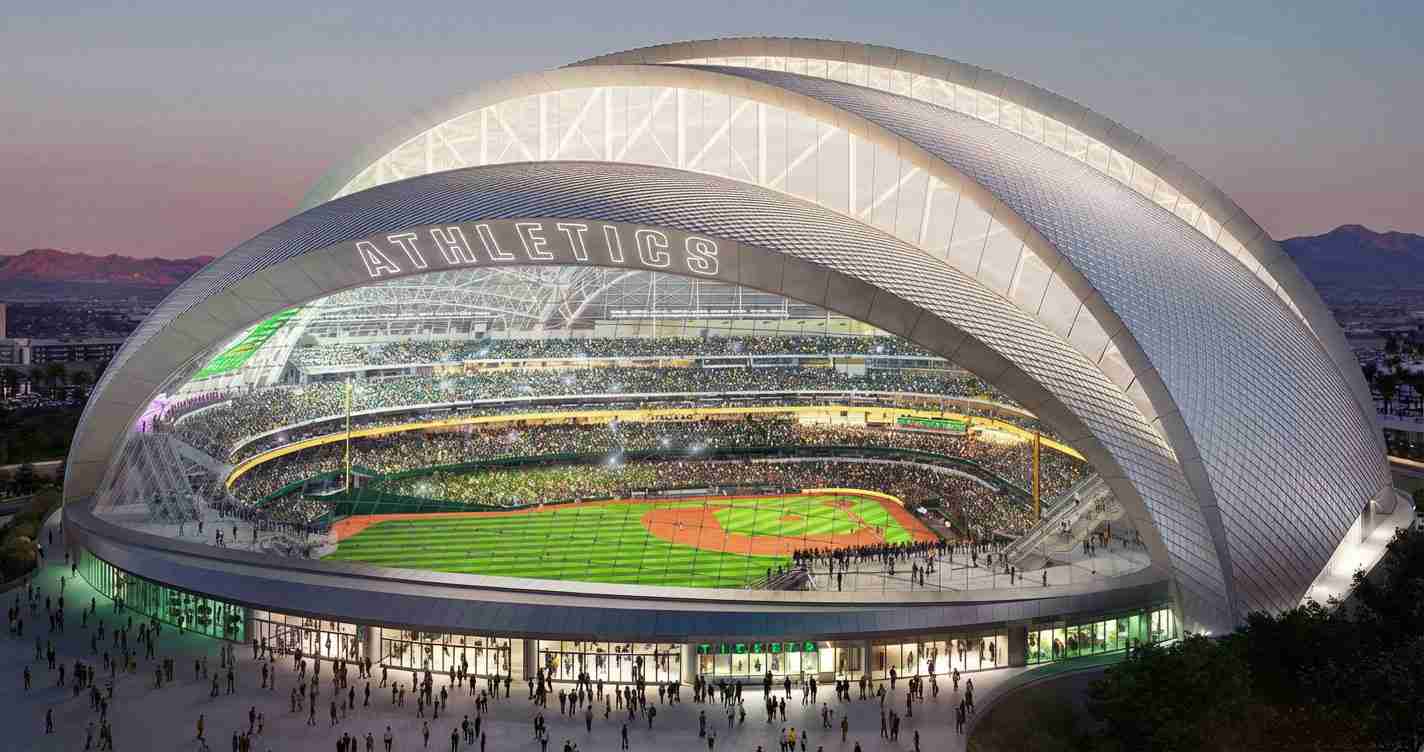
- Project scale: A $1.75 billion, 33,000-seat stadium designed by Bjarke Ingels Group (BIG) and HNTB, nicknamed the “Armadillo.”
- Funding mix: ~ $1.4 billion from the Fisher family and $350–380 million in public assistance authorized by Nevada (Senate Bill 1).
- Site & timeline: Footprint covers 9 acres of a 36-acre Tropicana parcel; groundbreaking June 23, 2025, with a targeted 2028 Opening Day and fast-moving construction milestones.
- Community and controversy: Officials tout job creation and tourism benefits while critics and California stakeholders raise questions about public oversight and Oakland impacts.
Key information
Event: A’s Las Vegas ballpark groundbreaking — June 23, 2025. (Source: MLB.com: A’s break ground on new Las Vegas stadium)
Cost and funding: $1.75 billion total: roughly $1.4 billion from the Fisher family and $350–380 million in public assistance via Nevada legislation. (Sources: MLB.com: A’s break ground on new Las Vegas stadium; Las Vegas Review-Journal: A’s Las Vegas ballpark timeline)
Design: The stadium — nicknamed the “Armadillo” — is by BIG and HNTB. (Source: Dezeen: BIG designs “Armadillo” stadium)
Site: Ballpark footprint occupies 9 acres of a 36-acre Tropicana site; adjacent development planned by Bally’s. (Sources: MLB.com; Review-Journal)
Timeline: Targeted 2028 season opening; multiple construction milestones already underway. (Sources: MLB.com; Wikipedia: New Las Vegas Stadium)
Ceremony and remarks
On June 23, 2025, owner John Fisher stood at the marked spot for home plate and told attendees, “We are Vegas’ team.” MLB Commissioner Rob Manfred attended along with Nevada Gov. Joe Lombardo, team president Marc Badain, former A’s stars including Rollie Fingers and Dave Stewart, Little Leaguers and community members.
The ceremony included the planting of a gold shovel with the A’s logo and a bat-shaped handle at the southeast corner of Las Vegas Boulevard and Tropicana Avenue — a symbolic start to site work and community engagement. (Source: MLB.com)
Why the move matters: Oakland A’s relocation
The relocation ends a decade-long effort to leave the Oakland Coliseum. MLB owners approved the move in late 2023; the Las Vegas site and financing reflect years of negotiation, legislation and approvals. For many fans and officials, the shift alters regional sports maps and economic expectations for both cities.
Armadillo stadium design and fan experience
BIG and HNTB describe the stadium as five overlapping wedge-shaped arched volumes — the form that inspired the “Armadillo” nickname. Renderings show metal-panel cladding and a large cable-net glass entrance wall that may rank among the world’s largest of its kind.
Design highlights emphasize fan proximity: roughly 84% of seating sits between the foul poles, producing one of the smallest foul territories in MLB and seats closer to home plate. Early renderings were released in 2024 and updated in 2025 to remove a previously proposed retractable outfield wall. (Sources: Dezeen; MLB.com)
Site plan and neighboring development
The ballpark occupies a 9-acre portion of a 36-acre Tropicana parcel. Bally’s Corp. plans an adjacent hotel, resort, casino and entertainment complex intended to link stadium activity with the Strip corridor. Early grading and zoning approvals began in spring 2025, establishing foundations for infrastructure and vertical construction. (Sources: MLB.com; Review-Journal)
Construction progress and schedule
Team president Marc Badain reported rapid progress in the days after groundbreaking: crews poured the first outfield deck and were pouring the second-level concourse from the third-base foul pole toward first base. About half of the ballpark decks had been poured early; steel work in the stadium bowl is scheduled to begin March 2026.
Badain noted five of six roof buttresses would be completed by the end of February 2026, with the sixth in spring 2026 and roof steel visible by June 2026. Escalators were due to arrive within weeks, and the Mortenson-McCarthy joint venture is the general contractor overseeing the build. (Sources: MLB.com; Review-Journal; Wikipedia)
Funding, public money and oversight
While the $1.75 billion project is largely privately financed, Nevada’s Senate Bill 1 authorized roughly $350–380 million in public funds. The Fisher family is expected to cover the remainder. Officials cite job creation, tourism lift and a 30-year rent-free lease as public benefits; critics urge close scrutiny of public subsidies for privately owned teams.
State and county approvals require continued oversight and reporting on cost, schedule and the promised public benefits; observers will watch for any requests for additional public support or cost escalation. (Sources: MLB.com; Review-Journal; Wikipedia)
Questions and investigative angles
- Cost trajectory: Watch for revised estimates and any future requests for additional public support.
- Public benefit: Will projected jobs, tourism and tax revenues materialize, and how will Nevada and Clark County monitor outcomes?
- Oakland impact: What commitments exist to preserve baseball culture in Oakland and what are redevelopment plans for the Coliseum site?
- Construction risk: Can supply chains, labor and desert weather sustain an on-time delivery for a 2028 season opening?
Community and labor notes
Officials emphasized construction jobs and ongoing stadium employment. Mortenson-McCarthy brings stadium experience, and local contractors are participating in early phases. Community groups and youth programs were present at the ceremony, with organizers pitching the project as a regional asset for sports and entertainment. (Sources: Review-Journal; MLB.com)
Implications for California
Economic effect on Oakland and the Bay Area: The A’s departure shifts ticket revenue, visitor spending and merchandising out of the region and may harm small businesses near the Coliseum. Local leaders must consider reuse and redevelopment of the Coliseum site to recover lost activity. (Sources: Review-Journal; Wikipedia)
Taxpayer and legislative questions: California officials and fiscally conservative voters will likely scrutinize Nevada’s public spending and demand transparency on public-benefit enforcement. The deal may influence future ballot measures and legislative debates on public subsidies for private sports franchises. (Sources: MLB.com; Review-Journal)
Fan access and regional sports dynamics: Long-time A’s fans face new travel plans; some season-ticket holders may not follow the team. Las Vegas’s addition of MLB could change TV markets, regional broadcast agreements and advertiser dynamics across the West. (Source: MLB.com)
Real estate and reuse opportunities: The Coliseum and surrounding Oakland parcels present redevelopment possibilities — housing, parks or mixed-use projects. Durable redevelopment plans and transparent zoning processes will be central to replacing lost jobs and activity. (Sources: Review-Journal; Wikipedia)
For conservative-minded readers in California
Key points to monitor include fiscal accountability, enforcement of public-benefit agreements, and credible redevelopment plans for Oakland properties. Lawmakers and voters favoring limited public spending will likely press for audits and regular reporting on outcomes such as job creation and tax revenue flows.
Reporting and sources
This article draws on reporting from MLB.com, the Las Vegas Review-Journal, Dezeen and public records on the new Las Vegas stadium. For detailed timelines, construction updates and design images, see:
- MLB.com: A’s break ground on new Las Vegas stadium
- Las Vegas Review-Journal: A’s Las Vegas ballpark timeline
- Dezeen: BIG designs “Armadillo” stadium for the Oakland A’s Las Vegas ballpark
- Wikipedia: New Las Vegas Stadium
Reporting by Times Media Service.