
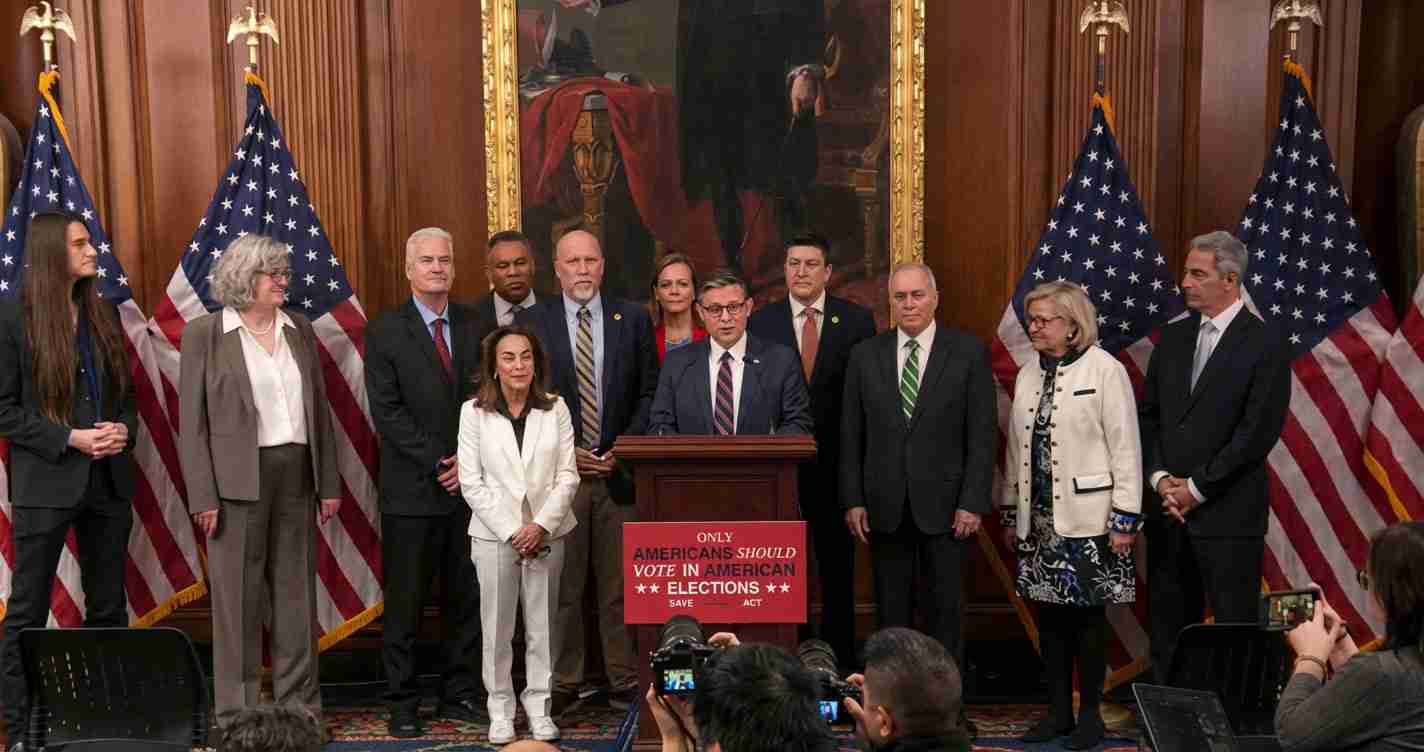
House passes GOP elections overhaul as SAVE America Act passes House, adding voter ID requirement and proof of citizenship voting mandate
The U.S. House passed the GOP SAVE America Act on Feb. 11, 2026, creating federal photo ID and in‑person proof-of-citizenship requirements for federal elections; the bill now faces uncertain prospects in the Senate and possible court challenges.
Key takeaways
- House vote: Passed 218–213; Rep. Henry Cuellar (D‑Texas) was the lone Democratic yes. Sources: Politico, Fox News.
- Major changes: Federally required in‑person proof of citizenship when registering, nationwide photo ID for federal elections, and state duties to purge noncitizens and share information with DHS. Sources: Rep. Chip Roy press release, Politico, Fox News.
- Implementation concerns: Critics warn noncitizen voting is rare and the bill would impose large, unfunded state costs. Source: Bipartisan Policy Center.
What the SAVE America Act would do
Overview: The bill would change federal election administration by imposing new documentation and verification requirements on states and in‑person registrants.
Proof of citizenship for in‑person registration
Under the bill, anyone who registers in person to vote in federal elections must present proof of U.S. citizenship at registration rather than relying on attestation alone. That requirement is a core provision emphasized by the bill’s sponsor. Source: Rep. Chip Roy press release.
Nationwide photo ID requirement
The legislation would require a government‑issued photo ID to vote in federal contests across all states. Supporters call this a uniform safeguard; opponents say it may create barriers for elderly, low‑income, or rural voters. Sources: Politico, Fox News.
Voter‑roll purges and DHS information‑sharing
States would be required to maintain rolls to remove noncitizens and to share information with federal authorities, enabling the Department of Homeland Security to pursue immigration cases when noncitizens appear on voter lists. Sources: Politico, Fox News.
How the House passed it
The vote followed tight party-line whipping: 218–213, with Rep. Henry Cuellar the only Democrat to break ranks. House GOP leaders reintroduced the measure after an earlier SAVE Act passed the House in April 2025 but stalled in the Senate; this updated version adds the photo ID mandate and tighter enforcement. Sources: Politico, Fox News, Rep. Roy press release.
Political pressure and strategy
Conservative activists — and high‑profile figures like former President Donald Trump and tech billionaire Elon Musk — urged action. Leaders initially sought to attach the measure to a funding package but split the bills to avoid a government funding fight and force a stand‑alone vote. Source: Politico.
Arguments from both sides
Supporters: Backers, including sponsor Rep. Chip Roy, call the measures “simple, reasonable, and common sense,” arguing the changes protect election integrity and respond to public concerns about migration and potential fraud. Source: Rep. Chip Roy press release.
“Simple, reasonable, and common sense,” said Rep. Chip Roy describing the bill and its proposed safeguards.
Opponents: Democrats call the bill voter suppression, noting citizenship is already required and that evidence of noncitizen voting is rare. Critics argue the law would create new barriers for elderly, low‑income, and minority voters and would impose large unfunded costs on states. Sources: Politico, Bipartisan Policy Center.
Practical and fiscal concerns
Nonpartisan analysts warn the bill would force states to overhaul systems, add staff for verification, and build new data‑sharing protocols — work that could take months or years and carry significant costs. The legislation does not include federal funding to offset implementation expenses. Source: Bipartisan Policy Center.
Senate outlook
Passage in the Senate is uncertain. Senate rules still require 60 votes to overcome a filibuster; Senate Majority Leader John Thune has declined to change that threshold. Several GOP senators have expressed reservations, and Republicans privately acknowledge they lack votes to clear a Democratic filibuster even as calls for action continue. Source: Politico.
Implications for California
Economic impact
Implementing the SAVE America Act would impose costs on California counties and the state: upgraded registration workflows, additional staffing for in‑person checks, and database updates to coordinate with federal authorities. Without federal funding, those costs would likely fall to state or county budgets. Source: Bipartisan Policy Center.
Political consequences
California’s pro‑access voting policies and vote‑by‑mail expansion make this measure politically contentious there. State leaders may resist the federal mandates and could mount legal challenges arguing conflict with state law. Sources: Politico, Rep. Roy press release.
Social and cultural effects
A federal photo ID and proof‑of‑citizenship mandate could create barriers for recent naturalized citizens awaiting paperwork, elderly voters, low‑income residents, and rural communities. Civic groups and civil‑rights organizations are likely to mobilize to educate and assist affected voters. Sources: Bipartisan Policy Center, Politico.
Practical steps for Californians
County election offices, the Secretary of State, and community organizations may plan outreach now: advertise ID resources, offer mobile ID events, and prepare legal strategies. Californians who use mail‑in ballots should monitor how photo ID rules would apply to federal contests. Sources: Rep. Roy press release, Bipartisan Policy Center.
Legal and administrative timeline
Any federal change would not take effect immediately. Expect legal challenges, state pushback, and months — possibly years — of administrative work to adapt systems and procedures. For now, House passage marks a political win for backers but the path forward includes the Senate and potential court fights. Source: Politico.
Reporting notes and sources
This article draws on coverage of the Feb. 11 House vote, the bill text and sponsor statements, and independent analysis. Key sources used in reporting:
Reporting note: All original facts, details, and URLs are included inline with sources for verification.



