
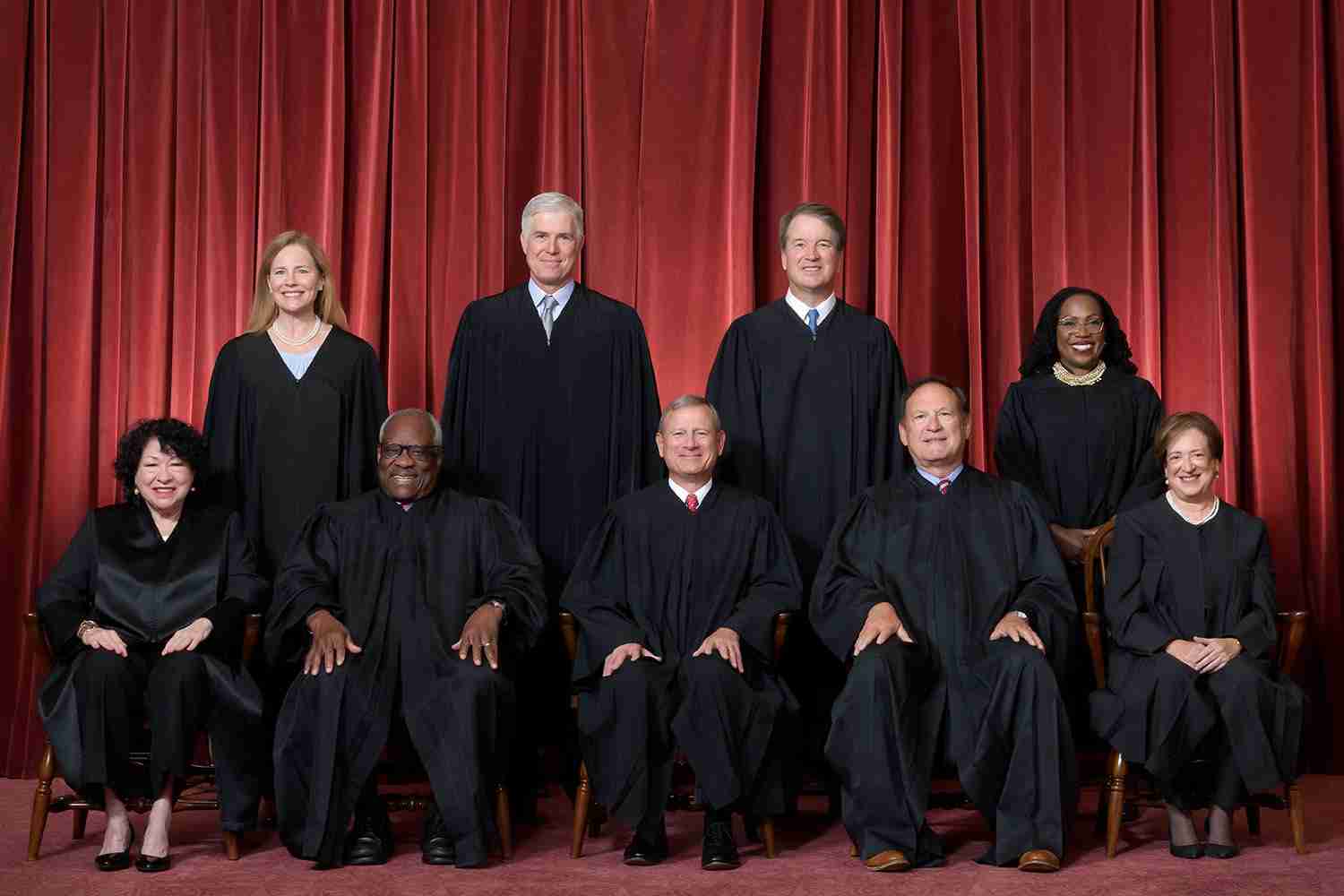
Trump blasts justices after Supreme Court hears cases on transgender athlete bans; majority signals support for upholding state restrictions
The U.S. Supreme Court heard landmark arguments on January 13, 2026, over state laws banning transgender women and girls from female school sports, as former President Trump criticized justices and the conservative majority signaled support for state restrictions.
- Consolidated cases: Little v. Hecox (Idaho) and West Virginia v. B.P.J., nearly three-and-a-half hours of argument on Jan. 13. Source: SCOTUSblog.
- State and federal defense: Idaho, West Virginia and the Trump administration argued bans protect fairness and fit within Title IX’s sex-separated teams framework. Source: Education Week.
- Challengers: Plaintiffs say bans violate the 14th Amendment and Title IX by discriminating against transgender girls and women. Source: ACLU.
- National stakes: Lower courts had enjoined the laws; at least 27 states have similar measures, so the ruling could have wide effect. Sources: SCOTUSblog, Education Week.
Key information
Cases and timing: The Court heard nearly three-and-a-half hours of oral argument in two consolidated cases — Little v. Hecox (Idaho) and West Virginia v. B.P.J. (West Virginia). Source: SCOTUSblog.
Video record: Full oral argument video is available online.
Background on the cases
The Court consolidated two challenges to state laws that define athletic teams by biological sex at birth and bar transgender girls and women from competing on female teams. The Idaho law in Little v. Hecox and West Virginia’s law in West Virginia v. B.P.J. both impose categorical exclusions. Federal appeals courts — the 9th Circuit and the 4th Circuit — had enjoined the laws, finding constitutional or Title IX problems and criticizing invasive verification requirements. Source: SCOTUSblog, Education Week.
What the states and the Trump administration told the Court
State arguments: Attorneys for Idaho and West Virginia said the laws aim to protect fairness for female athletes by drawing a line between sexes to prevent perceived physical advantages. West Virginia Solicitor General Michael R. Williams argued biological sex matters in athletics “in ways both obvious and undeniable.” Source: SCOTUSblog.
Federal position: The Trump administration, represented by Solicitor General-designate Hashim Mooppan, told the Court that Title IX permits sex-separated teams and that biological sex is the operative category; Mooppan argued medical interventions do not change that framework. Source: SCOTUSblog.
Arguments from the challengers
Equal protection and Title IX claims: Plaintiffs’ attorneys said the laws discriminate against transgender students. Kathleen Hartnett represented Lindsay Hecox, a transgender woman and former college runner; Joshua Block represented B.P.J., a transgender girl from West Virginia. They argued the laws single out transgender people, excluding them from opportunities provided to other students and causing tangible harm. Block said West Virginia’s statute “treats B.P.J. differently from other girls on the basis of sex, and it treats her worse in a way that harms her.” Sources: SCOTUSblog, Education Week, ACLU.
Challengers also argued that categorical bans are unlawful where medical treatment (e.g., puberty blockers or hormone therapy) has reduced any physiological advantage, and that Title IX requires equal athletic opportunities.
How the justices framed their questions
Several justices tested the scope and implications of challengers’ claims, signaling skepticism about broad exceptions while probing narrow medical scenarios.
- Chief Justice John Roberts pressed whether challengers sought to erase sex distinctions in sports or only an exception for transgender athletes, warning the argument might extend beyond athletics. Source: SCOTUSblog.
- Justice Amy Coney Barrett asked why laws would be discriminatory if trans boys can play on boys’ teams while trans girls are excluded from girls’ teams. Source: SCOTUSblog.
- Justice Clarence Thomas used a hypothetical about a weak male tennis player trying out for women’s teams to question whether biological sex should be decisive. Source: SCOTUSblog.
- Justice Samuel Alito highlighted objections from cisgender female athletes and asked whether their fairness concerns should be dismissed as bias. Source: Education Week.
- Justice Neil Gorsuch distinguished Title IX from workplace sex-discrimination law, noting sports’ long regulatory history and the Javits Amendment’s recognition of differences in sports. Source: Education Week.
- Liberal justices — Justices Sotomayor, Kagan and Ketanji Brown Jackson — focused on narrow questions and exceptions, exploring whether medical treatment should permit individualized claims. Justice Jackson asked why a transgender girl who underwent puberty blockers or hormone therapy could be excluded if she posed no safety or competitive threat. Source: Education Week.
Lower-court rulings and national context
Before Supreme Court review, the 9th Circuit blocked Idaho’s law, finding equal protection issues and criticizing invasive verification practices; the 4th Circuit blocked West Virginia’s law under Title IX. The Court’s decision will determine whether states may implement categorical transgender athlete bans or whether federal law and the Constitution forbid such exclusions. Source: SCOTUSblog.
At least 27 states have enacted similar bans or restrictions, meaning the ruling could have national effect. Source: Education Week.
Trump’s comments at the White House
“Some justices were fighting hard for men to be able to play in women’s sports,” former President Donald Trump said at a Jan. 13 White House press conference, adding that any justice who ruled for transgender athletes “should lose a lot of credibility.” He also said, “But we banned men from playing in women’s sports,” referencing actions his administration took on sports policy. Source: Fox News.
Reactions and what to watch next
Advocacy groups on both sides framed the hearing as historic. The ACLU called the arguments a major moment for transgender rights. Athletic and education policy groups warned that a broad ruling could reshape school sports nationwide.
Observers noted conservative justices’ questioning suggested a possible majority to uphold bans, but the ultimate ruling could be narrow — focused on Title IX interpretation in these contexts — or broad, affecting laws across states. Sources: SCOTUSblog, Education Week.
Implications for California
Economic: California’s large school and college athletic systems could face legal pressure and costly litigation if the Court upholds bans, as districts and universities defend inclusive policies. If bans are struck down, California may avoid defense costs and face fewer legal challenges. Source: Education Week, HigherEdDive.
Political: California officials who back protections for transgender students could see heightened conflicts with states that support bans; the ruling may become a campaign issue and prompt legislative or budgetary responses. Sources: SCOTUSblog, ACLU.
Social and cultural: A national ruling upholding bans could increase stigma and reduce access for transgender youth, while a ruling rejecting bans could affirm inclusive policies and reduce uncertainty for families and school officials. Local athletic associations may need to clarify and communicate eligibility rules. Source: Education Week.
Practical advice: California schools should review policies, prepare legal plans, update eligibility rules if necessary, and communicate with students, families and coaches while monitoring the Court’s decision. Source: HigherEdDive, Education Week.
Sources and further reading
- SCOTUSblog: “Supreme Court appears likely to uphold transgender athlete bans”
- Education Week: “Supreme Court signals support for state bans on trans girls in sports”
- ACLU press release: “Supreme Court concludes oral arguments in historic transgender rights hearing”
- HigherEdDive: “Supreme Court weighs state restrictions on transgender student athletes”
- Fox News: “Trump calls out Supreme Court justices after trans athlete hearing: ‘should lose lot credibility’”
- Full oral argument video
This article reports the arguments and reactions surrounding the Supreme Court transgender sports cases and outlines how different outcomes could affect California schools, politics, and communities.



