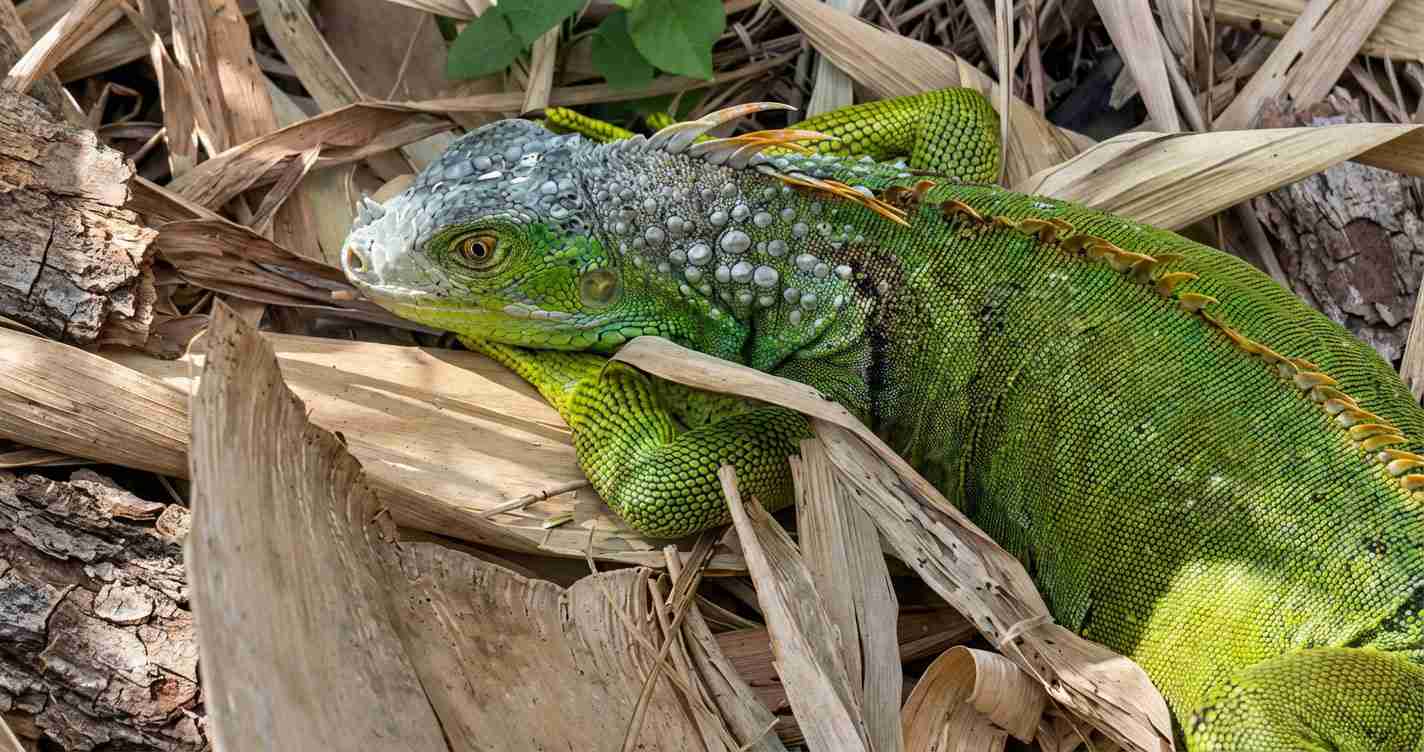
FWC says more than 5,000 invasive green iguanas removed during two-day permit-free cold snap
The Florida Fish and Wildlife Conservation Commission and partners coordinated removal of 5,195 invasive green iguanas during a two-day, permit-free cold-stun collection on Feb. 1–2, 2026, after Executive Order 26-03 temporarily allowed residents to turn them in.
Key takeaways
- Total collected: 5,195 invasive green iguanas turned in at four FWC drop-off locations over two days — FWC news release.
- Largest site: Sunrise received 3,882; other tallies were Tequesta 1,075, Marathon 215, Fort Myers 23.
- Temporary exemption: Executive Order 26-03 suspended permit requirements narrowly for Feb. 1 (9 a.m.–noon) and Feb. 2 (8 a.m.–4 p.m.).
- After collection: Live iguanas were transferred to permitted holders for possible out-of-state sale; untransferred animals were humanely euthanized by trained personnel.
How the exemption worked
Florida law generally classifies green iguanas as a prohibited nonnative species because of documented harms to native wildlife, infrastructure and the economy. Under normal rules, capturing them from the wild requires a permit. With the extreme cold that struck South Florida, Executive Order 26-03 gave a short, targeted exception.
The order allowed residents, visitors and property owners (with permission) to humanely capture live, cold-stunned iguanas and transport them directly to designated FWC offices without first obtaining a permit. Possession was limited to transport to those offices only; the exemption expired after Feb. 2. For the official FWC summary, see FWC news release.
Collection breakdown and logistics
FWC staffed four drop-off locations with tight windows to speed removal while protecting public safety and animal-handling standards. The public tally shows distribution across sites:
- Sunrise (about 13 miles west of Fort Lauderdale): 3,882 iguanas — FWC news release.
- Tequesta: 1,075 iguanas — FWC news release.
- Marathon (South Florida Regional Lab, Overseas Highway): 215 iguanas — see FWC news release and EO details.
- Fort Myers: 23 iguanas — FWC news release.
The operation required coordination across FWC divisions, regional offices and outside partners, including wildlife control operators and permitted holders able to accept live animals. Videos and local reports documented residents collecting stunned iguanas during the event (example: Video example; coverage: WUSF reporting).
What happened to the iguanas after collection
FWC staff worked to transfer live iguanas to permitted holders for potential out-of-state sale. Animals that could not be transferred were humanely euthanized by trained personnel according to protocols. The FWC characterized the removals as necessary to protect native habitats and infrastructure from impacts such as burrowing that can damage seawalls and irrigation systems. (See FWC news release and reporting from WUSF and Popular Science.)
“The removal of over 5,000 of these nonnative lizards in such a short time span was only possible thanks to the coordinated efforts of many staff members in multiple FWC divisions and offices, our partners and, of course, the many residents that took the time to collect and turn in cold-stunned iguanas from their properties,” said Roger Young, FWC executive director.
Why Florida acts on green iguanas
Green iguanas are invasive because they reproduce rapidly, compete with native species and cause infrastructure damage through burrowing. They are not protected under state conservation laws beyond general anti-cruelty statutes; landowners may humanely kill them on private property or hire licensed wildlife control operators. The FWC maintains guidance and deterrence tips and encourages reporting of nonnative species at FWC news release and related resources.
Public response and ethical questions
The public-facing operation drew attention and debate. Video clips of residents collecting stunned iguanas circulated online and outlets reported many animals were euthanized after being gathered. Supporters praised the pragmatic, emergency response; critics raised concerns about humane treatment and mobilizing the public during extreme weather. FWC emphasized that euthanasia was handled by trained personnel and that the exemption had clear, limited rules.
Implications for California
Economic and property considerations
California does not currently face a comparable green iguana population, but the Florida response highlights potential costs to infrastructure, property and government resources. The central takeaway for Californians: prevention — via stronger pet import rules and responsible ownership — is far cheaper than large-scale removals.
Political and policy lessons
The FWC’s narrow, temporary use of executive authority shows how agencies can rapidly mobilize responses in emergencies. In California, similar emergency tools could be considered for invasive-species threats, but any measure must be narrowly scoped, protect property rights and animal welfare, and include clear liability protections and accountability.
Social and community effects
Community participation in Florida helped protect yards and infrastructure. California communities should coordinate with state wildlife agencies and licensed professionals when invasive species appear. Public education campaigns emphasizing prevention, humane handling and quick reporting can channel private initiative into effective legal responses.
Cultural relevance and pet-trade oversight
California’s large pet market increases risk from escaped or released nonnative animals. The Florida event underscores the need for outreach to pet owners, stronger sale and transport rules for high-risk species, and clear surrender pathways to avoid illegal releases.
Practical steps for Californians
- Know the rules: Check state guidance before acquiring or transporting exotic species and report sightings promptly to local agencies.
- Support prevention: Back local ordinances and enforcement to reduce illegal sales and releases.
- Back targeted action: Favor narrowly tailored emergency measures that permit fast response while protecting welfare and rights.
- Prepare for climate risk: Include invasive-species risk in planning as ranges shift with climate change.
Sources and further reading
Report compiled from FWC releases and local coverage. Key sources:
- FWC news release — Green iguanas removed from Florida ecosystems
- Executive Order 26-03 details
- WUSF reporting
- Fox News coverage
- Video of residents collecting iguanas
- Popular Science on euthanasia reports