Bay County issues water‑quality advisories after high enterococcus readings at three Panama City Beach sites
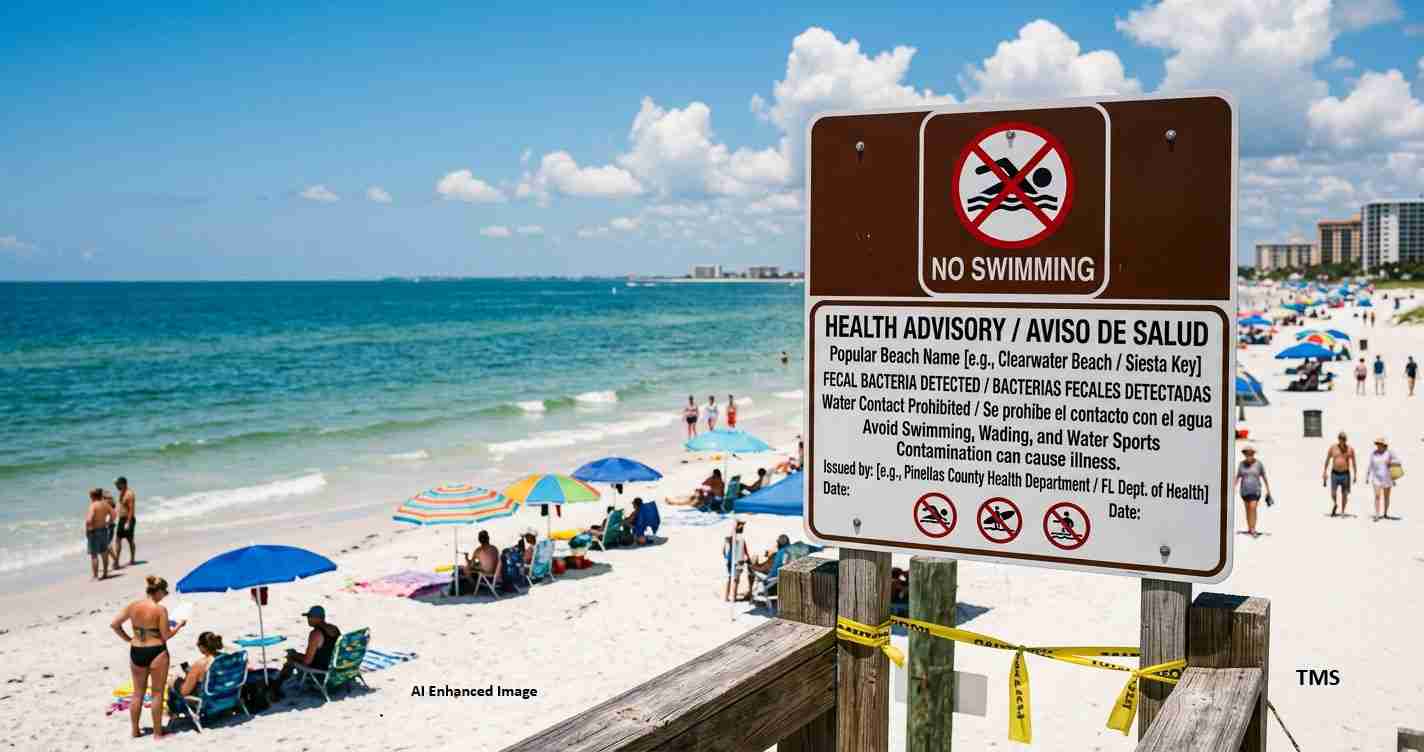
The Florida Department of Health in Bay County issued water‑quality health advisories for three Panama City Beach sites after routine May 26 sampling detected elevated enterococcus bacteria, warning against swimming or water contact until follow‑up tests show safe levels.
Key takeaways
- Three sites — Laguna Beach (SP 2), Carl Gray Park (SP 9) and Beach Drive (SP 10) — exceeded Florida’s recreational enterococci criteria on May 26.
- Beaches remain open, but officials advise against swimming, wading or other water contact until follow‑up tests confirm safe levels.
- Enterococci indicate fecal contamination and elevated levels raise risks for gastrointestinal, respiratory and skin infections.
- Updates and details are posted by the Florida Department of Health in Bay County and the Florida Healthy Beaches program.
What happened
The Florida Department of Health in Bay County posted water quality health advisories after routine Healthy Beaches sampling on May 26, 2026 showed enterococci counts above the state’s recreational threshold at three monitoring points. The advisory is precautionary: the beaches remain open, but officials recommend avoiding any water contact at the affected sites until follow‑up samples meet state criteria.
Advisory details
The advisory lists the monitored sampling locations and addresses used for the samples:
- Laguna Beach (SP 2) — 19440 Front Beach Road, Panama City Beach, FL 32413.
- Carl Gray Park (SP 9) — Collegiate Drive, Panama City, FL 32401.
- Beach Drive (SP 10) — US‑98 West Beach Drive, Panama City, FL 32401.
DOH‑Bay said these locations “do not meet the recreational water quality criteria for Enterococcus bacteria recommended by the Florida Department of Health,” and that advisories will remain until follow‑up testing shows levels below accepted health limits. See the full advisory from the Florida Department of Health in Bay County.
Why enterococci matter
Public health officials use enterococci as an indicator of fecal pollution in coastal and freshwater recreation areas. Enterococci live in the intestinal tracts of warm‑blooded animals and their presence suggests possible disease‑causing organisms in the water. Background information is available from the U.S. Environmental Protection Agency.
Health risks when enterococci levels are elevated include:
- Gastrointestinal illness (nausea, vomiting, diarrhea)
- Respiratory infections
- Skin, ear, eye and wound infections
Likely causes and recent weather context
DOH‑Bay did not identify a single cause for the spike. Common contributing factors include:
- Stormwater runoff that carries fecal material from streets, yards and fields into creeks and the ocean
- Malfunctioning septic systems or sewer overflows
- Animal waste from pets, wildlife or agricultural sources carried into waterways by heavy rain
Bay County and much of Florida experienced excess rainfall and localized flash‑flood conditions the week before sampling. Heavy rain increases stormwater flow and can push bacteria into nearshore waters, causing temporary spikes in indicator organisms detected by routine monitoring.
Public guidance and monitoring
The advisory is precautionary. DOH‑Bay advises against swimming, wading or other water contact at the three sites until follow‑up samples meet state criteria. People with open wounds, young children and those with weakened immune systems should be especially cautious.
“Advisories will remain until follow‑up testing shows levels below accepted health limits,” — Florida Department of Health in Bay County.
If someone who was in the water develops gastrointestinal symptoms, skin irritation, ear pain or respiratory trouble, officials recommend contacting a health care provider and mentioning recent recreational water exposure. Follow‑up sampling determines when advisories can be lifted; there is no fixed end date. Results are posted through the Florida Healthy Beaches program.
Investigative questions for local officials
The advisory raises routine but important questions for local leaders and residents:
- Are storm drains, culverts and seawalls near the affected sites functioning and being maintained to reduce runoff?
- Have recent sewer lines, pump stations or septic systems in nearby neighborhoods been inspected for leaks or overflows after the heavy rain?
- Is the public getting timely, clear information about sampling schedules and test results so beach users can make safe choices?
Residents can call DOH‑Bay at 850‑481‑4812 or use the Healthy Beaches portal for the latest test results and advisories.
Implications for California
Although this advisory is local, it offers lessons for California coastal communities:
- Public safety and messaging: Fast, visible public alerts and accessible online water‑quality data reduce exposure and public‑health burdens. Agencies should follow EPA guidance on beach monitoring (U.S. EPA).
- Stormwater and infrastructure: Prioritize stormwater systems and projects that reduce polluted runoff into nearshore waters.
- Septic systems oversight: Inspect and repair aging septic systems near shorelines and consider sewer connections where feasible.
- Tourism impacts: Rapid testing and clear advisories help protect both public health and local economies dependent on beach tourism.
- Individual precautions: Avoid swimming after heavy rain or when advisories are posted; seek care if illness follows water exposure. Guidance is available from the Centers for Disease Control and Prevention.
Reporting and transparency
DOH‑Bay published its advisory and sampling results on the county health site and via the state Healthy Beaches program. That transparency helps build public trust; residents deserve timely data, clear advice about health risks, and information on steps taken to identify and fix pollution sources.
Where to find updates
- Florida Department of Health in Bay County advisory page
- Florida Healthy Beaches program (statewide testing and advisories)
- U.S. EPA background on enterococci
- CDC guidance on recreational water illnesses and safe swimming
For direct questions about the Bay County advisories, DOH‑Bay lists a public information number: 850‑481‑4812.