
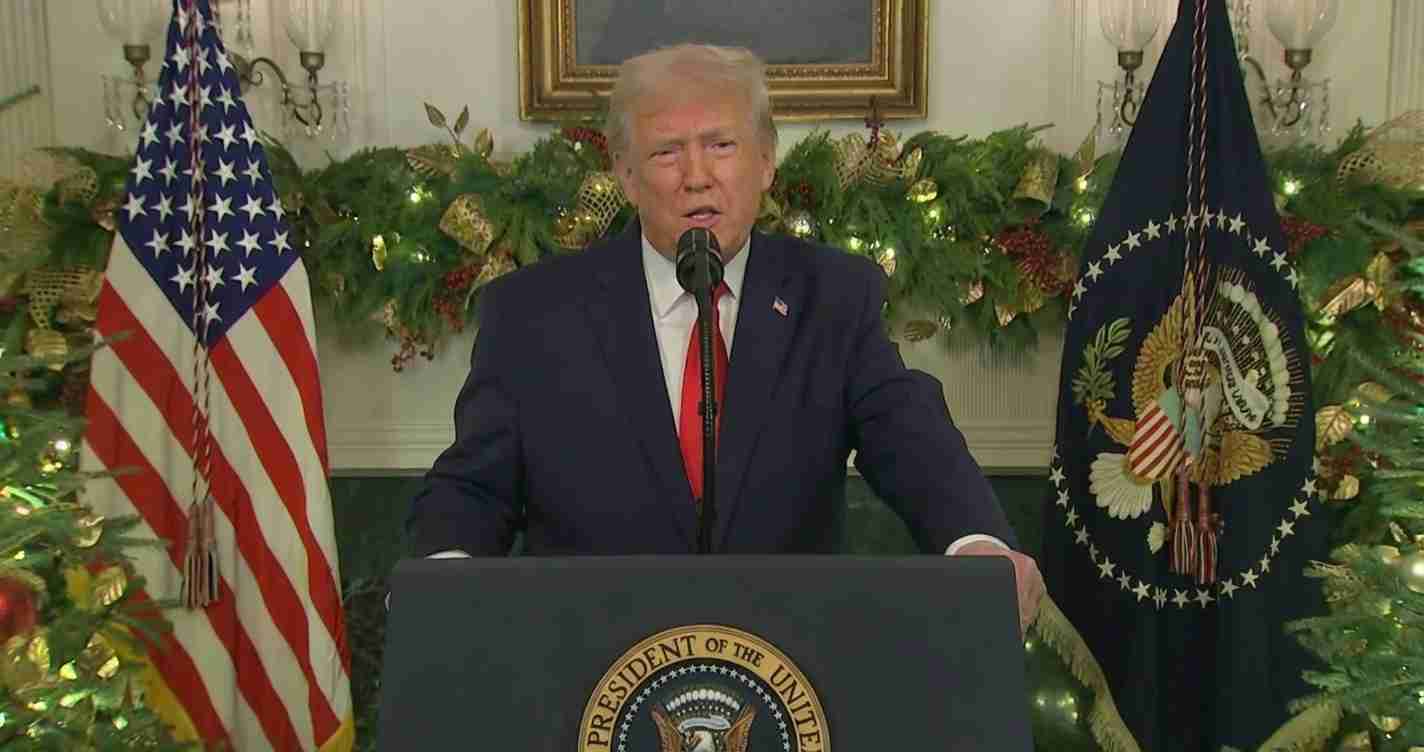
Trump touts economic turnaround in White House address, says wages now outpacing inflation and unveils “Warrior Dividends” for service members — but key data not shown
President Donald Trump delivered a White House address on December 17, 2025, claiming wages now outpace inflation, touting broader economic gains and unveiling “Warrior Dividends” for U.S. service members — but key data and program details were not shown.
- Prime-time address: In a national speech, Trump said the economy has strengthened and wages are rising faster than inflation — see the full speech video.
- New program announced: He unveiled Warrior Dividends, honorific payments for U.S. military members tied to the nation’s 250th anniversary, but did not provide amounts, timing or funding details.
- Missing evidence: The address presented no specific figures, datasets, or source citations; independent verification via the Bureau of Labor Statistics and the Bureau of Economic Analysis is needed.
Main story
What Trump said in the primetime address
President Trump used the national platform to present what he called “receipts” demonstrating an economic turnaround since the change in administrations. He claimed that wages are now growing faster than inflation, arguing workers are finally seeing real pay increases after years of lagging gains. He framed the improvement as the direct result of his policies and contrasted it with the prior administration’s record. See the speech video for his full remarks and presentation.
“We’ve pulled the economy back from the brink of ruin,” the president said, presenting the claims as proof of recovery.
Trump also announced the Warrior Dividends initiative, calling it a way to honor military service as the nation marks its 250th anniversary. He described the payments as gratitude for service and a tangible benefit for troops and their families but did not explain administration, eligibility, or funding. (See the full speech video.)
What the speech did not show
Although the president repeatedly referenced data and “receipts,” the address lacked concrete tables, reports, or citations that would allow immediate verification. Notably absent were:
- Specific figures on U.S. savings growth (total household savings, savings rate, or the comparison period).
- Exact measures showing wages outpacing inflation (which wage series, which inflation index, and the months compared).
- Details on the Warrior Dividends program — payment amounts, eligibility rules, timeline, or funding mechanism.
Why that matters: measuring real wages and savings
Claims that wages are rising faster than inflation are measurable, but results vary depending on the data series and time frames used. Economists commonly use average hourly earnings and the Consumer Price Index (CPI) to calculate real-wage changes; other measures like median usual weekly earnings or real average weekly earnings can produce different conclusions. The speech did not specify which measures were referenced. For official federal data, consult the Bureau of Labor Statistics and the Bureau of Economic Analysis.
Similarly, savings trends depend on definition: household savings rate, bank deposits, or net financial assets can tell different stories. Without a clear metric, it’s difficult to confirm whether reported growth in “US savings” meaningfully improves household financial security.
Independent verification: how reporters will check the claims
Reporters and analysts will compare the president’s statements with official statistics. Key verification steps include:
- Checking the Bureau of Labor Statistics for monthly and real wage series, including average hourly earnings and real average weekly earnings.
- Reviewing the CPI to confirm inflation trends and when wages may have outpaced price growth.
- Examining household savings and related measures from the Federal Reserve or the Bureau of Economic Analysis.
- Requesting details from the White House on Warrior Dividends: payment amounts, eligibility, legal authority, funding source, and rollout schedule; administration fact sheets or budget proposals would typically provide this information.
Administration claims and political framing
The speech framed economic progress as a direct reversal of the prior administration’s record, a politically charged comparison that matters to voters and markets. Because the address targeted a national audience with forceful, pocketbook-focused language — savings, wages, military support — independent data are essential to separate policy outcomes from political rhetoric. The timing of the Warrior Dividends announcement also carries symbolic and political weight: linking a benefit to the 250th anniversary blends patriotism with policy messaging, but absent cost and eligibility details, the program’s real impact is unclear.
Implications for California
Economic impact:
- Workers and households: If real wages nationwide are rising faster than inflation, California workers could see improved take-home pay — but the state’s higher cost of living and regional price differences may mute national trends. Regional BLS and state data will be important.
- Savings and housing: Any national increase in household savings could ease pressure for some Californians, but it won’t automatically resolve high housing costs in markets like San Francisco or Los Angeles.
Political consequences:
- Campaign effects: Presidential claims about wages outpacing inflation could influence voter perceptions before local and statewide races; local polling and independent verification will shape reactions.
- Military communities: California’s large military and veterans populations may respond strongly if Warrior Dividends are substantive and promptly delivered; local leaders will press for program specifics.
Social and practical effects:
- Public confidence: Verifiable improvements in real wages and savings can boost confidence, but the absence of presented data may foster skepticism among those who haven’t felt relief.
- Military pay administration: Key practical questions include timing, eligibility, tax treatment, and impacts on benefits such as housing allowances — local bases and veteran offices will seek guidance from the Pentagon and Treasury.
- Business and labor relations: California employers and unions will watch consumer spending and pay demands if workers’ real incomes rise; small businesses may see mixed effects.
Sources and where to watch for follow-up
Primary sources and resources for follow-up reporting:
- Full speech video provided by the White House
- Bureau of Labor Statistics (wage and CPI data)
- Bureau of Economic Analysis (household and savings statistics)
Readers in California should expect follow-up reporting that compares the president’s claims with federal and state data, outlines concrete terms of the Warrior Dividends program, and examines how any verified changes would play out locally. Journalists will seek documents and briefings from the White House and federal agencies to fill gaps left by the address.



