Zuckerberg’s Meta Ray‑Ban AI demo fails onstage as system overload leaves AI “confused”
Orlando, Florida (Times Media Service) — Meta’s Connect 2025 live demo of Ray‑Ban smart glasses failed when a mass activation overloaded development servers, causing the AI to skip steps and freeze during a cooking walkthrough and an unanswered WhatsApp video call onstage.
Key takeaways
- Product: Meta Ray‑Ban smart glasses with “Live AI” features.
- Failure: Voice‑activated assistant skipped steps, froze and did not present a WhatsApp answer UI.
- Root cause: Mass activation routed thousands of devices to a development server, creating an overload.
- Fixes: Meta says the bugs — including a display‑sleep issue — have been identified and corrected.
What happened onstage
Meta’s Connect 2025 was intended as a showcase for wearable AI. Instead, live demonstrations exposed the fragility of cloud‑backed features when many devices act simultaneously.
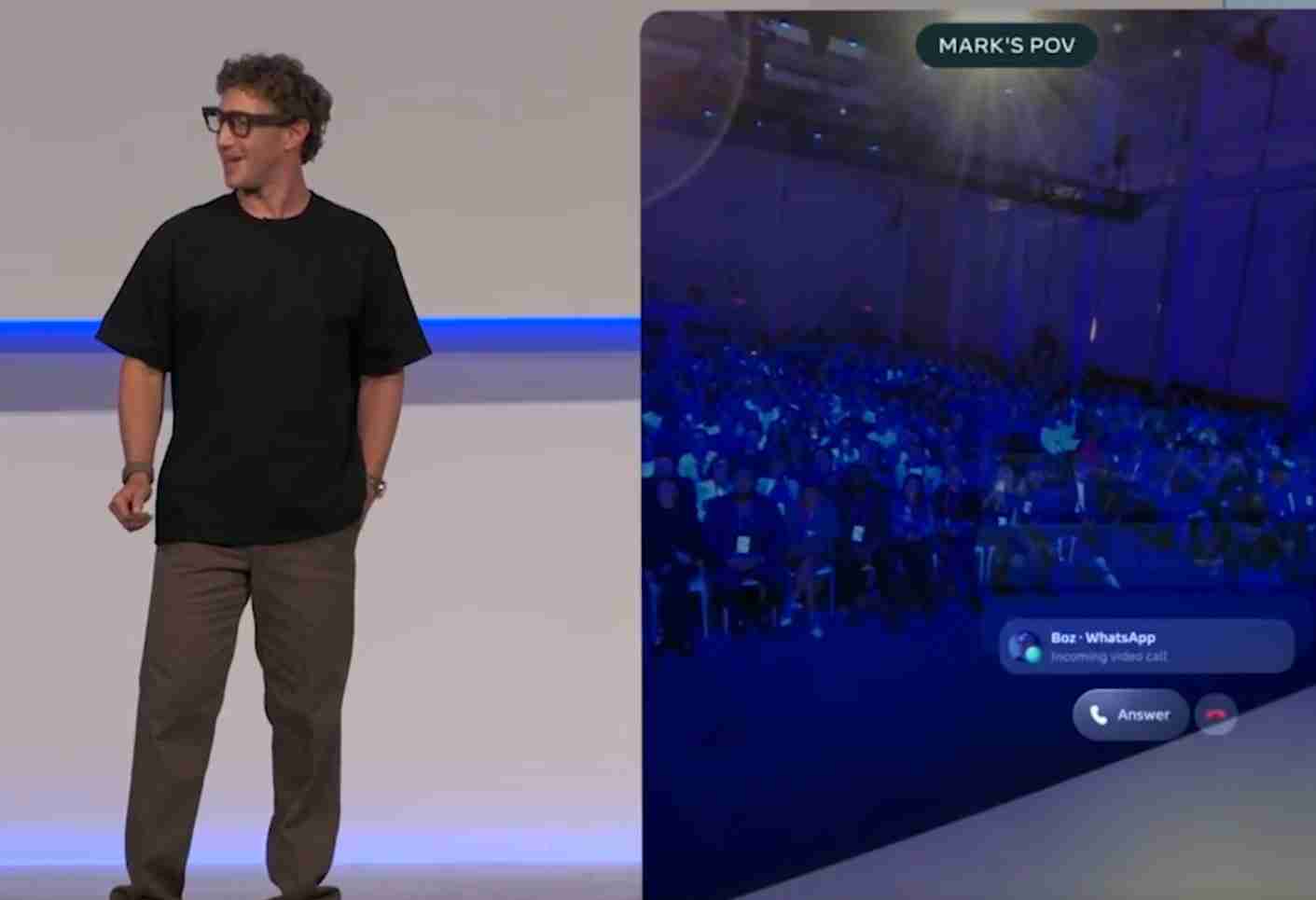
During the demo, a cooking influencer said, “Hey Meta, start Live AI,” prompting the glasses to guide a Korean‑inspired steak sauce recipe. The assistant skipped steps, repeated directions unevenly and at times stopped responding. Later, Mark Zuckerberg tried to accept a WhatsApp video call from Meta CTO Andrew Bosworth, but the glasses’ display went dark and the accept UI never appeared — the call remained unanswered in front of thousands of attendees. Sources reporting on the episode include Engadget, CNET and TechCrunch.
Why Meta says it failed: a demo overload, not Wi‑Fi
Audience members initially blamed spotty venue Wi‑Fi. Meta’s engineering team offered a different explanation: the voice trigger used onstage unintentionally activated Live AI on roughly 2,000 Meta Ray‑Ban units present at the venue. Those devices sent simultaneous requests to a development server that had been configured to isolate demo traffic, creating a sudden surge that overwhelmed the system and produced jittery, confused AI behavior rather than a simple connectivity drop. (Sources: Engadget, CNET, TechCrunch.)
How a staged demo became a DDoS‑like spike
Meta routed event device commands through a separate development server to protect production infrastructure. That decision unintentionally created vulnerability: when multiple units heard the same voice trigger, they all attempted to use Live AI at once. The flood of requests produced latency, skipped responses and what engineers described as a “self‑inflicted denial‑of‑service” effect on the demo server — leaving the AI to appear “confused and jumping around.” Technical commentators and attendees used that phrasing to describe the visible symptoms. (Sources: Engadget, CNET, Meyka, TechCrunch.)
Bugs uncovered and patched
Beyond traffic overload, the demos revealed software bugs. One notable issue caused the glasses’ display to enter a sleep state just as an incoming WhatsApp call arrived, preventing the answer UI from loading. Meta characterized these as edge‑case problems tied to unusual event conditions and said engineers have already deployed fixes to prevent recurrence in demos or consumer devices. (Sources: CNET, TechCrunch.)
Live demos and the risk of scale
Experts note that live demos compress complexity into one moment. When cloud services and thousands of devices must coordinate, a single oversight in trigger design or server capacity can cascade into public failure. Meta’s Connect 2025 incident is a high‑profile example of scale revealing weak points rather than proving capability. (Source: CNET.)
Public and expert reactions
Clips of the malfunction spread widely online. Critics labeled the episode an avoidable embarrassment and questioned whether such AI wearables are ready for mainstream use. Technical commentators, while critical of the stage execution, generally said the failures seemed tied to the demo setup rather than systemic hardware flaws. Some observers urged companies to avoid large‑scale live demos until software systems are stress‑tested under realistic loads. (Sources: Meyka, CNET, TechCrunch.)
Why the outage matters for consumers and competitors
For consumers: the incident highlights limits of cloud‑backed AI when many devices act at once, raising questions about reliability, privacy and the user experience for assistants that rely on remote servers.
For competitors: the failure is a reminder that hardware, on‑device processing and cloud services require careful orchestration; a public stumble can offer lessons and marketing opportunities to rivals.
Implications for California
Economic: California firms tied to wearable tech, cloud capacity and edge compute may see near‑term caution from investors but longer‑term demand for better stress‑testing and demo infrastructure.
Political: Lawmakers focused on AI oversight could press for clearer testing standards and transparency, using high‑profile demo failures to argue for consumer protections.
Social and cultural: Visible failures may nudge early adopters to wait for mature devices and prompt companies to favor quieter rollouts or more extensive prelaunch testing to avoid public embarrassment.
Practical advice: Californians considering Meta Ray‑Ban AI glasses should review software update histories, read independent reviews, verify after‑sale support and for demo planners: implement throttles and realistic rehearsals that mimic final event conditions.
Sources and further reading
- Engadget: Meta CTO explains the cause of its embarrassing smart‑glasses demo failures
- CNET: Bad luck for Zuckerberg — why Meta Connect’s live demos flopped
- TechCrunch: Meta CTO explains why the smart glasses demos failed at Meta Connect
- Meyka blog: Zuckerberg’s AI glasses demo ends in embarrassing tech fail
Reporting notes
This article focuses on the Meta Ray‑Ban AI demo incident at Meta Connect 2025 and is based on public statements by Meta engineers and multiple news reports listed above. Meta has stated the issues were tied to the unique conditions of the demo and that fixes have been made to address the identified bugs.