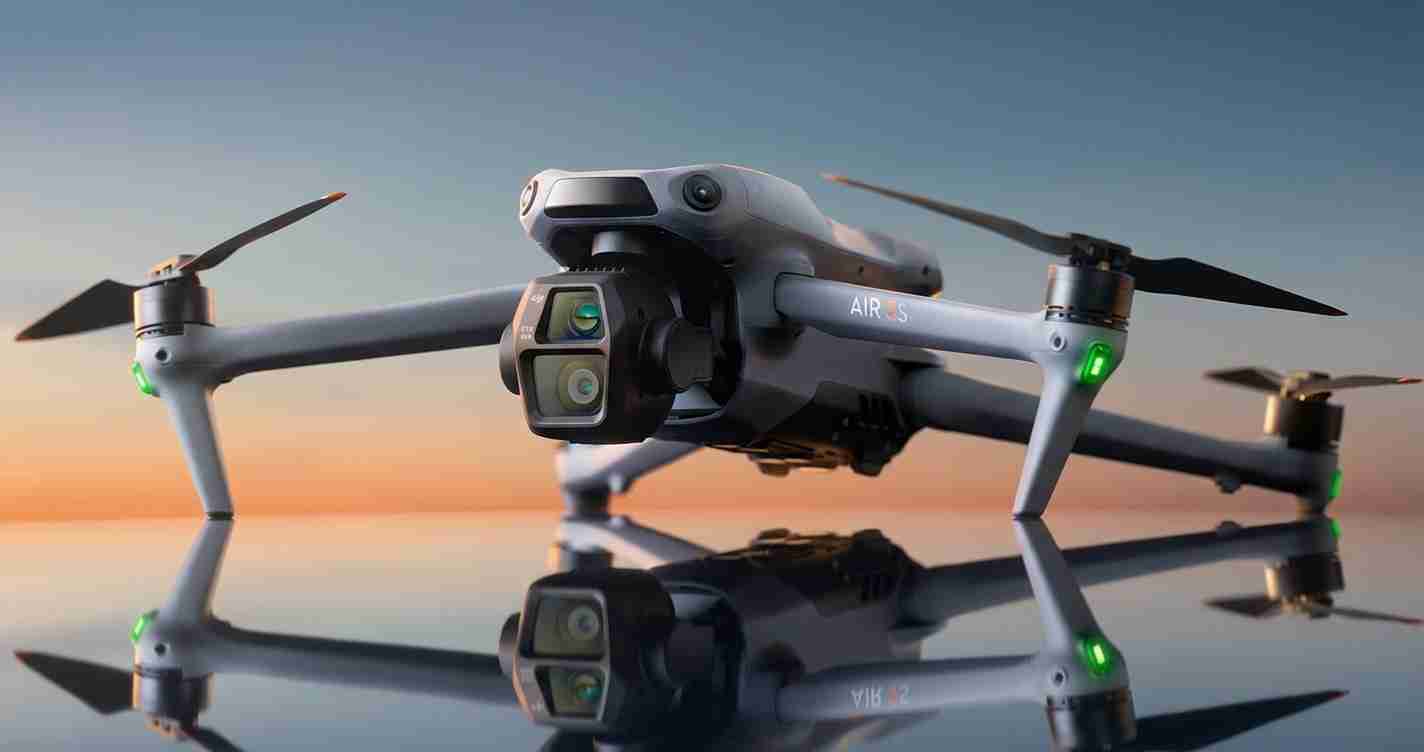
FCC bans Chinese-made drones, citing national security risks; DJI vows legal fight as U.S. market braces for disruption
WASHINGTON — The FCC on December 22, 2025 banned new Chinese-made drones and components from companies including DJI and Autel Robotics, citing data exfiltration and weaponization risks, placing five firms on its Covered List and blocking future U.S. sales.
Key takeaways
- The FCC added five Chinese drone makers — DJI, Autel Robotics, Teledyne FLIR, Innomaker and Xizheng — to its Covered List, preventing new FCC RF equipment authorizations for covered drone components (FCC press release).
- Existing devices are grandfathered: previously authorized equipment may still be operated but faces federal procurement and funding restrictions (FCC Covered List).
- DJI plans a legal challenge and disputes the evidence behind the designation, promising to seek remedies in federal court (DJI statement; Reuters).
Main content
What the FCC announced and why
On December 22, 2025 the FCC’s Public Safety and Homeland Security Bureau determined that the listed companies pose “unacceptable” risks to U.S. national security and critical infrastructure. The action invokes the Secure and Trusted Communications Networks Act of 2021 and blocks authorization of new radio‑frequency (RF) equipment used for drone communication, navigation or telemetry. For the agency statement, see the FCC press release.
“Criminals, terrorists, and hostile foreign actors have intensified their weaponization of these technologies, creating new and serious threats to our homeland,” said FCC Chair Brendan Carr in the agency statement (FCC press release).
The rule takes effect immediately for new equipment authorizations. Devices already certified are grandfathered and remain legal to own and operate, though federal agencies face phased restrictions and funding limits for covered products. The Commerce Department’s National Telecommunications and Information Administration (NTIA) will coordinate timelines for removing covered gear from federal networks (FCC Covered List).
Evidence cited and intelligence context
The FCC’s move aligns with U.S. intelligence and law enforcement findings about misuse of commercial drones. Officials cited incidents such as Mexican cartels using drones for smuggling and explosive delivery, Houthi forces deploying Chinese-made drones in the Red Sea, and risks of swarming or cyber-espionage attacks. Agencies also referenced Chinese laws — including the 2017 National Intelligence Law — that could compel companies to cooperate with state intelligence activities (Department of Homeland Security; Office of the Director of National Intelligence; reporting by Reuters).
Past U.S. restrictions paved the way: the Commerce Department added DJI to an export restrictions list in 2020; the 2022 National Defense Authorization Act banned certain federal procurement; and the Defense Department restricted DJI use for DoD in 2024. The FCC decision expands those measures by curtailing RF authorizations for new devices entering the U.S. market (Reuters).
DJI response and legal fight
DJI, which holds an estimated 70%–80% share of the U.S. consumer and prosumer drone market, said it was “disappointed”, disputed the evidence and plans to challenge the ruling in court. The company defended its compliance programs, third‑party audits and a “Local Data Mode” feature designed to limit data transmission to external servers (DJI statement; Reuters coverage).
Legal experts expect DJI’s challenge to argue the FCC acted arbitrarily or without sufficient public justification under the Administrative Procedure Act. DJI previously won an injunction against a separate restriction in 2024, suggesting courts may again be central to the dispute (Reuters).
Market effects and U.S. drone market impact
Analysts warn the ban could trigger supply shocks and price increases. DJI’s market dominance means many industries — agriculture, filmmaking, surveying, and public safety — rely on its models. Competitors like U.S.-based Skydio and European firms such as Parrot may gain business, but scaling to replace millions of devices will take time and investment. Media analyses project short‑term disruption, price spikes and delayed deliveries for government and commercial buyers (Wall Street Journal; Bloomberg reporting).
Public safety organizations warn of gaps if replacement funding lags. Police, fire and emergency-management units using DJI for search‑and‑rescue, accident reconstruction and wildfire mapping say there are no immediate, cost‑effective domestic alternatives at scale. The National Association of Police Organizations cautioned that frontline capability could be affected without rapid funding support (Politico; Axios).
Political and international reactions
The decision drew bipartisan support in Congress from lawmakers focused on Chinese technology risks and national security. Congressional leaders framed the FCC action as a defensive step to protect critical infrastructure. China’s Foreign Ministry criticized the move as “economic coercion” in state media coverage (Politico; Xinhua reporting).
Implications for California
Economic and industrial impact
California — a hub for drone use across agriculture, film, tech and mapping — could face higher costs and project delays. Many businesses use DJI hardware or software; a restriction on new Chinese-made models may push up prices for drone services and rentals and slow work across multiple sectors (Wall Street Journal).
Public safety and emergency response
California fire agencies, police departments and search‑and‑rescue teams rely heavily on drones for wildfire mapping, structure firefighting and coastal rescues. Agencies facing federal procurement restrictions will confront budget tradeoffs to replace fleet devices with trusted alternatives, potentially requiring substantial state and local investment (Politico; Axios).
Supply‑chain and manufacturing opportunities
The FCC action is likely to spur investment in domestic drone manufacturing. California’s aerospace and tech sectors could benefit from federal incentives and private capital aimed at building trusted supply chains. The Biden administration allocated funding in 2025 to boost domestic production capacity, creating potential jobs and long‑term resilience in critical technologies (Bloomberg/Washington reporting).
Security and privacy concerns for residents
For Californians, the ban highlights data privacy and foreign access risks. Local governments and private firms handling critical‑infrastructure data — from power‑grid inspections to water‑system mapping — will need to reassess vendor risk and data storage practices. The FCC emphasized RF component risks that can operate below software layers and bypass certain protections (FCC press release; ODNI assessment).
What comes next
The FCC action takes immediate effect for new authorizations, but outcomes depend on legal challenges, supply‑chain shifts and how quickly U.S. manufacturers can scale. DJI’s planned lawsuit could delay enforcement or require more detailed public justification from regulators. State and local leaders in California will face budgeting choices to ensure first responders maintain critical capabilities (FCC Covered List; DJI statement).