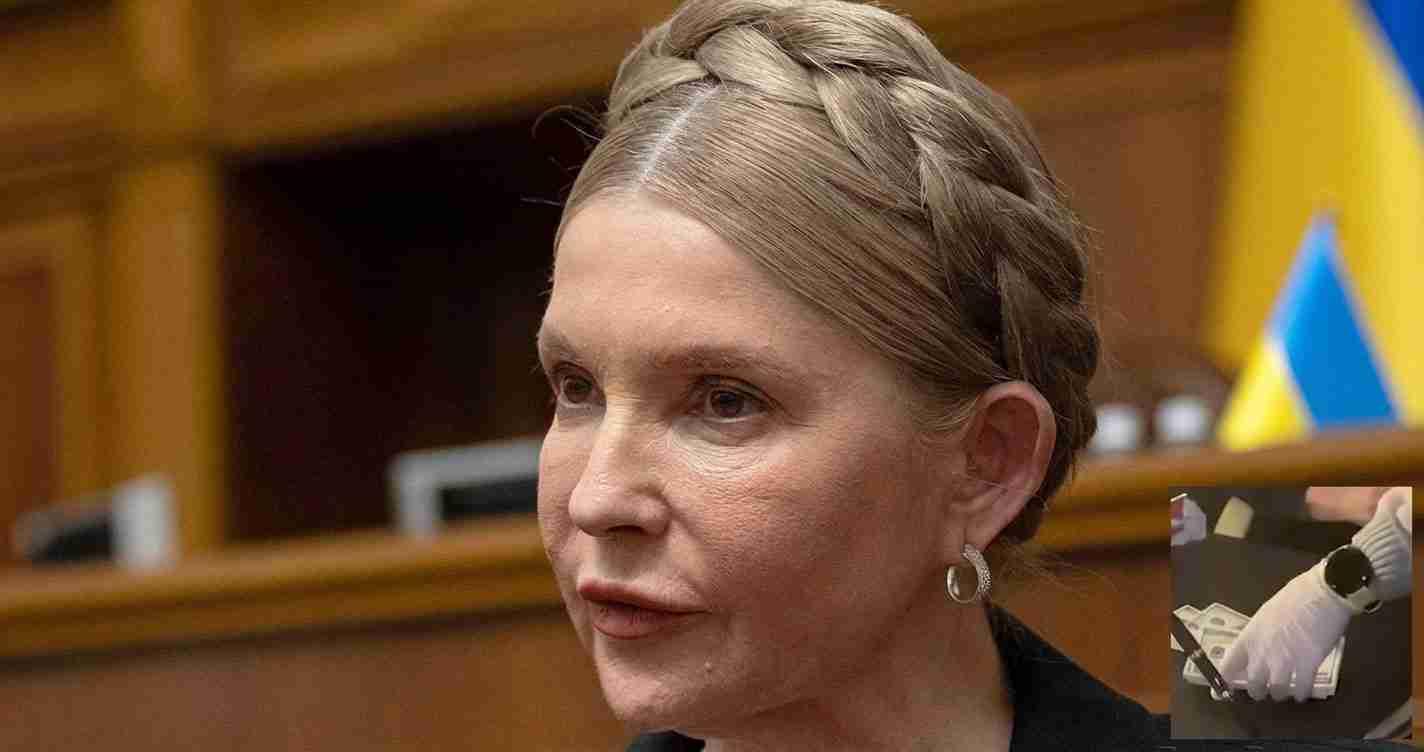
Former Ukrainian Prime Minister Yulia Tymoshenko Charged in Alleged $10,000-a-Month Bribery Plot Aimed at Weakening Zelenskyy Government
Yulia Tymoshenko, former Ukrainian prime minister and leader of Batkivshchyna, was charged Jan. 14, 2026, with allegedly organizing monthly $10,000 bribes to lawmakers to weaken President Volodymyr Zelenskyy’s government amid wartime tensions and anti-corruption probes in Kyiv.
- Charges: Authorities allege Tymoshenko organized a cash-for-votes scheme tied to monthly payments to lawmakers; prosecutors filed formal bribery charges. See JURIST.
- Evidence cited: Investigators released excerpts of wiretaps and reported seizing U.S. dollars, work phones and parliamentary documents — documented by the Kyiv Independent and JURIST.
- Immediate legal stakes: Prosecutors sought UAH 50 million bail and restrictions; conviction for organizing bribery could carry up to 10 years in prison as reported by Meduza and NV.
What prosecutors allege
NABU and SAPO say investigators uncovered a coordinated cash-for-votes operation allegedly run by Tymoshenko’s network. Prosecutors released blurred excerpts of wiretapped audio they interpret as references to payments of “10” — investigators say meaning $10,000 — to be delivered to lawmakers for two monthly sessions. Portions of the material and reporting are available via JURIST and the Kyiv Independent.
Prosecutors allege the payments were targeted to influence votes on personnel decisions connected to a government reshuffle — including motions affecting the Security Service head Vasyl Malyuk; appointments such as Denys Shmyhal to defense minister; Digital Transformation Minister Mykhailo Fedorov; and opposition to Denys Maslov as justice minister — with the broader aim, prosecutors say, of weakening parliamentary support for President Volodymyr Zelenskyy.
Searches and material seized
On the night of Jan. 13, NABU and SAPO agents searched Batkivshchyna party offices in Kyiv. Authorities reported seizing bundles of U.S. dollars, work phones, parliamentary documents and declared personal savings. Anti-corruption agencies published video and images showing blurred faces and cash; media coverage includes the Kyiv Independent, JURIST and Fox News.
Witnesses and party sources described law enforcement as remaining in the office for most of the night; officials say the operation was extended and that some aspects and identities in footage remain under review.
Timeline and immediate fallout
- Jan. 13: NABU and SAPO searched Batkivshchyna offices; Tymoshenko attended a parliamentary reshuffle session the same day. Sources: Kyiv Independent, JURIST.
- Jan. 14: NABU published blurred audio/video; SAPO confirmed criminal charges and requested high bail and restrictions; Tymoshenko appeared in the High Anti-Corruption Court. Reporting: JURIST, NV.
Tymoshenko’s response and political context
Denial and challenge: Tymoshenko has denied wrongdoing, calling the searches illegal and the case political persecution aimed at marginalizing the opposition ahead of potential elections called under martial law. Her lawyers say the seized items were declared and accuse authorities of timing the raid to damage her party’s standing (Kyiv Independent, Meduza).
“The raid was illegal and politically motivated,” Tymoshenko’s legal team said, arguing the operation aims to sideline opposition voices.
Political background: Tymoshenko is a veteran politician who led Batkivshchyna to 25 parliamentary seats and served as prime minister in 2005 and 2007–2010. Her 2011 imprisonment over a gas contract with Russia — widely seen as politically motivated — and 2014 release after the Maidan era make these allegations especially charged within Ukraine’s polarized landscape (Kyiv Independent).
Broader anti-corruption campaign and related probes
The Tymoshenko charges come as Ukraine’s anti-corruption watchdogs have been active in exposing cash-for-votes networks. NABU disclosed a separate group tied to cash-for-votes among lawmakers from President Zelenskyy’s Servant of the People party in late December 2025. Analysts say these actions test how Ukraine will police political corruption during wartime (Kyiv Independent, Meduza).
Legal stakes and possible outcomes
SAPO’s requests: Prosecutors asked the High Anti-Corruption Court for UAH 50 million in bail and restrictions on movement and contacts. If convicted of organizing bribery, Tymoshenko faces up to 10 years in prison under Ukrainian law. The proceedings are likely to be appealed and will unfold before the specialized High Anti-Corruption Court (Meduza, NV).
Coverage and international reaction
Reporting ranges from straightforward presentation of NABU materials to commentary suggesting politicization. International observers and Western outlets are watching because the case tests Ukraine’s rule of law and transparency during an active conflict. Some coverage emphasizes the presence of U.S. dollars in seizure footage as symbolic of alleged cash operations (Fox News, Meduza).
Implications for California
Economic and political ties: California firms and nonprofits with trade, tech and humanitarian links to Ukraine could face uncertainty if the case weakens Kyiv’s governing coalition or fuels instability, potentially complicating investments and reconstruction partnerships (Kyiv Independent).
Rule-of-law priorities: California-based donors and institutions supporting anti-corruption reform may interpret the prosecution either as evidence of accountability or as politicized law enforcement — outcomes that could influence grantmaking and public-private engagement.
Defense & security cooperation: Companies providing defense, cybersecurity or digital services to Ukraine will monitor political shifts that might affect procurement or reform timelines.
Diaspora reaction: California’s sizable Ukrainian community could increase political organizing, fundraising and demonstrations in cities such as Los Angeles, San Francisco and San Diego, with mixed responses among groups supporting anti-corruption measures versus those viewing the case as a crackdown (Meduza).
Ongoing developments
This is a developing story. NABU and SAPO materials, court filings and Tymoshenko’s legal responses are likely to produce additional public evidence and legal motions. Further reporting will follow as the High Anti-Corruption Court schedules hearings and party statements, and as international reactions evolve (JURIST, Kyiv Independent, Meduza).