Wi‑Fi Signals Can Track Your Heartbeat: UCSC’s Pulse‑Fi Opens Contactless Health Tech Frontier
UCSC researchers unveiled Pulse‑Fi, a contactless system that uses standard Wi‑Fi and machine learning to detect tiny chest motions and estimate heart rate accurately from up to about ten feet, offering a low‑cost alternative to wearables.
- Contactless, low‑cost monitoring: Pulse‑Fi uses standard Wi‑Fi radios and machine learning to estimate heart rate with near‑clinical accuracy — see the UCSC news release.
- High reported accuracy: Tests showed roughly a half‑beat‑per‑minute error versus medical‑grade equipment under controlled conditions (Tom’s Hardware).
- Cheap hardware, broad potential: Core radios can cost about $5–$10, enabling scalable deployment in homes, clinics, and community settings (UCSC news release; Tom’s Hardware).
How Pulse‑Fi works
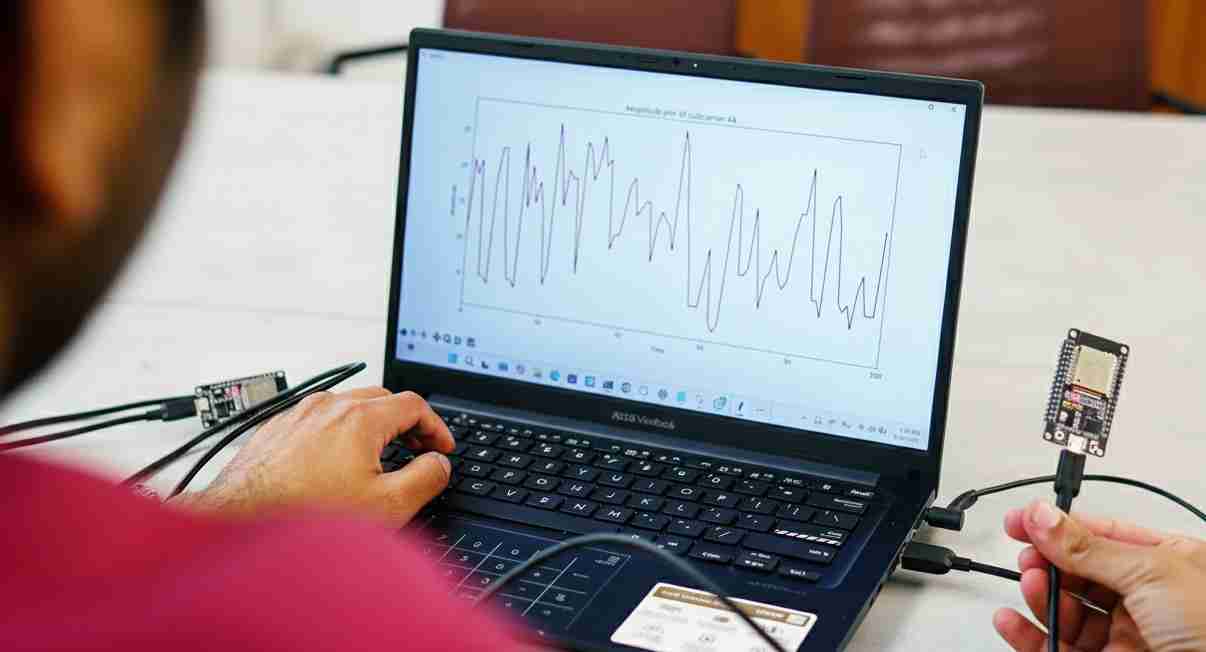
Wi‑Fi radios emit radio waves that reflect off people and objects. Minute chest movements from heartbeats subtly alter those reflections. Pulse‑Fi records the reflected channel data and applies signal processing plus machine‑learning models to extract the heartbeat rhythm, operating through clothing and without skin contact. See the UCSC news release and coverage from Tom’s Hardware for technical context.
Signal challenge: raw radio readings are noisy — people move, doors open, pets cross the room, and other transmitters add interference. Pulse‑Fi’s machine‑learning filters learn to separate heartbeat‑scale reflections from environmental clutter, which is why the team saw improved accuracy with longer monitoring runs or higher‑grade radios.
Research and validation
The work was developed at UCSC and presented at the 2025 IEEE International Conference on Distributed Computing in Smart Systems and the Internet of Things (DCOSS‑IoT) as an early peer review step — details in the UCSC news release. Related peer‑reviewed research on Channel State Information (CSI) analysis and noncontact heart‑rate sensing is summarized on PubMed, showing promising accuracy when advanced filtering is applied.
Independent media and industry reports highlight the method’s accessibility and low hardware cost (Tom’s Hardware; Earth.com; Environmental News Network).
Advantages and potential uses
- Contactless monitoring: No skin sensors or wrist straps required — useful for people who cannot wear devices or find wearables uncomfortable (Earth.com).
- Cost efficiency: Using common Wi‑Fi radios and open algorithms can drive hardware costs down to single‑digit dollars, enabling broad deployments (UCSC news release; Tom’s Hardware).
- Versatile settings: Can work while a person sleeps, sits, or lies in bed and can function through light clothing — promising for elder care, sleep studies, and bedside monitoring (UCSC news release).
- Public health potential: Low cost and accessibility could extend monitoring to underserved areas and enable large‑scale studies without shipping wearables.
Limitations and challenges
- Environmental sensitivity: Household motion, multiple people, and other reflections complicate heartbeat extraction (related research).
- Privacy and consent: Contactless sensing of physiological signals raises ethical and legal questions — who controls the data, how long it is stored, and whether monitoring could occur without informed consent.
- Clinical validation needed: Early tests are promising, but broader clinical trials and regulatory review (for example, FDA guidance) will be required before medical uses are certified (UCSC news release).
- Interference and reliability: Real‑world environments contain many wireless devices; consistent readings may require better radios or enhanced algorithms (Tom’s Hardware).
“Pulse‑Fi demonstrates how ubiquitous infrastructure can be repurposed for health sensing, but technical, legal, and ethical safeguards must accompany deployment.”
Safety, regulation and market outlook
For cautious stakeholders, the tradeoff is between rapid innovation and adequate oversight. Pulse‑Fi could reduce costs and enable new products — but regulators must clarify when a contactless system becomes a regulated medical device. Thoughtful standards will be necessary to protect patients while preserving affordable innovation (UCSC news release; Environmental News Network).
Implications for California
Economic and healthcare impact
California’s tech and health sectors could quickly adopt Pulse‑Fi‑style systems. Low hardware costs may spur startups and product integrations from Bay Area firms into routers, smart‑home systems, and care platforms, potentially creating jobs and investment (UCSC news release; Tom’s Hardware).
Political and regulatory consequences
California’s existing privacy laws (for example, the CCPA) may prompt lawmakers to expand biometric definitions and strengthen consent rules for deployments in homes and public places. State procurement standards could shape market entrants and set de facto safety and privacy expectations (Earth.com).
Social and practical effects
Low costs could help underserved communities through deployments in shelters, senior centers, and rural clinics, but barriers like broadband access and reliable power persist. Families might welcome remote monitoring in senior living or hospitals, yet concerns about constant surveillance and data handling will shape acceptance.
Cultural relevance and adoption
Adoption will vary across California’s diverse populace: tech hubs may embrace contactless convenience, while privacy‑focused communities could demand strict safeguards. For conservative‑leaning voters, market solutions that lower healthcare costs may be attractive, but legislators will be watched for balance between protection and innovation.