Trump says federal funding to “sanctuary” cities and states will stop Feb. 1 as he cites fraud, including Minnesota child care cases
President Donald Trump announced at the Detroit Economic Club that federal payments to self‑described “sanctuary” cities and states shielding them will cease Feb. 1, citing protection of criminals and alleged child care fraud, particularly in Minnesota.
Key takeaways
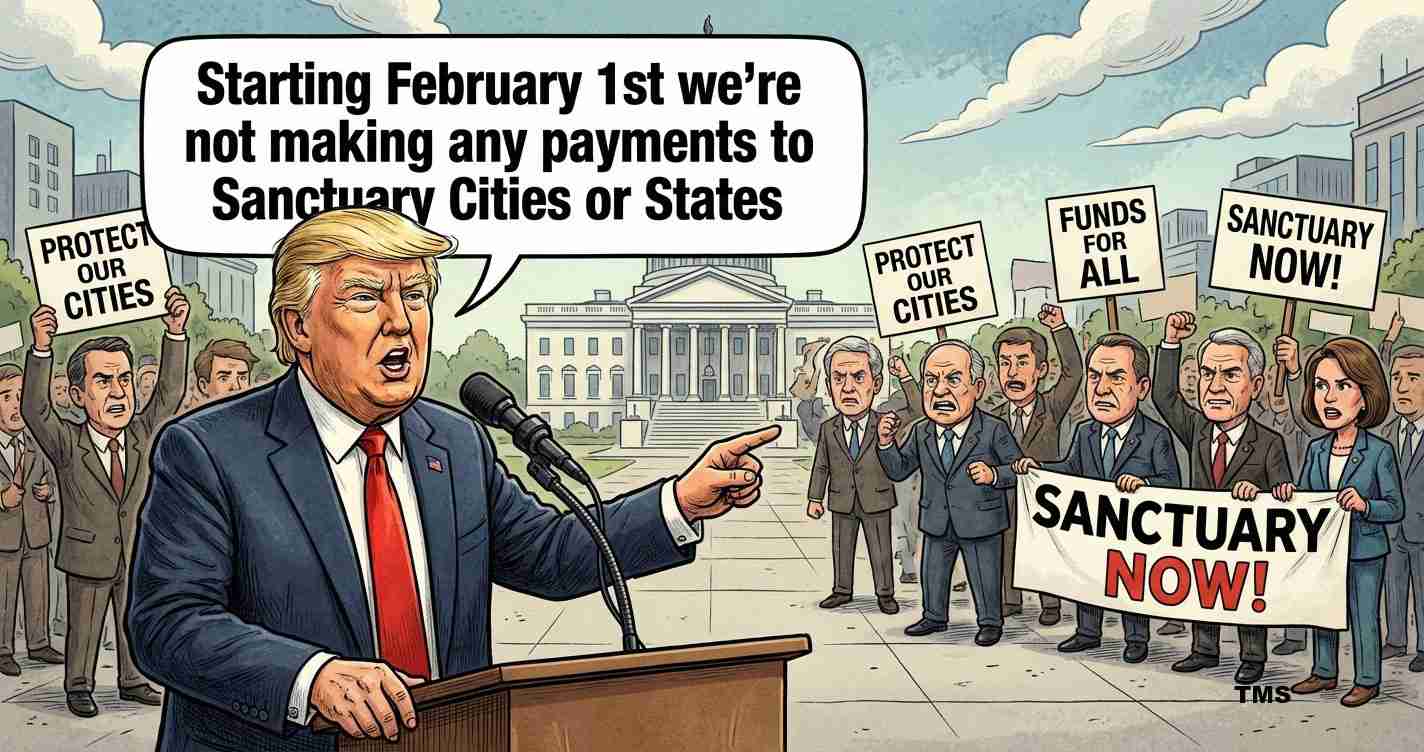
- Feb. 1 cutoff: Trump said, “Starting Feb. 1, we’re not making any payments to sanctuary cities or states having sanctuary cities.”
- Child care fraud cited: He singled out alleged Minnesota child care fraud and said HHS suspended payments tied to “suspected scammers.”
- HHS and courts: HHS moved to withhold child care and related funds in five states, but a federal judge temporarily blocked the halt on Jan. 9.
- Legal battles expected: The Justice Department has sued multiple jurisdictions for alleged noncompliance, and cutting funds raises statutory and practical challenges.
Trump’s announcement and rhetoric
At the Detroit Economic Club, President Trump framed the policy change as a public‑safety and anti‑fraud measure. He said jurisdictions that “do everything possible to protect criminals at the expense of American citizens” will no longer receive federal payments, adding, “It breeds fraud and crime and all the other problems that come. So we’re not making any payment to anybody that supports sanctuary.”
“Starting Feb. 1, we’re not making any payments to sanctuary cities or states having sanctuary cities.”
Reporting on the remarks appears in outlets including KRCR, WTOV9, KATV and Fox News.
Minnesota child care fraud and federal action
The administration pointed to cases it says show misuse of federal child care funds and other program dollars. Officials at the Department of Health and Human Services moved to withhold payments tied to programs including the Child Care and Development Fund, Temporary Assistance for Needy Families (TANF), and the Social Services Block Grant in five states: California, Colorado, Illinois, Minnesota and New York.
Trump specifically alleged widespread child care fraud in Minnesota and said HHS had “suspended payments tied to suspected scammers in Minnesota, of which there are many,” and he criticized Governor Tim Walz for allegedly ignoring fraud.
The temporary judicial response came on Jan. 9 when U.S. District Judge Arun Subramanian issued a temporary block on the HHS child care funding halt for those states, keeping money flowing while courts weigh the arguments.
Source coverage: Fox News (HHS action and judge’s order), and state/local reports at KRCR and WTOV9.
Prevailing legal questions and past precedent
The proposal revives a contentious legal debate. Courts previously blocked similar efforts in 2017, and states have challenged executive attempts to condition or cut funding. Key legal issues include:
- whether Congress authorized the executive branch to withhold funds for these reasons;
- whether agency conditions match statutory language for each program;
- whether withholding funds would unlawfully harm individuals who rely on services unrelated to immigration enforcement.
Legal precedent has sometimes favored states and cities where courts found withholding funds exceeded federal authority or conflicted with statutes. Coverage and analysis: ABC7 and KRCR.
How the policy could be implemented and who might be affected
Federal funding streams vary: some are targeted grants, others flow through states to local agencies. Expanding a cutoff from particular cities to entire states could unintentionally affect counties or towns that do not have sanctuary policies.
Local governments relying on federal dollars for child care subsidies, housing, public health, and social services face uncertainty. Even temporary interruptions can complicate budgets, delay provider payments, and force contingency planning.
Justice Department lawsuits and noncompliant lists
The Justice Department has sued multiple cities and states for alleged noncompliance with federal immigration enforcement. Jurisdictions named in reporting include Los Angeles, Chicago, Newark, Hoboken, Jersey City, Paterson (N.J.), Rochester (N.Y.), and states such as Illinois, Colorado, and New York. The Department of Homeland Security has also listed hundreds of jurisdictions it deems “noncompliant.” See reporting from KRCR and ABC7.
Reactions and political backdrop
The White House framed the move as protecting citizens and taxpayer funds. Advocates for sanctuary policies argue they build trust with immigrant communities so victims and witnesses will cooperate with police. Legal advocates warn that cutting funds risks harming vulnerable people who rely on federally funded services.
The debate occurs amid an administration effort to identify and challenge jurisdictions it calls noncompliant, with lawsuits and public listings intended to pressure policy changes.
Implications for California
Economic impact
California is among the five states targeted for withholding related child care and social program funds. Any suspension of federal payments could strain state and county budgets, risk unpaid claims to child care centers, and reduce access for low‑income families.
Political consequences
California’s large sanctuary jurisdictions, including Los Angeles and San Francisco, have faced prior DOJ suits and have litigated federal conditioning of funds. A statewide push to cut payments would likely trigger legal challenges from state and local officials and shape public debate ahead of elections.
Social effects and considerations
Interruptions to child care and social service funding could force parents to miss work, reduce incomes, and harm local workforces. For some constituents, anti‑fraud messaging resonates; for others, broad cuts risk punishing law‑abiding residents dependent on services.
What local officials can do
- Monitor court orders and federal guidance closely.
- Prepare contingency budgets and brief providers about potential payment delays.
- Coordinate with state attorneys general experienced in federal legal challenges.
- Communicate transparently with residents about possible service interruptions.
Sources and reporting
This article draws on reporting from multiple outlets covering the president’s remarks, HHS actions, and legal developments: