
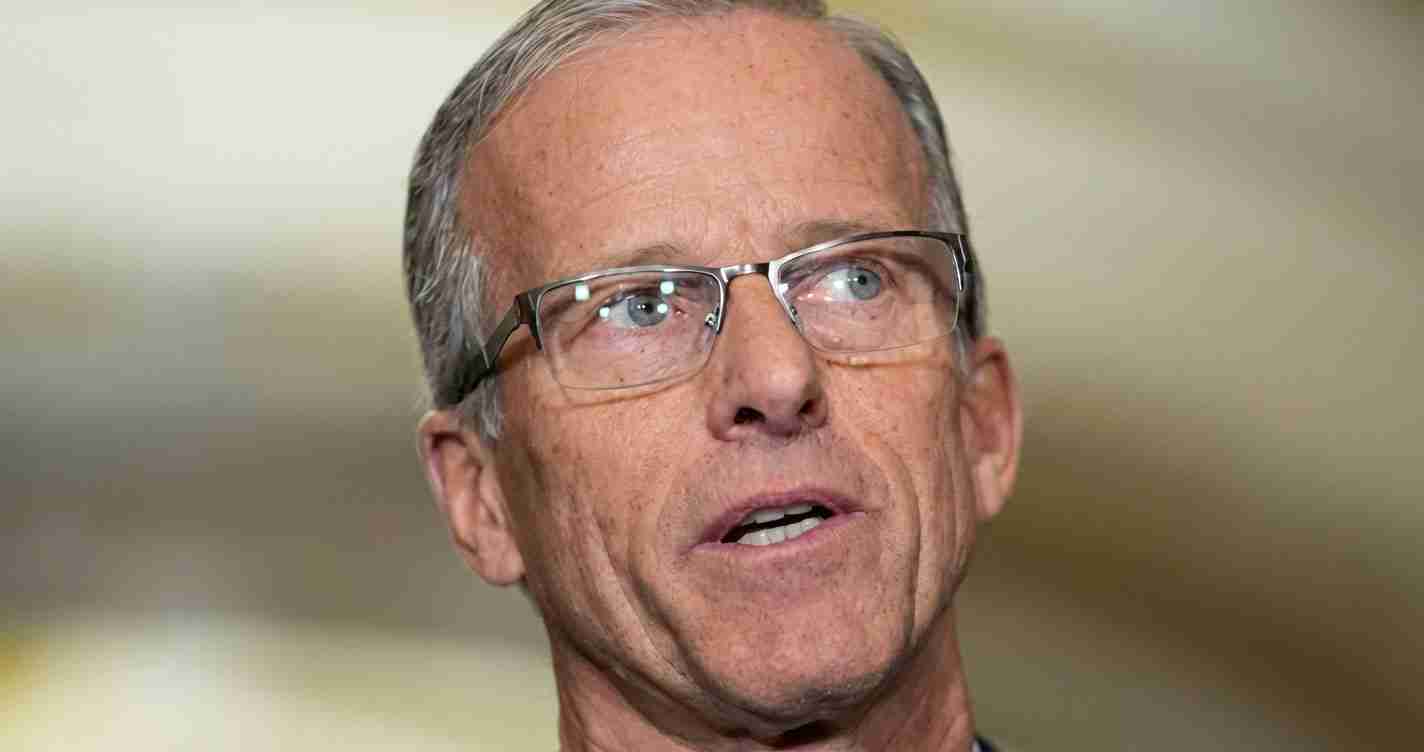
Thune pushes Senate test on SAVE America Act to force Democrats’ vote on proof-of-citizenship and photo ID
Senate Majority Leader John Thune is pressing for a Senate vote on the SAVE America Act to force Democrats to state positions on requiring documentary proof of U.S. citizenship for registration and a federal photo ID for elections.
Key takeaways
- The SAVE America Act would require documentary proof of U.S. citizenship to register for federal elections and impose a federal photo ID standard (Congress.gov; Majority Leader release).
- House passage: The bill passed the House 218–213 on Feb. 16, 2026, and Republicans say 50 senators back it, setting up a floor test (VoteBeat).
- Political strategy: Thune seeks a public vote to force Democrats to defend their positions ahead of the 2026 midterms; critics warn of disenfranchisement, implementation chaos, and expanded federal oversight (Brennan Center).
Background on the SAVE America Act and what it would do
The SAVE America Act updates prior proposals such as the SAVE Act (H.R. 22) and would create federal requirements for documentary proof of citizenship and a federal photo ID standard for federal elections. The bill cites documents such as REAL ID-compliant cards and birth certificates as acceptable proof (Congress.gov; Cornyn press).
Key provisions
- Proof of citizenship: Requires documentary proof of U.S. citizenship to register for federal elections and authorizes repeated checks tied to federal records to remove noncitizens from rolls (VoteBeat).
- Federal photo ID: Imposes a federal photo ID requirement that accepts only specified documents; many student IDs and some tribal IDs may not qualify (Barrett press; Brennan Center).
- Immediate effect and federal checks: The bill takes effect on enactment and would require states to use federal databases such as DHS’s SAVE (Systematic Alien Verification for Entitlements) for verification (VoteBeat).
How Thune frames the push: forcing a record vote
Senate GOP leaders, led by Thune, say the floor vote is a strategic move to put Democrats on record for voters. Thune said,
“We will make sure that everybody’s on the record, and if they want to be against ensuring that only American citizens vote in our elections, they can defend that when they have to go out and campaign against Republicans this fall.”
Thune’s message is being amplified as Republicans prepare for the 2026 midterms (Majority Leader release).
Democrats and voting-rights groups push back
Opponents — including Democrats, state election officials, and civil-rights groups — argue the bill would be harmful and impractical. Their concerns include:
- Disenfranchisement: Eligible voters without required documents (some elderly, lower-income people, those with name changes) could be blocked from voting (Campaign Legal; Brennan Center).
- ID exclusions: Many commonly used IDs — including many student IDs and some tribal IDs — may not meet the bill’s standards (Barrett press).
- Implementation chaos: Rushed implementation without federal funding or realistic timelines could disrupt the 2026 midterms in some states (VoteBeat).
- Federal intrusion: The measure would expand federal oversight of state voter registration and roll maintenance via DHS and other federal databases (Brennan Center).
Legal and logistical hurdles
Even if Republicans publicly back the bill, Senate rules and the filibuster mean advancing legislation typically requires 60 votes. Republicans point to scenarios in which a 50-vote GOP tally plus the vice president’s tie-breaker could secure cloture in limited circumstances, but significant obstacles remain. Some GOP senators have discussed attaching provisions to must-pass bills such as the defense authorization or appropriations to force movement (Colorado Politics).
Where the bill stands now
The SAVE America Act passed the House on Feb. 16, 2026. Senate leadership has signaled plans to force a vote to record where senators stand, but as of Feb. 17 public details about a formal Senate floor schedule were not available (VoteBeat; Majority Leader release).
Implications for California
A federally imposed proof-of-citizenship and photo ID standard could have wide-ranging effects in California across budgets, politics, and social access.
Economic impact
- Implementation costs: California could face significant expenses to update registration systems, issue acceptable IDs, and fund county staffing and outreach unless Congress provides money for compliance (VoteBeat).
- Legal costs: Potential federal litigation challenging a mandate could create additional legal costs for state and local election offices (Brennan Center).
Political consequences
- Messaging: Republicans may frame the change as election-integrity reform for moderate-conservative voters; Democrats will stress turnout impacts for key constituencies (Majority Leader release).
- Campaign dynamics: A federal voter ID rule could affect turnout patterns in 2026 and beyond given California’s large, diverse electorate (Campaign Legal).
Social effects
- Vulnerable populations: Older adults, low-income voters, people with name changes, and some Native American communities could face greater hurdles; tribal IDs are a particular concern in California (Brennan Center).
- Public trust: Supporters argue the law would boost confidence in elections; critics say it could undermine trust by making voting harder for some communities.
Practical applications for voters and officials
- For voters: Californians should verify whether current IDs meet federal standards and gather documentary proof of citizenship if required; counties would need to provide guidance and expanded services (VoteBeat).
- For election offices: Counties must plan for document verification, federal cross-checks, dispute resolution, training, and likely additional funding to avoid errors and long lines (VoteBeat; Campaign Legal).
Reporting and next steps
Senate leaders intend to press for a floor test to record senators’ positions. Whether the measure can clear the Senate and reach the president remains uncertain; Thune’s immediate objective is a public vote that Democrats must explain to voters ahead of the 2026 midterms (Majority Leader release; VoteBeat).



