
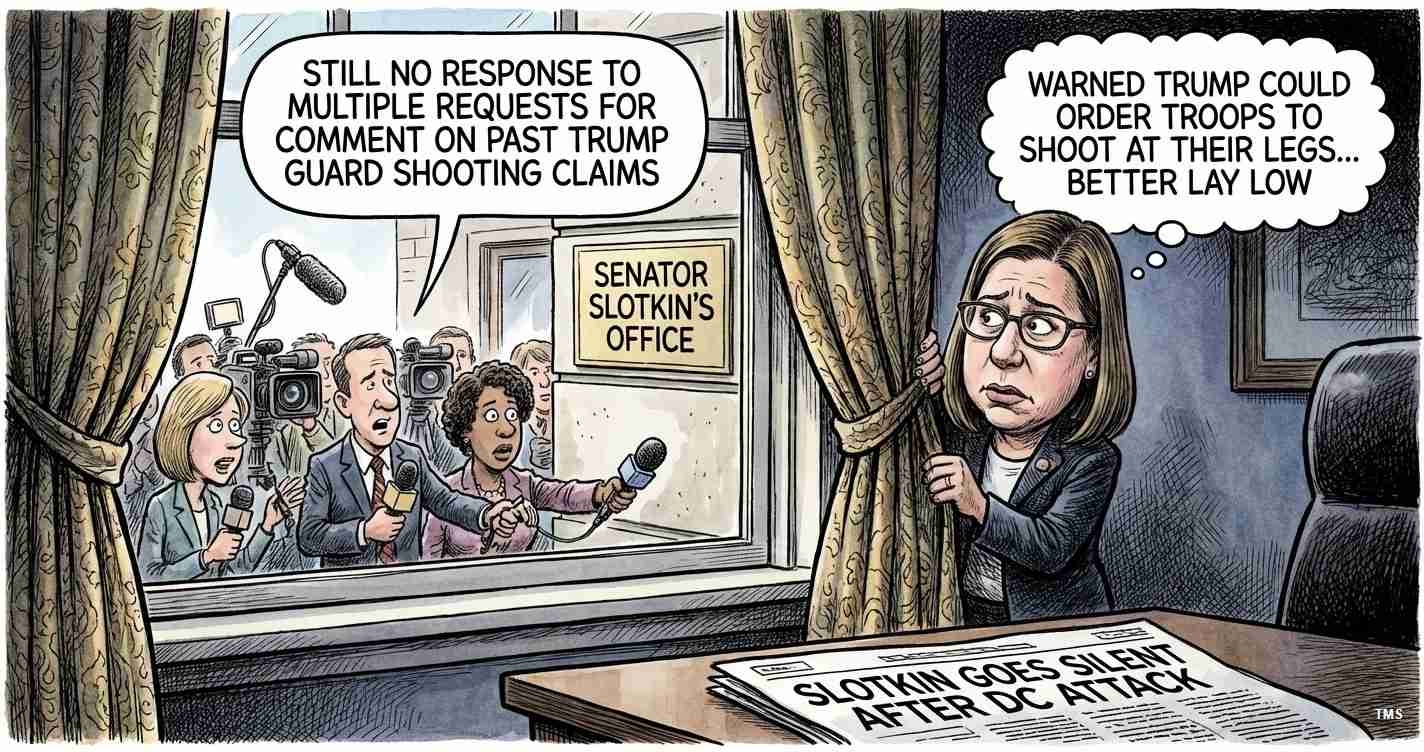
Slotkin Silent on Past Claims About Trump Telling Guards to “Shoot at Their Legs” After D.C. National Guard Attack
Sen. Elissa Slotkin declined to answer questions about past allegations that former President Trump suggested troops “shoot at their legs” after a deadly D.C. attack killed a National Guard member, raising fresh debate over military orders and political rhetoric.
- Sen. Slotkin did not answer reporters when pressed on past allegations tied to former President Trump and comments about shooting at protesters’ legs, as reported by Fox News.
- Alleged comment recorded by then-Defense Secretary Mark Esper and published in his memoir, A Sacred Oath, is part of the public record (Fox News).
- Slotkin and colleagues urged troops in a November 2025 video to refuse unlawful orders under the UCMJ; that message produced heated backlash and an FBI counterterrorism inquiry (Fox News; Michigan Public).
Key details and immediate context
Background on the alleged comments and Slotkin’s warning
During congressional hearings about the use of force in 2020, Sen. Slotkin raised an account attributed to Mark Esper in which former President Trump allegedly asked whether troops could “shoot at their legs” when confronting peaceful protesters. Esper recorded the exchange and included it in his memoir, A Sacred Oath. Trump has denied making the remark. (Source: Fox News.)
Slotkin’s November 2025 video and reaction
In November 2025, Slotkin and six other House and Senate Democrats — including Sen. Mark Kelly and Reps. Jason Crow, Chris Deluzio, Chrissy Houlahan and Maggie Goodlander — released a video advising uniformed and intelligence service members they have the legal right to refuse unlawful orders under the Uniform Code of Military Justice. Lawmakers said the message responded to concerns from service members about potentially unlawful orders related to protests or classified operations. (Sources: Fox News; Michigan Public.)
President Trump’s reaction: The President called the message “seditious behavior” and wrote it was “punishable by DEATH” on social media, a post the White House later said was not meant to advocate execution of lawmakers.
Supporters argued the video reiterated established legal protections and the limits of unlawful commands; critics said it risked undermining civilian control of the military and could sow confusion in crisis moments. (Source: Michigan Public.)
FBI counterterrorism inquiry into lawmakers
After the heated exchange of rhetoric, Slotkin disclosed the FBI opened a counterterrorism inquiry that included her and five other congressional Democrats. She said the inquiry and the subsequent threats validated the lawmakers’ decision to issue the video. Slotkin reported a “massive uptick” in death threats following the video’s release and the President’s comments. (Source: Michigan Public.)
D.C. National Guard shooting and timing of Slotkin’s silence
Slotkin’s refusal to comment on Friday came days after a Washington, D.C. shooting that killed one National Guard member and left another critically injured. The FBI opened a terrorism investigation; the suspect, identified as 29-year-old Afghan national Rahmanullah Lakanwal — a former counterterrorism team member in Afghanistan — faces first-degree murder charges. In the immediate aftermath, some observers asked whether officials who had publicly discussed military orders and protest responses should revisit their messaging. When reporters pressed Slotkin about the prior “shoot at their legs” allegation and the November video, her office did not respond to multiple requests for comment. (Source: Fox News.)
Safety, legal norms and the military chain of command
Legal experts note the Uniform Code of Military Justice and longstanding military doctrine require service members to obey lawful orders and permit refusal of illegal ones. Slotkin and colleagues stressed that legal framework in their messaging. Supporters say the lawmakers fulfilled a duty to remind service members of legal protections; critics say the public framing risked eroding trust in civilian control and confusing troops during crises. (Sources: Fox News; Michigan Public.)
Personal security fallout for lawmakers
After the video and the President’s reaction, Slotkin said she and her family experienced a sharp rise in threats, including a bomb threat at her family farm and persistent harassment of relatives. Those threats prompted changes to her security detail and daily routines. Slotkin maintains the lawmakers acted to protect the Constitution and servicemembers from unlawful orders. (Source: Michigan Public.)
Elissa Slotkin silent: media scrutiny and unanswered questions
Reporters asked whether the November video or the prior allegation about Trump’s “shoot at their legs” remark had any bearing on the D.C. attack; Slotkin’s office did not answer repeated requests. The silence drew attention given her earlier public statements and the broader debate over military obedience and political rhetoric. Coverage and online searches have included tags such as “Slotkin Trump shoot legs” and “Elissa Slotkin silent” as readers seek context and clarity. (Source: Fox News.)
Implications for California
Economic, political and social ripple effects were identified for California: possible impacts on defense contracting, pressure on state politicians to clarify public messaging about military orders, heightened anxiety in communities with large Guard and veteran populations, and potential outreach from nonpartisan veterans’ groups to reassure servicemembers about legal protections.
Practical advice for residents: Constituents should expect hearings and inquiries, may contact members of Congress for clarifications, and employers that work with veterans or defense contractors should review safety and communication plans.
Conclusion
The episode underscores tensions between free speech, national security and civilian oversight of the armed forces. Slotkin’s silence after the D.C. shooting renewed scrutiny of past claims and the broader debate over how elected officials discuss military obedience.


