
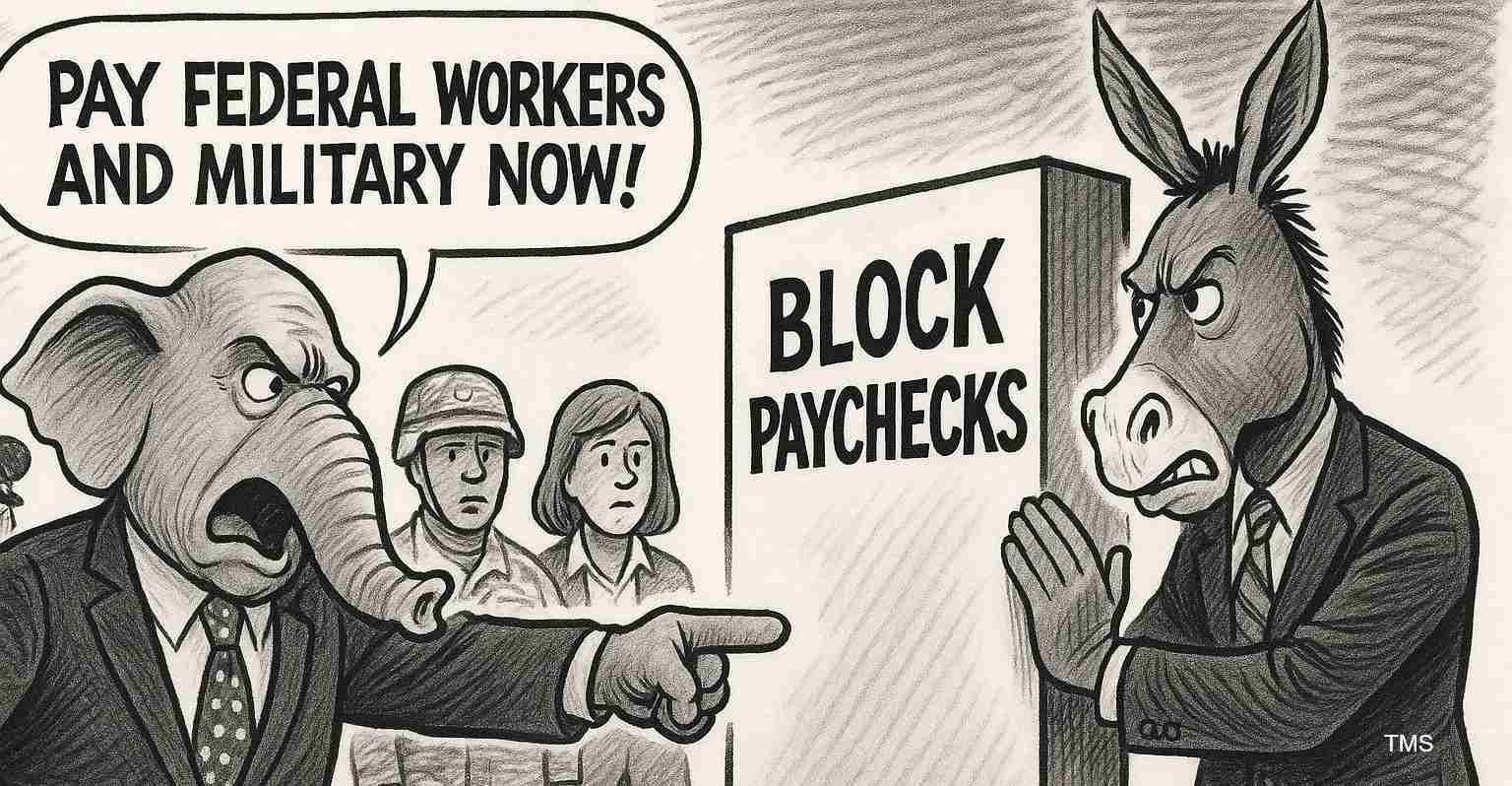
Senate Blocks Federal Worker Pay as Democrats Reject Sen. Ron Johnson Bill Amid Shutdown Standoff
Senate Democrats blocked a Republican-backed bill by Sen. Ron Johnson intended to guarantee pay for federal workers and military during the 38-day government shutdown, citing risks the measure would allow funds to be redirected without adequate safeguards.
- Vote fell short: Motion to proceed failed 53-43; 60 votes required to overcome a filibuster.
- Main Democratic objection: Bill lacked safeguards to prevent diversion or reprogramming of funds, risking an open-ended discretionary pool for the White House.
- Crossovers: Three Democrats joined all Republicans in supporting the motion to proceed.
- Shutdown context: The government shutdown has lasted 38 days, leaving thousands of federal workers and military personnel with pay uncertainty.
What the bill would do
Sen. Ron Johnson presented the measure as a straightforward stopgap to guarantee pay for civilian federal workers, furloughed employees and active-duty military during a shutdown. Johnson and GOP backers argued the bill would authorize funds directly for payrolls so those who serve would not miss paychecks, and they emphasized that amendments could be offered during debate to address concerns.
How the vote played out
Senate rules require 60 votes to cut off debate on most measures. The motion to proceed on the Johnson bill failed to reach that threshold, finishing 53-43 — seven votes short. Three Democrats crossed party lines to support the motion; the remainder of the Democratic conference opposed it, preventing an up-or-down final vote.
“We can vote to proceed and then offer fixes,” said Sen. Ron Johnson and other GOP senators on the floor, urging a procedural vote to begin debate.
Democrats’ stated concerns
Senate Democrats argued the bill’s text lacked clear guardrails to prevent reprogramming of funds or to guarantee congressional oversight. Sen. Gary Peters (D-Mich.) warned the measure could create an “unlimited and permanent slush fund” by giving the President too much discretion over newly authorized money, allowing uses beyond payroll.
Their opposition combined technical objections with a negotiation strategy: Democrats said they offered a trade — a one-year extension of enhanced Affordable Care Act premium subsidies — which Republicans rejected as a “nonstarter.”
Republican response
Republicans pushed back sharply, calling the Johnson bill simple and necessary and characterizing the Democratic block as political theater that harms working families and service members. GOP senators said Democrats could have voted to proceed and then proposed amendments to add protections.
Senate Majority Leader John Thune (R-S.D.) said negotiations on broader issues should come after the government reopens: “We are willing to address long-term problems, but we will not reopen the government only to start negotiations from scratch.”
Political context and stalemate
The vote occurred amid the longest government shutdown in modern U.S. history, now lasting 38 days. Partisan distrust has deepened. Senate Minority Leader Chuck Schumer (D-N.Y.) said the Senate could end the funding lapse quickly if the White House and Republicans offered a reasonable, bipartisan path forward.
Both parties remain entrenched: Republicans view the Democratic counteroffer as an attempt to trade unrelated policy changes for funding, while Democrats view the Johnson bill as a risky short-term fix that would cede too much authority to the executive branch.
Impact on federal workers, the military and services
The immediate consequences are both human and economic. Thousands of federal employees are furloughed or working without pay. Military members continue to serve amid pay uncertainty, affecting service members, families and local economies that rely on federal payrolls.
- Agencies affected: Transportation Security Administration, Internal Revenue Service, national park systems and many contractors have seen staffing disruptions in past shutdowns.
- Economic ripple: Reduced services at parks, tourism declines, and lost payrolls hit local businesses and communities.
Reactions from both parties
Republicans criticized Democrats for blocking the bill, arguing pay protections for troops and civil servants should be nonpartisan. Democrats maintained that the bill’s spirit did not excuse what they view as serious policy flaws, with Sen. Gary Peters calling the language vague and potentially harmful due to the lack of binding restrictions.
Sources and official records
This report is based on Times Media Service reporting, Senate roll-call practice and senators’ public statements. For primary records and official texts, consult the Senate and the public offices of the senators involved.
Implications for California
Economic impact
California’s large federal workforce and major military installations mean the shutdown significantly affects airport security staff, national park employees and many federal contractors. When federal paychecks are delayed, local businesses — from grocery stores to hospitality near parks — see reduced consumer spending and revenue.
Tourism and parks
California’s national parks and historic sites draw millions of visitors. A prolonged shutdown can reduce services, close visitor centers or limit maintenance, hurting gateway communities and seasonal staff in places like Yosemite and Sequoia.
Military readiness and families
Bases and communities in San Diego, Monterey and the Bay Area are directly impacted. Delayed pay increases demand for emergency loans, food assistance and counseling for affected service members and families.
State and local government strain
Missed federal pay can increase demand on state and local social services, emergency assistance and community programs. School districts with many federal employees may see attendance and participation affected as families cope with financial uncertainty.
Practical effects for residents
For Californians who rely on federal services — at airports, border crossings, disaster response and public lands — interruptions mean slower processing, reduced access and delayed benefits. Military families often depend on predictable pay for mortgages, child care and commuting; lost pay complicates daily obligations.
Reporting and where to follow updates
Times Media Service will continue to monitor negotiations and report developments affecting federal employees and military personnel. For official roll-call records, bill text and statements, consult the following sources:
- U.S. Senate
- Sen. Ron Johnson office
- Sen. Gary Peters office
- Senate Majority Leader John Thune
- Senate Minority Leader Chuck Schumer
- Times Media Service
- Reuters
- Associated Press
Source: Times Media Service reporting, Senate roll call practice and public statements by senators and leadership.



