
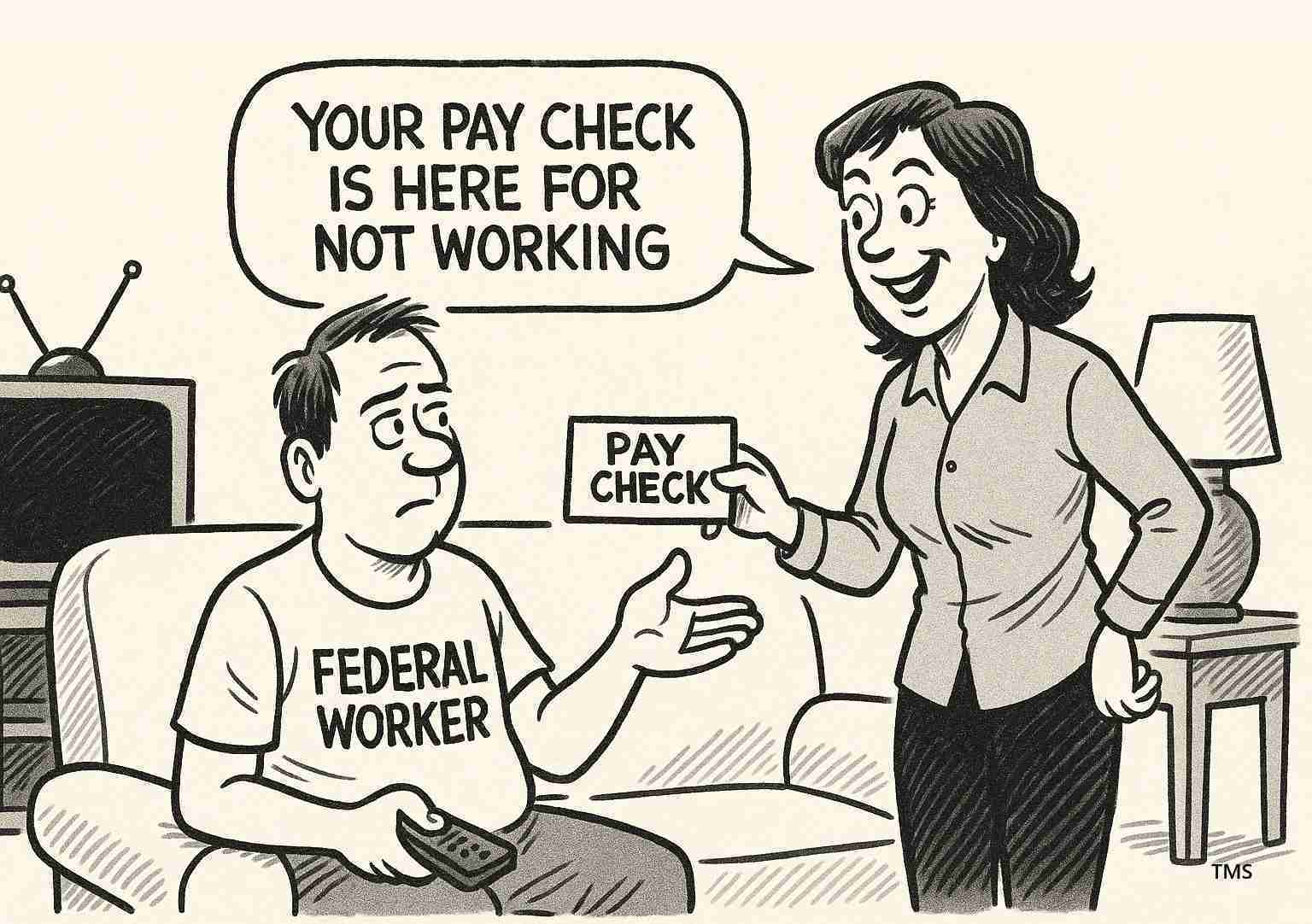
Schumer shutdown taxpayer cost: Is the $1.2 billion figure for furloughed pay accurate?
WASHINGTON (Times Media Service) — A recent U.S. government shutdown — labeled the “Schumer shutdown” by critics — prompted claims that taxpayers will shoulder about $1.2 billion for furloughed workers’ backpay under the Government Employee Fair Treatment Act of 2019, and political debate followed.
Key takeaways
- Claim: The shutdown has been said to cost about $1.2 billion in payroll for furloughed federal workers.
- Law: The Office of Management and Budget (OMB)-linked Government Employee Fair Treatment Act of 2019 guarantees retroactive pay after a lapse in appropriations.
- Verification: The $1.2 billion figure is plausible based on past shutdowns but not confirmed by a single government release; analysts point to Congressional Budget Office (CBO) and OMB for formal tallies.
- Politics: Republican officials have called it the “Schumer shutdown”; Senate Majority Leader Chuck Schumer disputes that framing and responsibility is often shared across branches.
What the Government Employee Fair Treatment Act requires
Under the Government Employee Fair Treatment Act of 2019, federal employees furloughed because of a lapse in appropriations are guaranteed retroactive pay for the period they were barred from working once Congress passes funding. That protection was made permanent to prevent furloughed workers from suffering lost wages when Cabinet-level or congressional actions delay funding.
That law is the reason furloughed federal workers receive backpay after the shutdown ends. Reporting on the law and its application to this shutdown can be found in local and national coverage, including Press & Sun-Bulletin/PressConnects. For authoritative budget tallies, analysts point to the Office of Management and Budget (OMB) and the Congressional Budget Office (CBO).
Why the $1.2 billion figure is being cited — and what’s missing
The $1.2 billion estimate for furloughed-pay costs appears in political messaging and some media reports tied to this shutdown. The figure represents an estimate of wages that will be paid retroactively to federal employees who were furloughed during the lapse in funding.
However, that exact $1.2 billion number is not directly documented in the reporting and public records reviewed for this article. Past shutdowns have produced a range of costs: payroll backpay for furloughed and excepted employees, lost economic activity from delayed contracts and services, and administrative costs to restore operations. Without a formal calculation from OMB, the CBO, or another official accounting body, the $1.2 billion number should be treated as an estimate rather than a finalized government figure.
How shutdown costs are usually tallied
When shutdowns end, agencies and oversight bodies typically break down costs into categories such as:
- Direct payroll backpay for furloughed employees.
- Additional pay for federal workers who continued working (excepted employees) during the shutdown.
- Costs to restart government services and IT systems.
- Economic ripple effects from delayed contracts, inspections, and services.
Agency-by-agency estimates vary and are tallied over weeks following a shutdown. The CBO and OMB generally provide the clearest, consolidated pictures of overall fiscal effects. For immediate reporting, local and national news outlets often rely on agency statements or internal estimates, which can differ until formal accounting is completed.
Political framing: “Schumer shutdown” and lines of blame
The label “Schumer shutdown” has been used by Republican leaders and commentators to assign political responsibility for the lapse in funding to Senate Majority Leader Chuck Schumer. Reporting shows Republicans publicly criticized Schumer and other Senate leaders for the failure to secure funding, while Schumer pushed back and pointed to other figures and broader negotiations as causes — see coverage from Press & Sun-Bulletin/PressConnects.
“It is common in shutdowns for both parties to blame the other.”
Legally, shutdowns occur when Congress does not enact or extend appropriations. That means responsibility can be spread among House and Senate leadership, the White House, and individual lawmakers who oppose compromise. For readers focused on fiscal accountability, understanding who controls appropriations in each chamber and which negotiators were involved is essential to unpacking political blame.
What we know about past shutdown spending
Historical shutdowns have shown that direct payroll costs can be substantial, but shutdowns also carry broader economic effects. For example:
- The cumulative costs of past shutdowns—measured in lost wages, delayed services, and economic slowdowns—have ranged from hundreds of millions to several billion dollars depending on length and scope.
- Backpay provisions like those in the 2019 law mean furloughed workers are made whole for lost earnings, shifting the immediate financial cost to taxpayers once funding is restored.
These trends make a $1.2 billion estimate plausible for a multi-day or longer shutdown, but again, official confirmation is needed on the precise figure for this event.
Gaps and what would confirm the $1.2 billion claim
To confirm the $1.2 billion figure, reporters and analysts look for:
- An OMB memo or statement summarizing federal payroll backpay totals linked to this specific shutdown.
- A CBO estimate breaking down short-term costs by category.
- Agency-level tallies from departments with large civilian workforces (e.g., Defense, Homeland Security, Veterans Affairs) showing furlough and excepted-pay totals.
At the time of this reporting, no single government release publicly documented the $1.2 billion figure. Readers seeking official accounting should watch for updates from OMB and CBO. Local reporting that raised the $1.2 billion number referenced the political debate and the backpay requirement under the 2019 law: Press & Sun-Bulletin/PressConnects.
Why the backpay rule matters
The Government Employee Fair Treatment Act of 2019 removed a key financial penalty for federal workers caught in shutdowns: the risk of permanently losing pay for missed work during a lapse in appropriations. The law aimed to protect workers’ livelihoods.
For taxpayers and budget watchers, it means that some costs of shutdowns are automatic and immediate once funding is approved. That trade-off is central to debates about how to best balance protecting workers and incentivizing timely budget agreements.
Implications for California
Economic impact: California hosts large federal operations — active-duty and civilian Defense personnel, Department of Veterans Affairs facilities, National Park Service sites, airports and passenger security overseen by the Transportation Security Administration, and research institutions tied to NASA and other agencies. Furloughed employees and service disruptions can reduce consumer spending and slow local businesses, especially in communities with high shares of federal employment.
Fiscal pressure: If the $1.2 billion figure — or anything close to it — reflects direct backpay obligations, some of those dollars will flow to Californians who work for federal agencies. Taxpayers in California contribute to federal revenue and share in those costs. Local governments and service providers that contract with federal agencies may also face delays in payments or projects, creating knock-on effects on municipal budgets and private contractors.
Political consequences: California’s moderate conservative voters, particularly those attuned to fiscal responsibility, may view shutdown costs as evidence that federal leaders must prioritize timely appropriations and bipartisan compromise. The “Schumer shutdown” label could influence messaging around statewide races and congressional contests where incumbents or challengers are judged on fiscal stewardship.
Service disruptions: Californians seeking passports, federal benefits, or national park access can face delays during shutdowns. Work at ports, aviation security, and immigration processing can slow, affecting travel and commerce. Tourism-dependent areas that rely on national parks — such as Yosemite and Joshua Tree — can see immediate effects when services are limited.
Practical effects for residents: For residents who are federal employees in California, backpay provisions will blunt long-term harm to household budgets. But the short-term disruption — missed paychecks, paused services, and postponed permits — can still create real stress for families and small businesses that work with federal contracts.
Authoritative tallies and further reading
For authoritative tallies and ongoing updates about the fiscal cost of this shutdown, including any confirmation or revision of the $1.2 billion estimate, readers can check the Office of Management and Budget (OMB) and the Congressional Budget Office (CBO). For reporting on the political debate and the law governing backpay, see Press & Sun-Bulletin/PressConnects.



