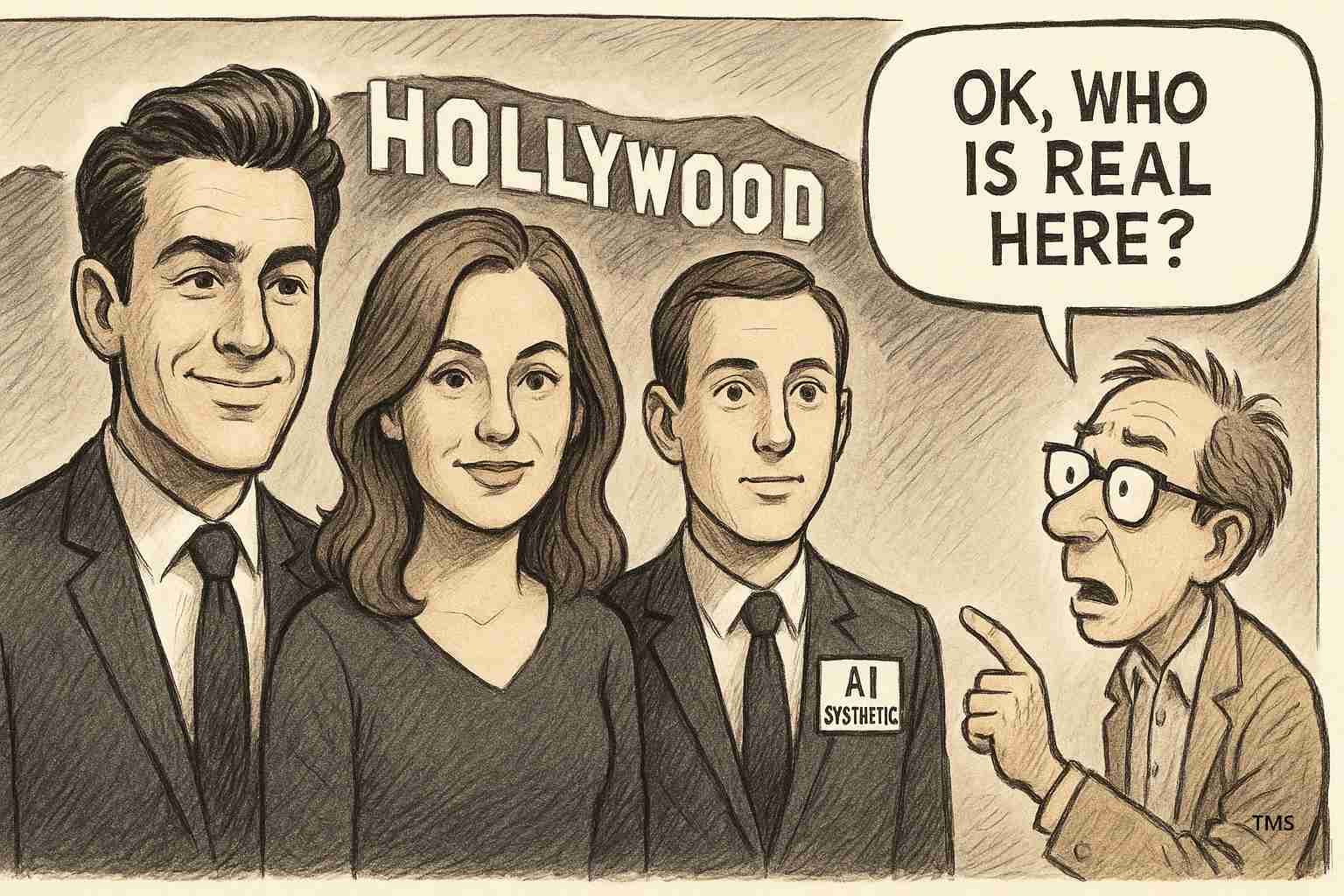
SAG-AFTRA slams AI synthetic performers after viral “Tilly Norwood” — union warns technology could replace human actors
SAG-AFTRA has denounced the AI-generated “Tilly Norwood,” saying the synthetic performer was trained on many actors without consent or pay, warning the technology could threaten roles and require bargaining under existing union contracts and devalue human artistry.
- Synthetic character contested: SAG-AFTRA labeled Tilly Norwood “not an actor,” saying it was trained on performers without permission or pay — Source.
- Union protections invoked: The union warned synthetics could jeopardize jobs and said use in major productions requires notice and bargaining under existing contracts — Source.
- Company response: Xicoia’s founder defended Tilly as a storytelling tool, not a replacement for human performers — Source.
- Industry alarm: Reports that Xicoia sought talent representation for Tilly raised concerns that AI characters could enter agency and casting systems — Source.
What SAG-AFTRA said
SAG-AFTRA issued a forceful public statement after the launch of Tilly Norwood, arguing that synthetic performers should not replace human actors. The union said the character “is not an actor. It is a character generated by a computer program that was trained on the work of countless professional performers without permission or compensation.” The union added that such uses of AI “jeopardize performer livelihoods and devalue human artistry,” and stressed that any use of synthetics in union-covered projects must follow bargaining rules and give members notice. Source
The union’s stance reflects long-standing demands from performers for clear protections around digital likeness, voice cloning and AI reproductions. SAG-AFTRA leaders emphasize that rules protecting wages, credits and residuals were won through decades of negotiation and should not be side-stepped by new technology.
How Tilly Norwood went viral
Tilly Norwood was unveiled by Dutch company Xicoia as the debut character of an AI talent studio at the Zurich Film Festival. The company’s presentation and social posts spread quickly, provoking debate online and within industry circles. The reveal included claims that Tilly was built using generative AI tools trained on extensive visual and performance data — a claim that drew immediate scrutiny. Source
Industry reaction and actor concerns
Several actors publicly criticized the project, saying it threatens authentic storytelling and performers’ livelihoods. Notable voices included Melissa Barrera, Nicholas Alexander Chavez, Lukas Gage, Mara Wilson and Toni Collette, who warned that allowing synthetic characters to compete for roles could undercut career paths built over years of training and work. Source
Actors and union advocates pointed to broader risks: fewer speaking roles for newcomers, pressure on wages, and a shift toward cheaper, more controllable synthetic options. They argue storytelling depends on lived experience and emotional truth only human performers can reliably provide.
Xicoia’s defense
Elene Vandervelddon, Xicoia’s founder, defended the project, saying Tilly is “not a replacement for a human being” and comparing the technology to animation, puppetry and CGI. Vandervelddon framed the character as “another way to imagine and build stories” and noted she is an actor herself: “nothing, certainly not an AI character, can take away the craft or joy of human performance.” Source
Xicoia reportedly sought representation for Tilly Norwood with talent agencies, a move that heightened controversy by suggesting AI characters might enter traditional commercial markets alongside human performers. Source
Legal and labor implications
The Tilly Norwood episode lands amid active negotiations over AI and digital recreation. SAG-AFTRA emphasized that current contract rules require notice and bargaining before synthetic performers are used in union-covered work — protections that could be bypassed if studios or third parties adopt AI talent without negotiation. Source
Beyond contract language, questions arise about intellectual property, training data, and compensation for artists whose work may have been used to train models. The union described the reported use of “stolen performances” to train AI as a dangerous practice that risks undermining the legal and economic framework around performance work.
The broader Hollywood AI debate
Tilly Norwood has become a focal point in a wider conversation about AI in entertainment. Proponents say AI can unlock new creativity and reduce production costs; critics warn synthetic performers could hollow out entry-level and midlevel acting jobs, reduce bargaining power, and erode standards for consent and credit.
The case encapsulates both sides: a tech company presenting a new creative tool and a labor union pushing to protect members’ livelihoods — a tension likely to shape policy, contracts, and industry norms going forward.
Implications for California
Economic impact: California’s entertainment ecosystem could see fewer paid acting roles, reduced hiring for supporting crews, and budget shifts if synthetic performers become commercially viable without labor protections.
Political consequences: State lawmakers and regulators may hold hearings, seek clearer rules on AI training data and digital likeness rights, and coordinate with unions like SAG-AFTRA to balance innovation with worker protections.
Social and cultural effects: Replacing or supplementing human performers risks altering on-screen representation and reducing opportunities for local and diverse talent that rely on California’s industry to build careers.
Practical applications: Agents may be asked if they will represent AI creations. Casting offices could need policies on AI submissions. Unions and employers must negotiate rules for synthetics to protect wages, credits and residuals.
Sources and further reading
Video statement and coverage of Tilly Norwood and SAG-AFTRA response
Industry voices to watch
- SAG-AFTRA leadership — statements and contract negotiations.
- Xicoia and other AI studios — product announcements and defense of creative use.
- Major talent agencies — policies on representing or submitting AI characters.
- California policymakers — potential regulatory and legislative responses.
Reporting draws from the public presentation and the union’s follow-up responses; readers may review the linked presentation for primary-source material.